A deep dive into the NYPD’s crime statistics for the Bronx shows that the borough is reaching a level of public safety that hasn’t been seen in generations.
By the end of 2026, the Bronx is on track to see shooting victims fall by roughly 50% from the approximately 600 recorded in 2021. Compared with the same period in 2006, shootings in the Bronx are down 37.8% and murders have declined by 29.7%.
Murders have also declined by more than 31% since 2021.
According to NYPD data, the Bronx has led the city in major crime declines since the start of 2026, with an 11.3% drop.
While there are many other factors that have led to a safer Bronx, in the NYPD’s point of view, the department’s efforts to improve policing across the city have made the greatest impact of all.
Chief of Department Michael LiPetri, who is also the NYPD’s biggest number-cruncher, said it all comes down to following the data.
“The biggest thing that has changed CompStat in the past 20 years is the analytical data that we are able to use to suppress crime in New York City. We are extremely granular, like block to block, minute to minute, almost hour to hour, where those shots are fired,” Chief LiPetri explained. “We were fighting that fight 20 years ago, but we have gotten so precise, and obviously, that’s the biggest game changer that I’ve seen in 20 years.”
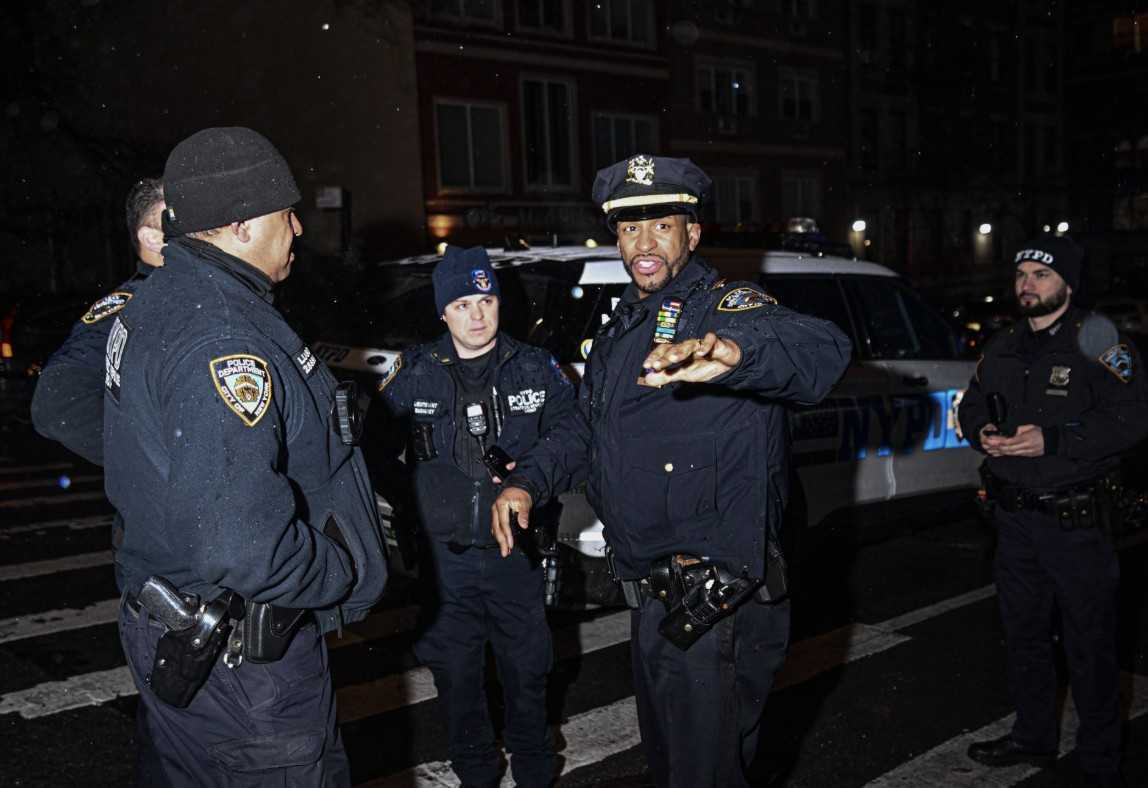
The NYPD credits a number of strategies for the improvement, including violence deployment zones, which concentrate officers in areas with high levels of shootings and other violent crime during peak hours.
In May, the department also split the Bronx into two patrol boroughs, adding roughly 200 officers to the streets.
“For years, the Bronx continued operating under a single patrol borough command while the demands placed on this borough continued to grow. The creation of Bronx North and Bronx South is one of the most significant operational changes to policing in the Bronx in decades, and it is about equity, ensuring that Bronx residents receive the same level of oversight, resources, and operational support that communities in other boroughs have had for years,” Police Commissioner Jessica Tisch said earlier this year.
Police brass also point to detectives’ ability to close cases more quickly as another factor in curbing crime. Officials say investigators are making arrests within 30 days of a felony crime 45% of the time, up from 35% three years ago.
LiPetri also highlighted long-term investigations targeting gangs and crews responsible for shootings across neighborhoods. Police officials say those investigations have not only led to arrests but have also helped prevent other members from stepping in to fill the void left behind.
“Working with the chief of detectives, I’m able to say: ‘Hey, what do we have going on with crew A? They’ve been shot four times in the past six months. They’ve been shooting perpetrators seven times in the past six months. They’ve been involved in 14 robberies in a very tight area. What do we have going on with this crew?’” LiPetri explained.
“And then the chief of detectives is able to brief me on it, and then we give direction or we all collaborate and we say this is a crew that we really need to start looking at for a possible case, long-term case, short-term case.”
“We got to remember at least, and this is a long number, at least 60% of our shootings have a crew nexus in New York City,” he added. “So why not have the data-driven approach to crews and gangs in New York City.”
And yet, even with the massive crime reduction in the Bronx in recent years, the borough struggles to shake off a reputation for danger. Chief LiPetri said he and the department are not blind to that perception, acknowledging that there is still considerable work ahead to reinforce the reality among the public.
“I understand why some residents, not just in the Bronx but across the city, may perceive that they have concerns, and we are trying to change that perception,” Chief LiPetri said.
For many New Yorkers, the Bronx’s reputation was shaped long before today’s crime statistics.
The borough’s struggles with disinvestment, widespread fires and abandonment during the 1970s, followed by the violent crime wave of the late 1980s and early 1990s, left a lasting impression that has proved difficult to shake.
But just as the borough underwent a long and often difficult process of rebuilding in the decades that followed, the latest figures suggest a new and better chapter is being written for the Bronx.
For the NYPD, the challenge is now ensuring that the progress reflected in the numbers is felt on the streets and in the everyday lives of Bronx residents.
“The Bronx continues to lead the city in major crime decline, and the NYPD remains focused on making sure Bronx residents feel safe in their community,” an NYPD spokesperson said.