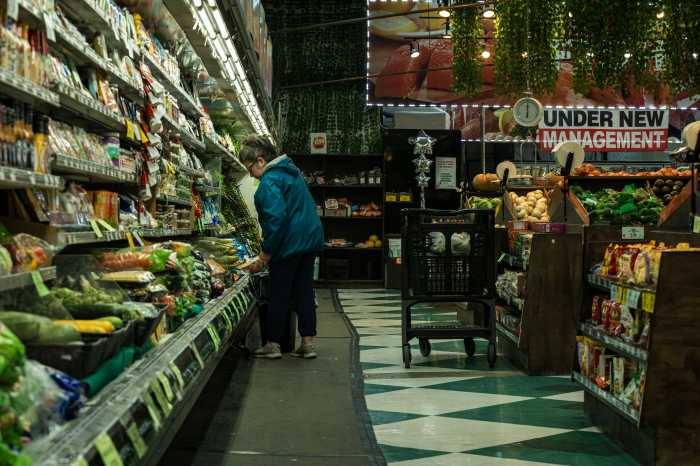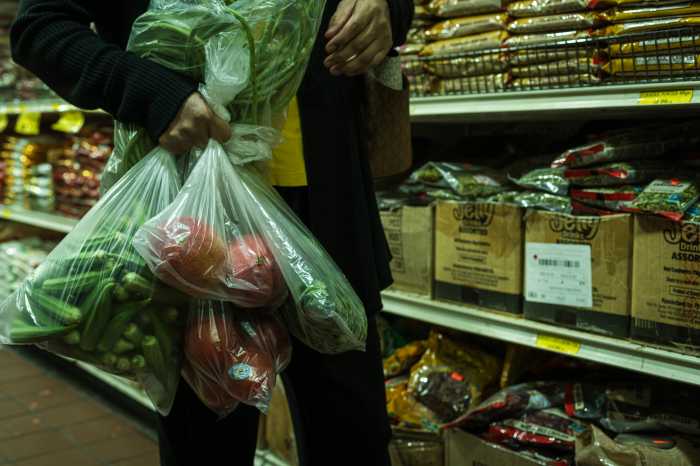
The Bronx might be the last place that the average New Yorker can afford to buy a home — yet, it has the lowest rates of homeownership in all of New York City.
In a city filled with renters, only 20% of Bronx residents own their homes. Roughly 108,800 units are owned, making nearly 80% of Bronx residents owners, according to a study by the New York State of Health.
The thought of going from a renter to an owner can seem daunting. Most people live lease-to-lease, unsure of how to afford a home or even how to start the process.
It’s incredibly difficult for the average New Yorker to start the homebuying process. Figuring out interest rates, a down payment and outbidding other interested parties, seems like a hurdle first-time home buyers can’t get over.
City officials and housing experts are trying to change that.
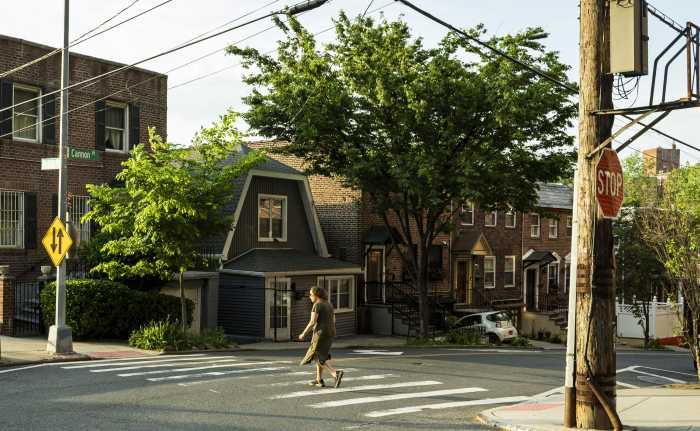
“The Bronx is the last borough standing,” said Crystal Hawkins-Syska, a real estate agent who sells homes in Westchester County and the Bronx. “It is the last borough in New York City that’s still affordable… It’s an untapped place for likeminds to join together to figure out what’s possible.”
Home prices across the Bronx can vary depending on the neighborhood. An average home in the Bronx, for example, typically sells at $490,942 – according to data from Zillow. Yet, certain neighborhoods, for example, Throggs Neck and Pelham Bay, have homes on the market for prices ranging between $600,000 and $800,000.
But can many Bronx residents afford to buy the more affordable homes? The rent for many in the borough already eats away at their finances.
The average yearly income of a Bronx resident is $48,676, according to the U.S. Census Bureau, while the average monthly rent is $1,458. More often than not, however, that number creeps into the $2,000 a month category. That means nearly half of a person’s wages go to rent with no return or investment.
That means many residents don’t have the ability to squirrel away money to buy a home, Hawkins-Syska said. She tries to talk to clients about thinking of the future outside of a one or two-year lease agreement.
Difficult as home-buying is, it is not impossible under the right circumstances.
Making a home in Kingsbridge
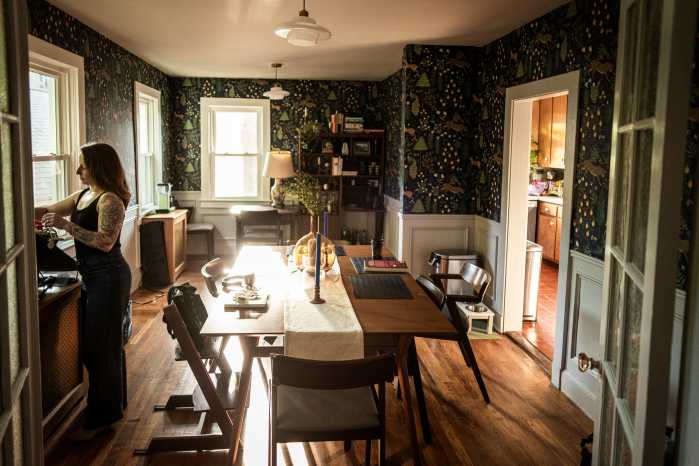
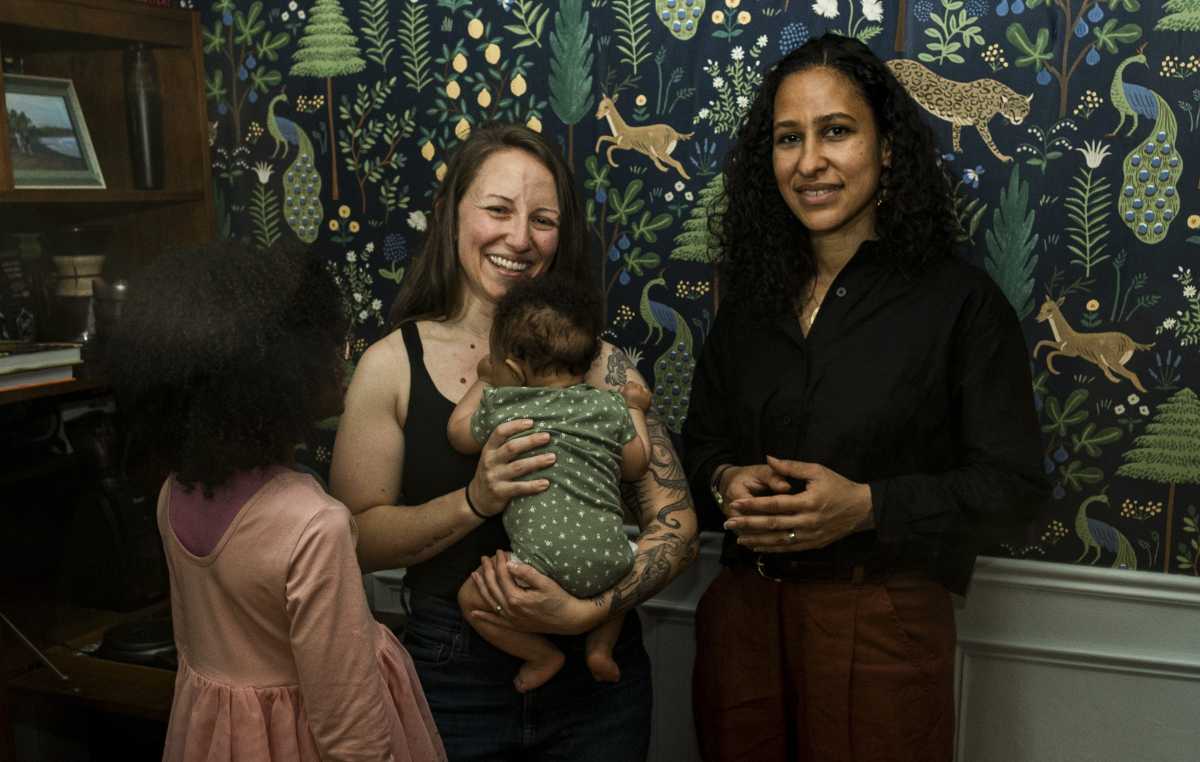
Lindsey Lerner, a documentary photographer from Rhode Island and Selena Carrión, a NYC education administrator from Soundview, purchased their first Bronx home together about six months ago in Kingsbridge.
The married couple wanted to build a future for their family –a 10-year-old daughter and 5-month-old daughter– that included settling down in the borough Carrión grew up in.
No one in Carrión’s family has owned a home before –her mother struggled with housing insecurity and homelessness before living in NYCHA housing and then finding a rent-controlled building in the Bronx– stable housing is something extremely important to her in why she wanted to buy a home.
“I started to see as a kid just like gentrification creeping into New York City as a whole, and felt strongly that it would come for the Bronx,” Carrión said. “It felt important to me to own, to preserve a stake as a native New Yorker, be a part of the community and really secure a place for myself and my family.”
Carrión viewed owning a home as more cost-effective than renting, and better for her family’s long-term goals of settling down.
“It just became too expensive. We had to basically say, ‘We’re gonna have to leave New York in order to save up to then come back,’” she said. “Because we couldn’t even afford rent anymore.”
Yet, the challenge of finding their perfect home felt like a full-time job outside of already both having full-time jobs, Lerner said. It felt like every weekend was spent going to open houses or viewing homes that didn’t quite match their online photos.
The couple ended up putting down several offers, which were either outbid or lost out to an all-cash buyer.
The home they ended up buying – a two-floor standalone home in Kingsbridge with three bedrooms, 1.5 bathrooms, with a basement, attic, backyard and driveway – cost a bit over its $850,000 asking price.
That’s without renovations, which Carrión and Lerner did on their own.
“We didn’t have any extra money for anything,” Carrión said.
Carrión and Lerner said their monthly mortgage is about $5,000, which they admit, is pricey. Nevertheless, it is still less than some of their friends who rent in Manhattan, plus there’s the added sense of security that they don’t have a landlord who can decide to not continue renting to them.
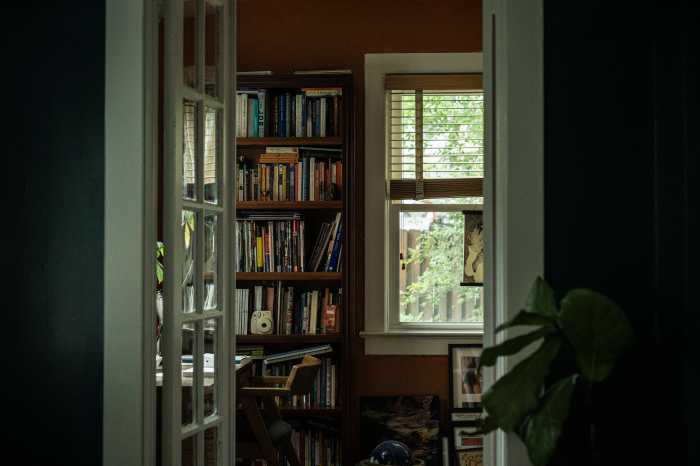
The Bronx needs more homeowners like Carrion and Lerner and the city needs to do more to make that happen, according to Bronx Borough President Vanessa Gibson.
“We need to look at incentives that drive more affordable home ownership pathways,”Gibson told the Bronx Times, adding that she’s working with Mayor Zohran Mamdani’s administration and the New York City Department of Housing Preservation and Development (HPD) on creating more affordable options.
“That’s how you build generational wealth and that’s how you address the wage gap so that Black and Brown home owners increase and have more diverse areas to choose from,” Gibson added.
Fighting discrimination and redlining
Gibson noted that there are many areas in the Bronx that Black and Brown residents can’t afford and have historically never lived. “It’s a disparity, and it’s happening for a reason,” she said.
Persistent racial discrimination and redlining are what’s continuing to prevent Black and Brown Bronx residents from accessing financing for their future home – residents who would otherwise qualify, according to Kevin Wolfe, Deputy Director of Advocacy and Public Affairs at the Center for NYC Neighborhoods.
“When we look at the homeownership rates, there’s a gap between Black households, Latino households and white households,” Wolfe said. “If you’re talking about a borough that’s majority Black and Hispanic, then we’re seeing [racial discrimination] is a driving force in who has access to purchase a home.”
Redlining in the Bronx began in the 1930s, when the federal Home Owners’ Loan Corporation created maps to rate neighborhoods for mortgage lending risk.
Large sections of the Bronx with Black, Latino and working-class residents were classified as either “declining” or “hazardous,” which discouraged investment and contributed to decades of economic hardship and segregation, according to the NYC Environment and Health data portal.
Because the Bronx is such a rental forward borough, Lerner and Carrión said they were limited in locations where they were interested in buying. The South Bronx, for example, they loved, but nearly all the apartments and new buildings are rentals.
“I think a lot of that is to keep people perpetually in this state of instability and renting versus owning, and I do feel like developers don’t want people to have ownership in the Bronx,” Carrión said.
“It’s due to the economic history that we’ve had over the decades, especially since the 70s, so that’s more the reason to try to buy in the Bronx if you can, or at least start the process and see if it’s possible.”
Due to these historic challenges, Black and Brown renters have not considered themselves homeowners or looked into what it takes to save for a down payment. Even with bad credit, experts say that there are assistance programs that help first-time home buyers, even those who have little saved.
Experts point towards city-run programs that can help first time New York City home buyers like the HomeFirst Down Payment Assistance Program, which provides qualified homebuyers with up to $100,000 towards a down payment or closing costs on a family home.
Bronx homeowners with low-to-moderate income limits can also apply for repair grants to their family homes through Neighborhood Housing Services of New York City and Rebuilding New York City’s Housing Preservation Program.
“We do want to have more opportunities to convert those to home ownership through a thoughtful process,” Dina Levy, HPD commissioner, told the Bronx Times. “If the housing is already built, in theory, it is much less expensive than building new, and if there’s an opportunity to convert housing like that into collective home ownership, I think it’s an opportunity that the agency should be supporting more directly.”
City leadership is prioritizing building more new housing in the Bronx, and serving all family and household sizes, Levy said.
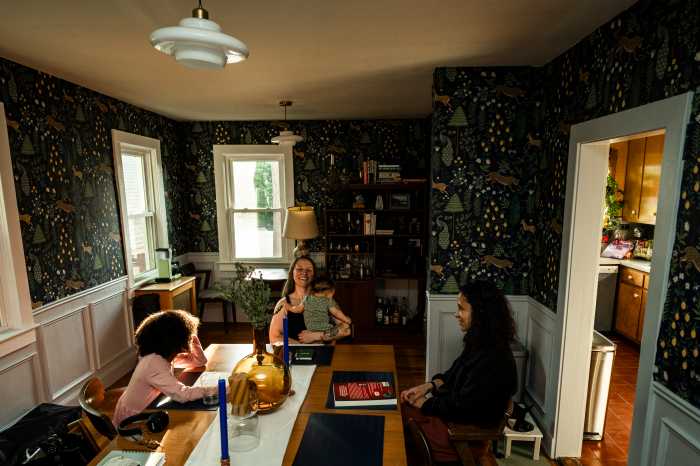
Carrión and Lerner are now settling into their neighborhood – excited that they finally have a place where they can put down roots and spend their lives enjoying. Their neighbors are open-minded and progressive and they see the same characters (and their dogs) on their daily walks.
“It’s a really close-knit community, which is what I wanted,” Carrión said. “That’s what I really loved about growing up in the Bronx. I definitely wanted to find something that felt similar in terms of knowing your neighbors.”
It’s the small things which make a community, home.
“I think a lot of people look down on the Bronx and have for a very long time, and that feels really unfortunate, or there’s like one or two neighborhoods that people would deem worth living, that also feels hurtful,” Carrión said.
“I do think every neighborhood has something to offer, and there’s something for everybody throughout the borough. I would love for people to see that.”