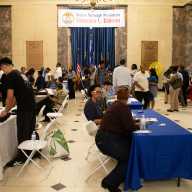
Hundreds of Bronx tenants packed the Hostos Center for the Arts and Culture on Monday, using their allotted two minutes to describe years —and in some cases decades— of deteriorating conditions in their rent-stabilized apartments while urging the Rent Guidelines Board to approve a rent freeze.
The Rent Guidelines Board (RGB), which sets annual rent adjustments for the city’s roughly 1 million rent-stabilized apartments, is considering a rent freeze this year. During its preliminary vote in May, the board advanced a range of potential increases from 0% to 2% for one-year leases and 0% to 4% for two-year leases.
This marks the first time a rent freeze has been proposed as an option for two-year leases beginning in October.
The Bronx hearing was one of several public forums being held across the city before the board’s final vote later this month. Additional hearings are scheduled in Brooklyn and Manhattan.
The last time the board approved a rent freeze was in 2020 under then-Mayor Bill de Blasio, when one-year lease holders received no increase.
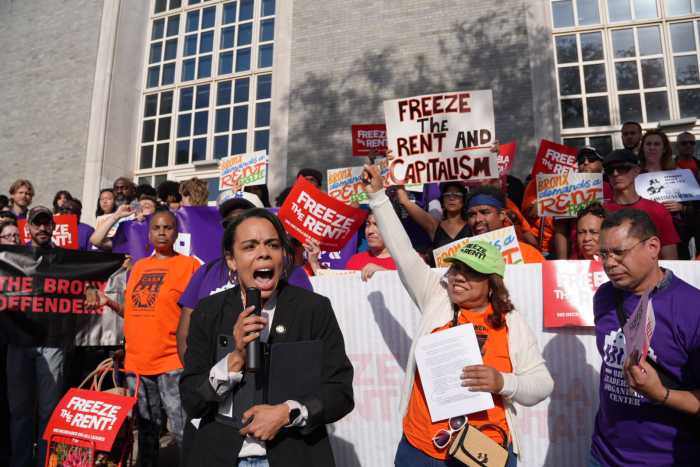
Mayor Mamdani made a rent freeze a central campaign promise. In April, he appointed five new members and reappointed another member to the Rent Guidelines Board, giving his appointees a majority on the panel.
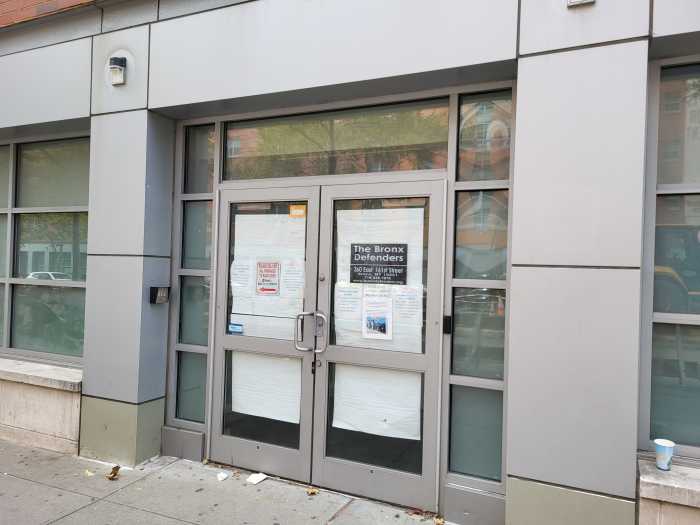
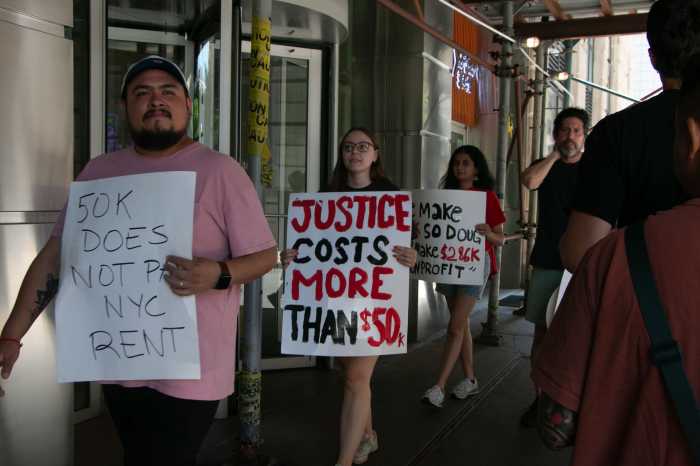
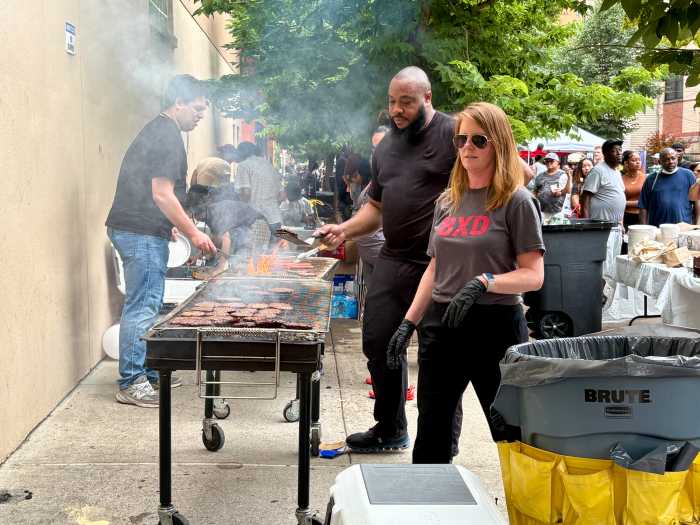
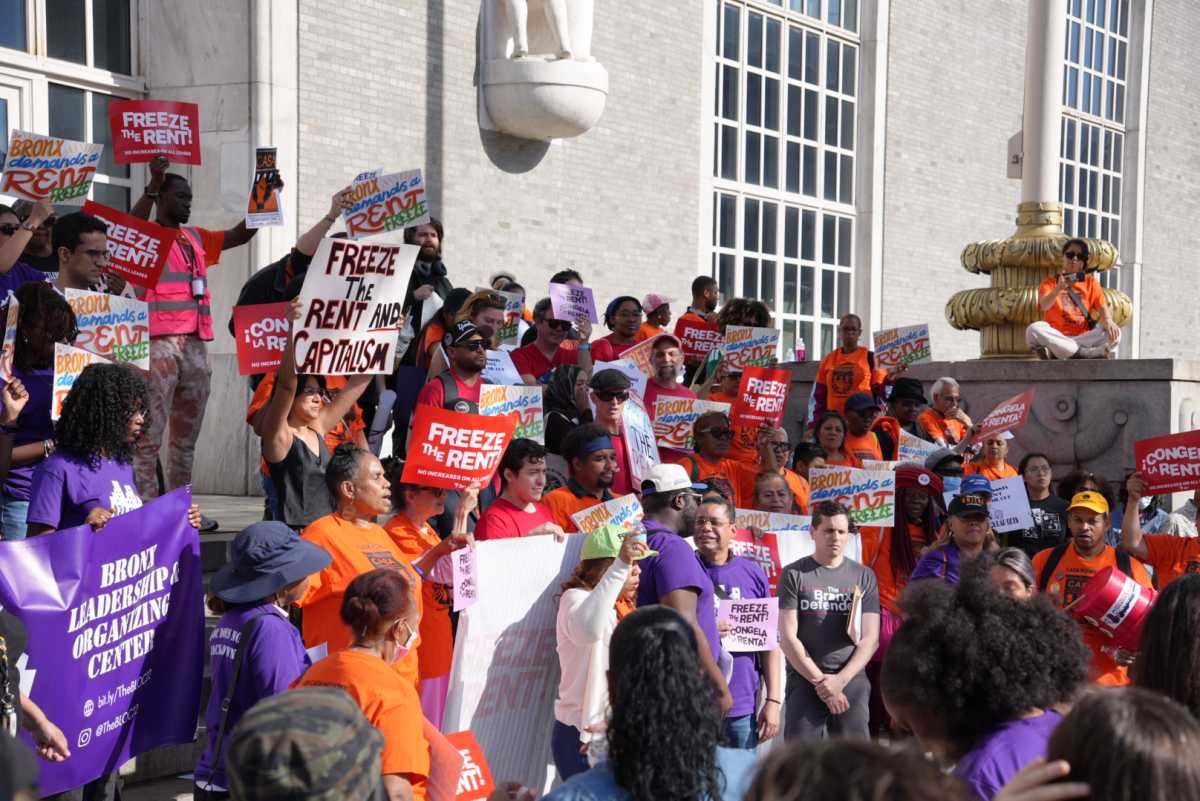
Before the hearing, tenants and housing advocates from the Bronx Defenders, Community Action for Safe Apartments (CASA), New Settlement, Bronx Leadership Organizing Center, Met Council on Housing, PSC-CUNY and NYC-DSA marched down the Grand Concourse to Hostos Community College to testify.
Inside the auditorium, tenants mixed housing advocacy with citywide enthusiasm ahead of Game 3 of the NBA Finals, leading chants of, “No increases on our leases” and “Knicks, Knicks, Knicks in four. Freeze the rent, slam the door!”
Among those who testified was Andre Walters, a Northeast Bronx tenant who has lived in his rent-stabilized apartment building with his family for more than 50 years.
Andre Walters, has lived in his rent-stabilized apartment building with his family for more than 50 years. He described the building as once being a great place to live before it became increasingly dilapidated after changing ownership twice in the past decade.
Walters said basic services became increasingly unreliable. Heat and hot water outages became common, rodent infestations persisted, and at one point the building owner failed to pay the Con Edison bill, leaving residents feeling unsafe in their homes.
Since 2016, Walters estimates he has made thousands of complaints to 311 and the city’s Department of Housing Preservation and Development. He said he has spent years taking his current landlord, Yeshiel Weinberger, to housing court. While a judge ordered Weinberger in 2024 to complete most of the repairs, Walters said significant issues remain in both his apartment and throughout the building.
“Continuing to allow them to increase the rent is rewarding bad behavior to those rental property owners for not maintaining the property and not following the law and not doing right by policy holders,” Walters said.
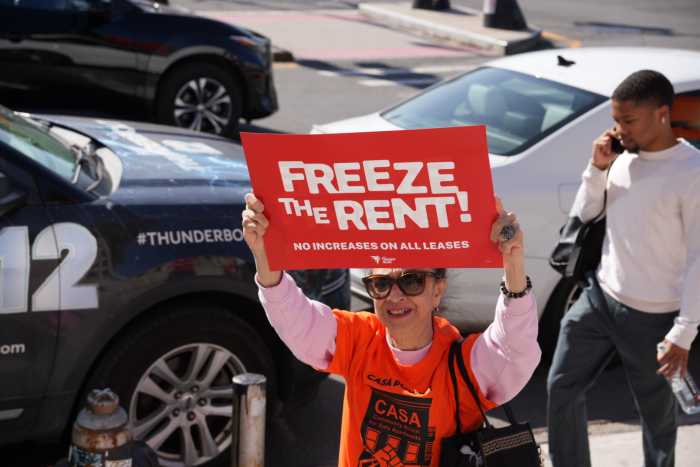
Housing advocates said Walters’ experience reflects conditions faced by many rent-stabilized tenants across the borough.
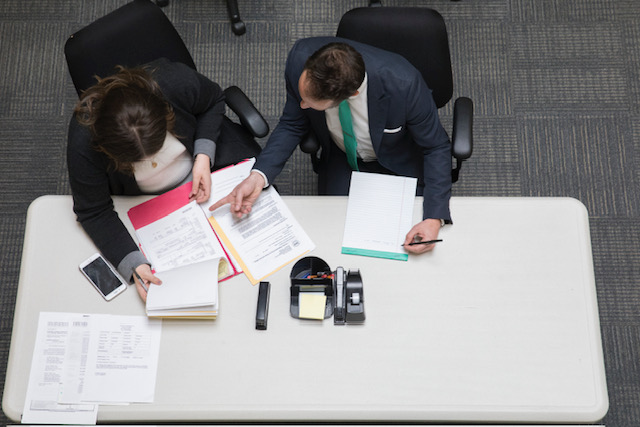
“Most are tenants of color, and all are living on the edge financially. A lost week of work, a child’s medical emergency, an unexpectedly high utility bill, almost any unexpected financial stress is enough to cause a family to fall behind in rent, and soon enough face evictions,” said Adam Markovics, director of housing justice and defense at the Bronx Defenders, describing the rent-stabilized tenants his team represents.
Under Mayor Eric Adams, the board increased rents by 12%, further burdening The Bronx’s rent stabilized tenants. Landlord groups have argued that rising operating and maintenance costs have made it increasingly difficult to maintain older buildings, particularly in the Bronx, where many properties have experienced declining net operating income.
Reports from the Independent Budget Office, however, contend that financial distress is concentrated among a relatively small share of landlords. Additional data shows that many building owners continue to use profits to acquire additional properties and refinance existing debt.
“Bronx landlords may protest that they are cash-strapped due to rising maintenance costs, but the reality is they are not reinvesting their profits in our clients’ homes,” he added. “Most of the tenants we represent are living in conditions that are utterly degrading.”
The last time the board enacted a rent freeze was in 2020 under then-Mayor Bill de Blasio for one-year leases.
“Why is it that as a tenant we have to hold up all depends on the agreement, but the rental property owners have free will? It’s just absolutely unfair,” Walters said.
“So that’s why we’re here, asking, requesting, and demanding a rent freeze, and hopefully with this new administration it won’t fall on deaf ears like it has over the last several decades.”
Reach Marina Samuel at msamuel@schnepsmedia.com. For more coverage, subscribe to our newsletter and follow us on Twitter, Facebook and Instagram!