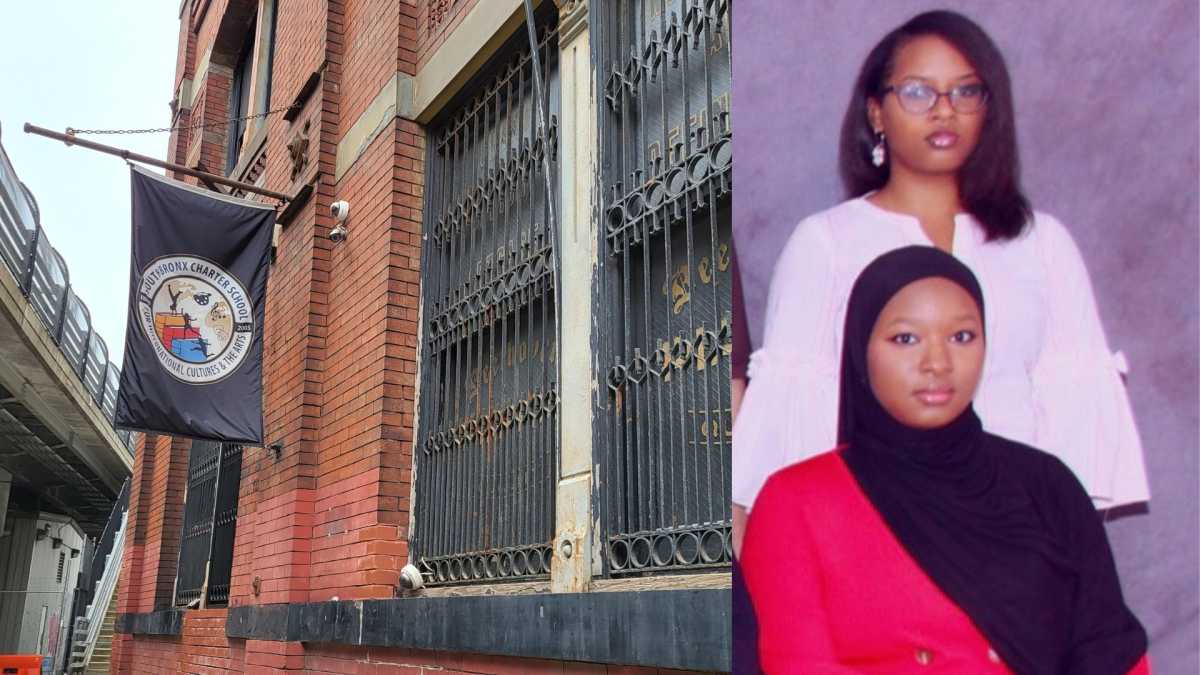
Graduating seniors from the South Bronx Charter School for International Cultures and the Arts (SBCSICA, or X309) have come forward with allegations of a chaotic learning environment that harmed their academic performance.
Multiple students filed complaints with the DOE Charter Schools Office alleging understaffing and frequent turnover; inconsistent learning; punishments that included revoking laptops and moving soap, toilet paper and mirrors from inside to outside the restrooms; a lack of guidance counselors to track students’ progress toward graduation; and poor standardized test results.
The complaints, which were also shared with school leaders, further allege that staff failed to meaningfully work with students to resolve challenges.
“Now I question, what is the point of showing any emotions and speaking up if, in the end, we [students] are continued to be seen as the issue,” one student complaint said. “It feels like our concerns are ignored and our voices go unheard.”
Though most of the small graduating class was accepted into college, students told the Bronx Times that many they had expected to mark the milestone with were already gone. The freshman class started with 30 or 32 students, and only 11 will walk on June 18, according to multiple students.
Total enrollment at the charter school is 318, with 56 in grades 9-12, but is authorized for as many as 1,225, according to the school’s 2024-2025 annual report.
At the school, 85% of students are Hispanic or Latino and 13% are Black, according to the 2024-25 School Quality Report. Records show that the K-8 school performs at or above the citywide average in math and reading, but data for the high school is not yet clear.
“Our intellectually challenging and standards-based curriculum is enriched by our international perspective, the arts, and dual language program. Students receive a well-rounded education that uses the arts to promote excellence in all areas,” reads the school mission statement. “Our school meets or exceeds New York State Learning Standards.”
The annual report said that “Students are not just sitting at desks all day.” “Our curriculum and instructional methods promote engagement through inquiry-based learning, manipulatives, and hands-on activities that bring the curriculum to life.”
Growing pains
In a statement to the Bronx Times, Executive Director Evelyn Hey explained that the school had growing pains as it expanded to include the high school.
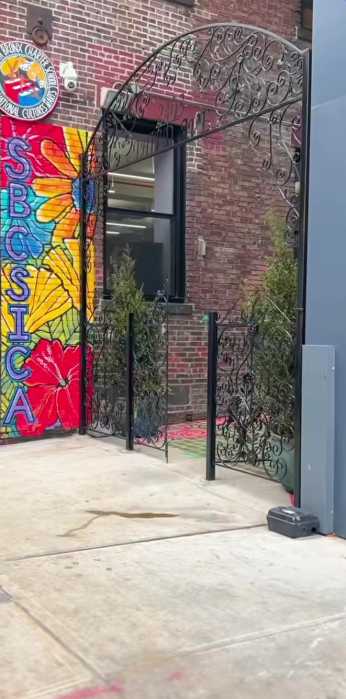
Hey said the K-8 portion has operated since 2005 but later expanded one grade at a time and finally completed the transition for the 2025-26 school year. Now, students in grades K-5 are located the former site of the infamous former strip club, The Golden Lady, while the middle and high school are at 2403 Third Ave.
But the transition added to the chaotic environment, students said. They spent three of their four years in temporary spaces, both in another school and an annex at the K-5 building, before moving at the start of this school year to 2403 Third Ave.
“Like many public schools, our high school faced challenges during its early years, including enrollment shifts, leadership transitions, and delays in opening a permanent high school facility,” Hey said. “Throughout this period, school leadership met regularly with high school students, families, and staff to listen to feedback and address concerns. We strengthened academic support, expanded student opportunities, and made changes to improve the high school experience.”
Hey also said that she twice pivoted into the role of high school principal — because two principals came and went within the four years, students said.
“During leadership transitions, I stepped out of my executive role twice to serve as the high school principal because I believed our students deserved stable leadership, strong support, and someone fully focused on helping the school move forward,” Hey said.
She also reported 2023 earnings of $335,000, a figure approaching the salary of current DOE Chancellor Kamar Samuels at $363,000.
With the high school program now situated, Hey said the students have access to Advanced Placement courses, robotics, athletics, arts, college- and career-readiness opportunities, and credit-recovery options. Nine students from the 11-member senior class were accepted into college, she said.
“At SBCSICA, we remain focused on ensuring every K–12 student has the support and opportunities needed to succeed,” Hey said.
In a statement to the Bronx Times, a Department of Education spokesperson said that DOE-authorized charter schools are subject to annual compliance reviews but generally granted autonomy in their day-to-day operations.
However, schools must publicize the formal complaint process, which begins by bringing concerns to the board of trustees and may escalate to the charter authorizer and the state, if necessary.
‘Not normal’
Senior student Alecia Guerrero, who has been at SBCSICA since kindergarten, told the Bronx Times that she’s only recently realized that “what we have gone through is not normal.”
“I didn’t know the gravity of the situation” until it was too late,” Guerrero said.
She said her class has only 11 seniors after starting with 32 in freshman year. The school did not confirm these numbers.
Across two interviews and several text messages, Guerrero outlined what she described as an unstructured and disorganized high school experience.
In her written complaint to the DOE, Guerrero said she needed three attempts to pass the Regents exam in science after receiving “little to no effective preparation” in school. An afterschool science teacher was “unable to properly explain the material,” she said.
Guerrero also said her senior AP Literature teacher — who was hired as a guidance counselor but took over the course “out of nowhere” — told the class that their skills were at about a ninth-grade level.
Guerrero said the AP Lit teacher was one of the few sources of adult support for students, but, “She’s not a teacher. She’s trying to get us in the proper level of ELA … but it feels like it’s too late to even put in an effort. All those books, all those papers aren’t really gonna prepare us for what we should’ve been had for the four years.”
Guerrero later told the Bronx Times that the teacher resigned with less than two months left in the school year. She said she saw evidence that understaffing at her school is “wearing people thin.”
“I feel like that could be very overwhelming to the staff because they’re not fully committing to their role,” she said.
Guerrero said the lack of filled positions is concerning. SBCSICA currently has no high school principal, social worker, speech teacher for special education students or fully bilingual Spanish-English teacher, even though the school is billed as dual language.
Frequent turnover is also an issue, she said. For instance, two principals started and left within four years, and the teaching positions seem to be a revolving door, she said. “They just be hiring people to hire them.”
According to Guerrero, many relationships between students and staff were strained, and at times, school leaders seemed to respond to students in unproductive ways.
For instance, at one point last year, administrators said students were too messy in the bathroom and removed the mirrors, toilet paper and soap and turned the pressure in the water fountain very low, according to Guerrero and other students.
The school told the Bronx Times that students had “misused” the supplies, and that they were “always made available outside the restroom while the issue was addressed.”
Students complained, and the bathroom items were eventually restored, but “It’s not really an achievement,” Guerrero said.
On that issue and others, she said she often felt defeated.
“I have raised these concerns multiple times, only to be dismissed and reminded that I am ‘just a student,’” Guerrero wrote in her complaint to the Charter Schools Office. “This reflects a culture where students’ voices are minimized and accountability is avoided.”
Finally, in the spring of her senior year, Guerrero started encouraging her peers to join her in writing complaints, and most jumped on board.
She also got some good news: she was accepted at Skidmore College, a private liberal arts school in Saratoga Springs.
But in what should be a time of celebration, Guerrero said she’s “very anxious” about starting at Skidmore and is often reduced to tears. She’s enrolled in a program that requires her to spend the entire summer preparing for college-level work.
“I will have to do more than any freshman,” she said.
Recently, Guerrero also voiced her concerns not only to the DOE but also to the local community board, where she said members applauded her for striving for a better education.
Even if it was too late to make substantial changes for her class, “I just want to bring things to light,” Guerrero said. “None of the kids know what’s normal.”
‘They neglected my needs’
Aisatu Jalloh, a graduating college-bound senior, started at SBCSICA in kindergarten, left for middle school and came back in tenth grade. Unfortunately, she returned to a mess in the making.
Jalloh said she attended ninth grade outside the U.S. but was never asked to turn in a transcript, and the school had no guidance counselor. While she was aware of the number of credits she had, she was unaware that she had missed certain required classes until partway through senior year.
In the end, Jalloh said she did make up the courses but had to spend months in after-school classes, making her school days last until 8 p.m. All could have been avoided if she’d been registered for the proper classes, she said.
“They’re neglecting these things,” she told the Bronx Times. “They didn’t really tell us what we needed until it was like, ‘Now you gotta cram this, cram that.’”
“They neglected my needs, and when the time came, I was the one that had to pay for this neglect,” she wrote in her complaint letter.
Jalloh also said her learning experience at SBCSICA was far from engaging and interactive as promised in the mission statement.
For instance, she said her Environmental Science teacher printed pages from the textbook, of which students had no copies, and had them read during class.
Her junior year Geometry teacher was only in school twice a week for five months, resulting in major learning gaps, she said.
In an Economics class, Jalloh said the teacher assigned a project that was halted when administrators took away laptops because students were misusing using them. After that, “More times than not, we’re watching a movie in the class.”
Overall, Jalloh said she didn’t feel held to high expectations at SBCSICA. She said she wasn’t assigned to read an entire book until senior year. Due dates and grades were lax, she said. But while this may sound like a student’s dream, Jalloh said it only caused her more stress in the long run.
As their final year progressed, Jalloh said she and her peers were backsliding beyond the usual senior slump. Some staff tried to address why students seemed unmotivated, but “There’s only certain teachers trying to do their part to get students to do the work,” she said.
Like Guerrero, Jalloh was also accepted at a good school — Bard College on the Hudson River — but she said she feels genuinely “underqualified” to be there. She said her college career will likely begin as her senior year of high school did — that is, cramming for 12 hours a day to make up for lost time.
Now that their class is graduating, Jalloh and Guerrero said their mission is to ensure that incoming SBCSICA students have a better future. “It’s no longer about us,” Jalloh said.
In addition to the individual written complaints, they submitted a list of demands to school leaders.
These included addressing turnover by hiring qualified staff; providing resources for all students, especially those with IEPs and English language learners; and providing a consistent curriculum.
The list also included, “Stop treating education and basic resources as ‘privileges’ that can be taken [away] as punishment,” and asked for a written response from the board of trustees and administration. With just 10 days until graduation, the students said they have not received a response.
Reach Emily Swanson at eswanson@schnepsmedia.com or (646) 717-0015. For more coverage, subscribe to our newsletter and follow us on Twitter, Facebook and Instagram!