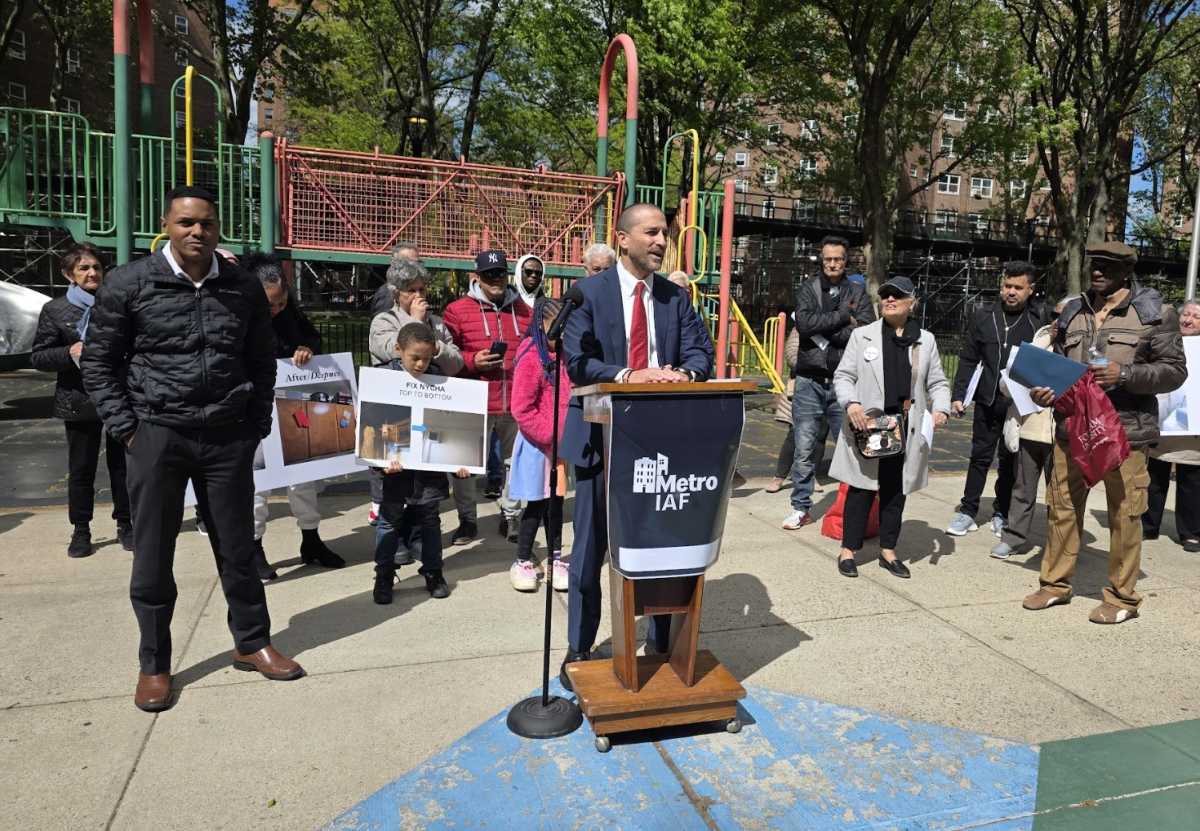
The Ombudsperson Call Center (OCC) is an important source of oversight for NYCHA, addressing mold and water leaks in every borough. The problem is that few people know it exists.
The position was created out of the landmark 2013 class action lawsuit, “Baez v. New York City Housing Authority.”
In that case, residents of the Bronx’s Melrose and Webster Houses were among the defendants who alleged that NYCHA knew about the hazards of mold and water leaks in buildings, especially for asthmatic residents, but failed to take swift action.
Even after the settlement, tenants and local advocates, including Metro IAF affiliate South Bronx Churches, saw the need for an independent NYCHA watchdog.
They secured an agreement in 2018 that established the OCC and made it available to residents across all NYCHA and PACT developments. Since its 2019 launch, the OCC has addressed complaints regarding more than 17,000 unique apartments and received more than 100,000 calls.
Of those, 26% of complaints came from Bronx residents, 28% from Brooklyn, 39% from Manhattan and only 7% each from Queens and Staten Island, highlighting the overall need for more residents to be aware of the office’s powers, according to an OCC report.
While OCC staffers can push NYCHA to restart unfinished work and keep the process moving, it is a follow-up measure —not a first call. A statement on the website advises, “Do not contact the OCC unless you have first contacted your property manager about the mold or leak problem and are dissatisfied with the response.”
But when they do contact the office of court-appointed ombudsperson, César de Castro, who has more than 20 years’ experience in criminal defense and commercial litigation, he pledged that his office is ready and responsive.
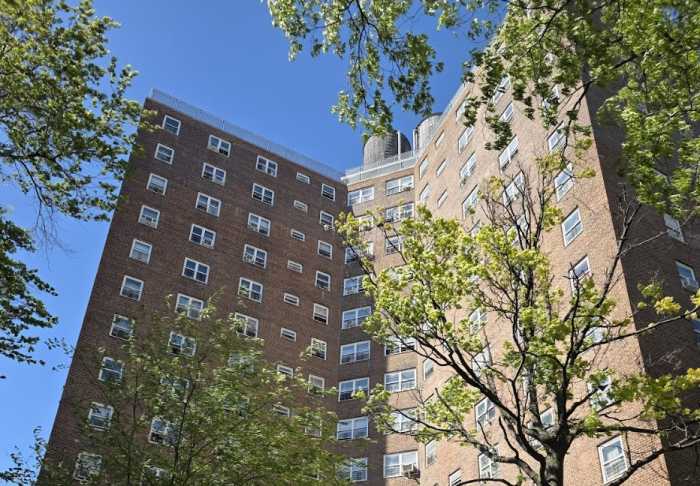
At a May 3 South Bronx event at Melrose Houses, de Castro said his office has resolved about 30,000 residents’ mold and leak issues — but that figure should be closer to 100,000.
“Nobody knows about us,” de Castro told NYCHA tenants and local housing leaders. “We can do more, and we will do more. Thirty thousand apartments is not enough.”
As he spoke, someone in the crowd said, “They don’t want us to know” — a sign of residents’ distrust of their landlord.
de Castro encouraged residents to spread the word about his office and post flyers in their buildings. Instead of suffering in poor conditions for months or even years, tenants should wait no more than two weeks for NYCHA to start acting on a mold or leak complaint before calling his office, he said.
When tenants call or submit the online complaint form, they will usually receive a response within one day, de Castro said.
Most importantly, in his court-appointed role, NYCHA can’t appeal or deny his orders, he added.
“We are very, very busy, but we are ready for more work.”
Rep. Ritchie Torres spoke at the event, saying that the OCC provides critical independent oversight for NYCHA because, unlike private tenants, public housing tenants cannot call 311 or HPD to report problems.
Instead, “You’re expected to call NYCHA regarding your complaint against NYCHA,” Torres said. “We know from experience that NYCHA cannot be trusted to police itself.”
He said de Castro was “the best advocate that you’ve never heard of” and that residents can trust his office to get the necessary work done.
“We know that NYCHA often ignores tenants, and NYCHA even ignores elected officials. But NYCHA cannot ignore the OCC,” Torres said.
After the event, de Castro told the Bronx Times that his office can and should be expanded to meet whatever capacity is needed.
Though his office is “limited in some respects” to addressing only mold and leaks, he said it could easily be scaled up to address other complaints, such as pests, elevator outages and more. But not enough are even using the OCC in its current capacity.
de Castro said his office is crucial because of the “massive trust problem” between residents and NYCHA.
Reports from his office show that NYCHA buildings that privatize under PACT submit few complaints, averaging only about nine per month, and just 534 total since the OCC began covering PACT properties in 2022.
PACT partners “are generally responsive” to the OCC and don’t require as much escalation or intervention as with NYCHA, the 2025 annual report said.
It also stated that in most cases, complaints decrease after a building completes conversion to PACT.
Bernard Smith, a resident of Morris Houses at 169th and Washington Ave. for 40 years, is among those who have used the OCC — and become a believer.
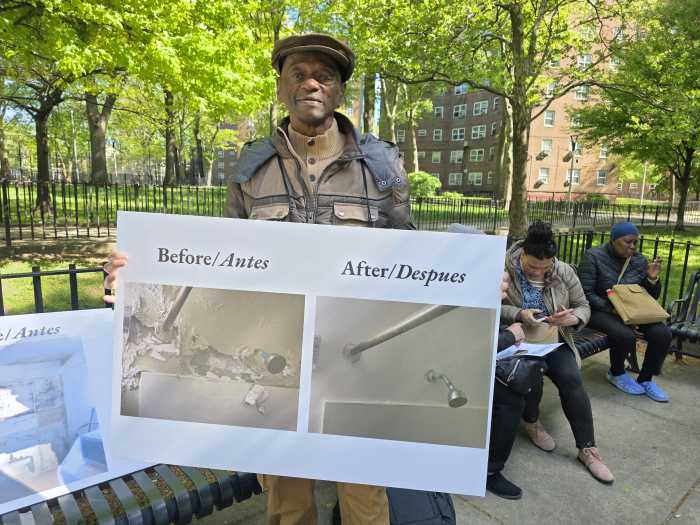
His apartment was finally repaired three years ago after he waited more than six months for NYCHA’s response, he told the Bronx Times.
Smith said he had all but given up but found out about the OCC from South Bronx church leaders. He called, and before he knew it, workers were in and out of his apartment “like Grand Central,” he said.
Today, Smith said the plaster is starting to bubble again — so he’s trying in vain to contact NYCHA as required before contacting the OCC. “It’s almost like a routine with NYCHA.”
Smith said the OCC is “the best thing since sliced bread.”
“They take care of business,” he said. “It’s a lot more I wish the OCC could do.”
Metro IAF is now pushing the Mamdani administration to do just that, holding him accountable for what they said was a campaign promise to expand the OCC with a $102 million investment, enabling it to handle complaints beyond mold and leaks.
At an October 2025 Metro IAF event with the mayoral candidates, Mamdani committed to the organization’s overall agenda. Organization leaders have since held productive talks with the administration and are optimistic about a substantial expansion of the OCC, a spokesperson told the Bronx Times.
Mamdani said at the campaign event that he has long seen NYCHA accountability tossed around between the city, state and federal government. But today, the city cannot rely on the Trump administration and must pursue other means of keeping public housing up to standard, such as increasing subsidies and accountability, he said.
A statement from the the mayor’s office to the Bronx Times said he “has been clear that NYCHA residents are at the center of this administration’s housing agenda. We are grateful for our partnership with organizations like Metro IAF and look forward to continuing to work together to strengthen oversight and deepen accountability for all New Yorkers who call NYCHA home.”
Residents can reach the OCC at 1-888-341-7152 or ombnyc.com.