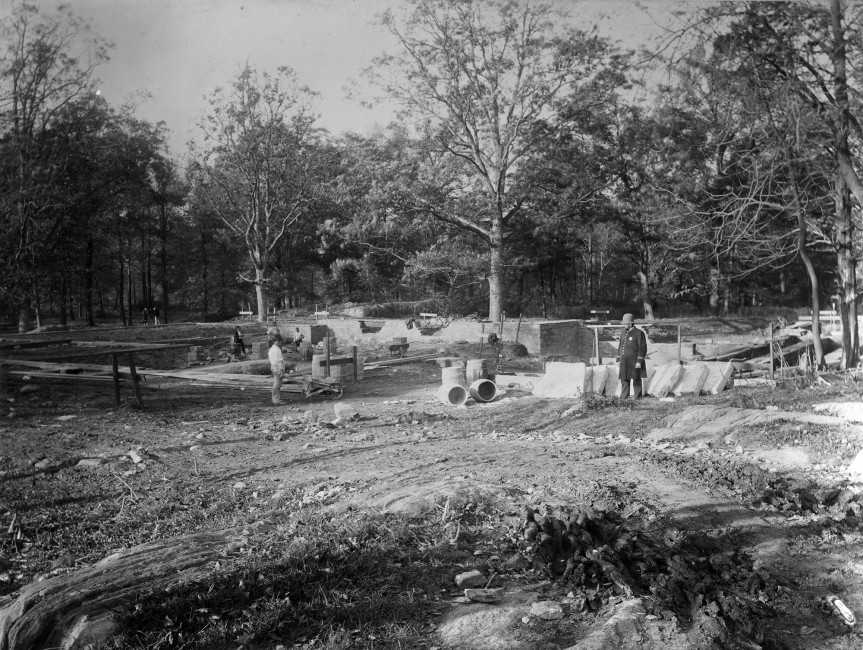
Before Arthur Avenue became known for its bakeries, butcher shops and restaurants, demand for skilled construction workers helped draw Italian immigrants to Belmont. Experienced Italian masons and other laborers helped build the Bronx Zoo and New York Botanical Garden, settling near their work and establishing the community that became the Bronx’s Little Italy.
October’s Italian American Heritage Month offers a chance to revisit those beginnings and the workers whose contributions remain visible both inside the zoo’s gates and along the neighborhood’s streets.
Tony Murante, a local Bronx historian and educator, has traced the area’s transformation from estates and industrial properties into public parkland and growing residential communities.
Among its influential landowners were the Lorillards, whose tobacco business operated along the Bronx River. Their property included mills, homes, gardens and woodlands. The family’s surviving stone tobacco mill stands within the New York Botanical Garden, a reminder of the area’s industrial past.
As New York grew, efforts to preserve land for public recreation helped transform that landscape. The Botanical Garden was established in 1891, and the Bronx Zoo opened in 1899. According to Murante, zoo directors specifically sought the skills of Italian masons to help construct its buildings.
“The zoo’s directors reached out to the Italian masons to help develop many of the zoo’s sites,” Murante said. “As a result, the masons helped develop the popular Italian community of ‘Belmont.’”
Their craftsmanship contributed to a zoo whose historic architectural center featured grand Beaux Arts buildings and formal landscaped terraces. Designed by architects Heins & La Farge, the buildings incorporated limestone, brick and terra cotta, with decorative details reflecting the animals housed inside.
Those workers also needed somewhere to live. According to the Wildlife Conservation Society’s archives, Italian immigrants settled in Belmont to take jobs at the zoo and Botanical Garden. Expanding train service also helped attract residents to the area.
Families stayed, opened businesses and established a parish. Our Lady of Mount Carmel held its first Mass in a storefront in 1906, saving Belmont’s Italian residents the long trip to attend services at St. Philip Neri on the Grand Concourse at East 202nd Street in Bedford Park.
The parish became a center of neighborhood life, bringing families together through their shared faith and language. As the community grew around it, the church offered a place to worship, educate children and help neighbors.

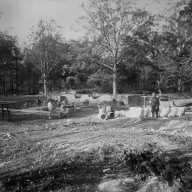
Visitors to the zoo can still see what some of those workers built. Italian immigrant laborers broke ground on the Reptile House on Aug. 22, 1898. Winter weather delayed its completion until the following year. WCS identifies it as the zoo’s oldest surviving building.
A similar connection between work and nearby settlement developed around the Jerome Park Reservoir. Italian and Irish immigrants worked on the project, completed in 1906, and settled in Bedford Park.
At the zoo, Italian workers also helped reassemble the Rockefeller Fountain after it was shipped from Italy in numbered boxes. Originally installed in Como, the fountain stood near the zoo’s Sea Lion Pool beginning in 1904 before being moved to its present location in 1910.
Decades later, another landmark opened in the neighborhood: the Arthur Avenue Retail Market. Opened in October 1940, it gave local pushcart vendors an indoor place to sell their goods. Mayor Fiorello La Guardia, himself the son of an Italian immigrant, established the market as part of a citywide effort to ease street and sidewalk congestion.
Many of the Italian shops around Arthur Avenue have remained in the same families for generations, with descendants carrying on the businesses their relatives started.
That tradition is celebrated each year at the Ferragosto festival, when local shops and restaurants bring their food and merchandise onto Arthur Avenue. Vendors have lined the stretch between East 184th and East 187th streets, showcasing their businesses as patrons gather to shop, eat and enjoy Italian music and entertainment. The annual celebration brings longtime customers, neighbors and visitors together in the streets of Little Italy.
Albanian, Mexican and other immigrant families have also made their homes in Belmont, bringing their own food, businesses and traditions to the neighborhood.
For people visiting Arthur Avenue today, the zoo and Botanical Garden may be another stop on a day out. For many of the Italian immigrants who settled there, those institutions were the reason they came. The Belmont neighborhood they made their home is still known as Little Italy more than a century later.