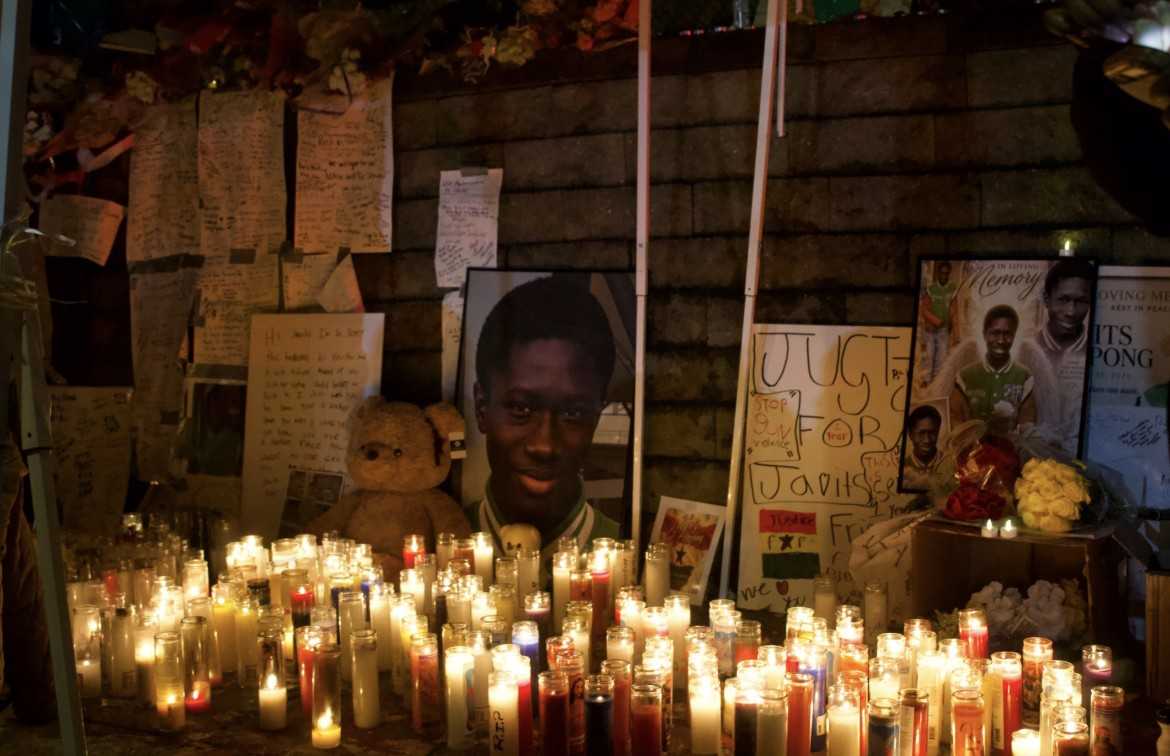
Families and community members marched from Lou Gehrig Plaza, along Melrose and Park Avenue, to the candlelight vigil for the late Javits Frimpong, a 15-year-old Ghanaian teenager who was shot and killed in broad daylight on 171 Street and Claremont Avenue while on his way to school on Oct. 29.
Three members of Frimpong’s family led the march as Bronx residents and members of the Ghanaian and African diaspora took to the streets to mourn his death and demand accountability. They united to stand against gun violence and bullying in schools, calling for greater investment in resources to make streets safer and demanding a justice system investigation into the killing of Frimpong.
The event was organized by the African Advisory Council, The National Council of Ghanaian Association and National Ghana Parade Council.
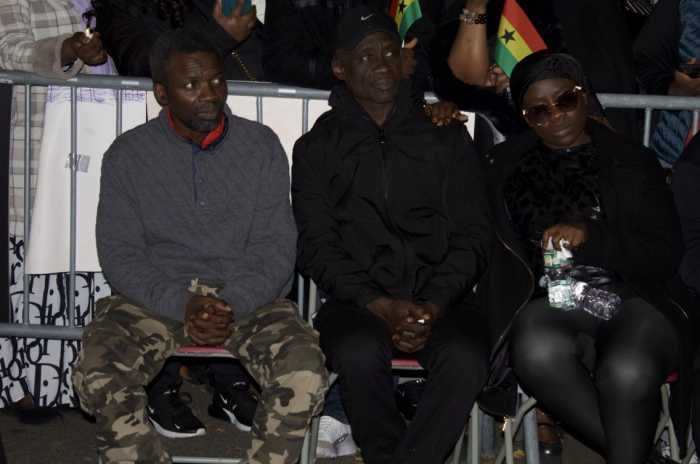
Frimpong’s father, Thomas Frimpong, was present at the candlelight vigil. Natalie Jackson, a representative of attorney Ben Crump, whose office represents Javits Frimpong’s family said they want justice for their son.
“They want to know the truth about what happened to Javits,” Jackson said. “And they want an assurance that no other family will ever have to suffer the way that this family has had to suffer. We ask anyone with any information to contact the New York Police Department”
A teenage suspect is currently in police custody, sources close to the investigation told amNewYork on Wednesday, Nov. 11.
The 17-year-old suspect was taken into custody and is being questioned at the 42nd Precinct; charges are pending, the sources said.
Frimpong’s mother was granted a visa from Ghana after Mayor Zohran Mamdani made a phone call to President Donald Trump that will allow her to attend the funeral to mourn the loss of her child.
The funeral arrangements have yet to be revealed, but it is said to be announced by Attorney Crump office this upcoming week.
Elected officials also demand justice for Javits killing.
“Too many of our communities are offered guns and handcuffs, and we failed him again. The people who killed him need to be taken off the street and face accountability now,” said Jumaane Williams, New York City Public Advocate. “So give our communities the tools that they need to teach our young people to communicate differently. So they don’t pick up guns to communicate and have permanent solutions for very temporary problems.”
“There are no guns made in the Bronx. We have a demonic obsession with guns in this country. And I’m hoping at some point we can break hold,” Williams said, referring to the iron pipeline that connects the I-95 to Southern states with less strict gun regulation that makes it easier for gun smuggling into the Bronx and across New York City.
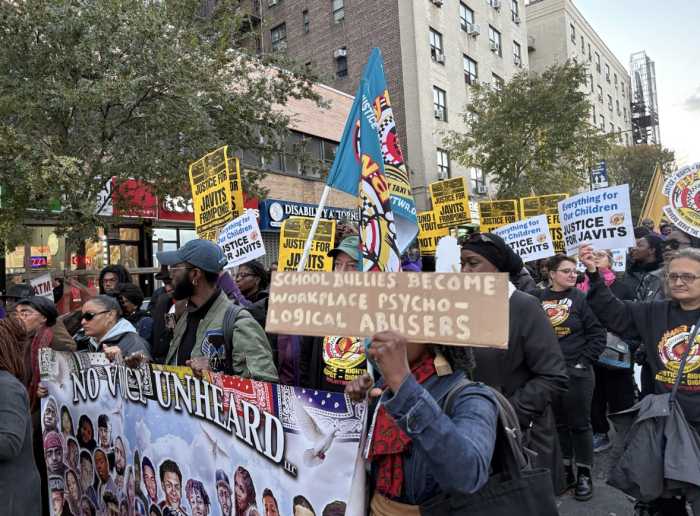
Sidiki Donzo, the Chairman of the African Advisory Council (AAC) to the Bronx Borough President said all they’re asking for is justice.
Donzo said currently his team is working on renaming 171 street and Claremont Avenue after Frimpong. He also wants to put out a resolution to the city council to criminalize bullying in schools.
“That resolution would not rest until that resolution passed in the City Council,” he said.
Frimpong’s classmates spoke to support the grieving family. One of his classmates revealed she received messages of death threats after opening up about his killing to the public.
“He lost his voice, but I’m alive and breathing and I’ll be fighting for his voice,” she said.
Frimpong’s classmates called on the NYPD to expedite its investigation and identify those responsible for his killing. They also raised concerns about how policing disproportionately affects communities of color and the barriers they face in seeking justice.
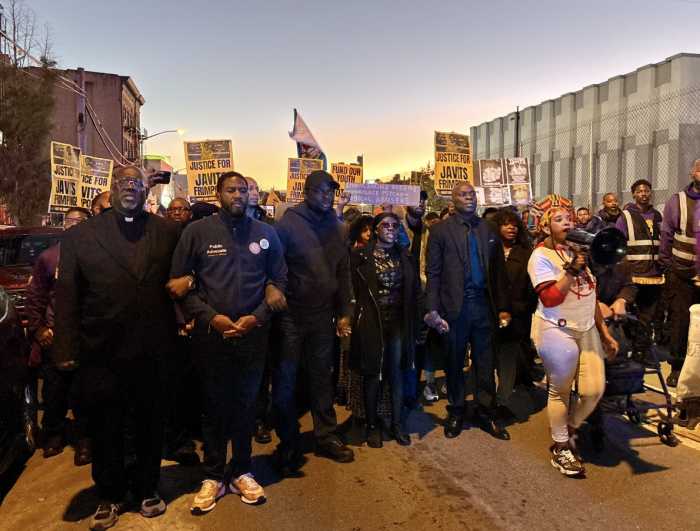
“I want an end to gun violence. I want an end to bullying. I want an end to racism,” said a 21-year old young man who lives in the Bronx and immigrated from Nigeria. “I feel the pain as an immigrant. Enough is enough. I am a concerned community member. About the gun violence, about the bullying, about the society, and about the negligence of the government to respond to when it comes to people of color. When something happens they don’t really take action.”
Stella Aboagye marched with both arms tied around her younger sister and son. A mother of four, Aboagye said she was also bullied as a student in public school because she was a Ghanaian immigrant.
“We need justice and the bullying needs to stop,” Aboagye said. “I was scared because I have four boys. I was terrified because that could have been any of my sons.”