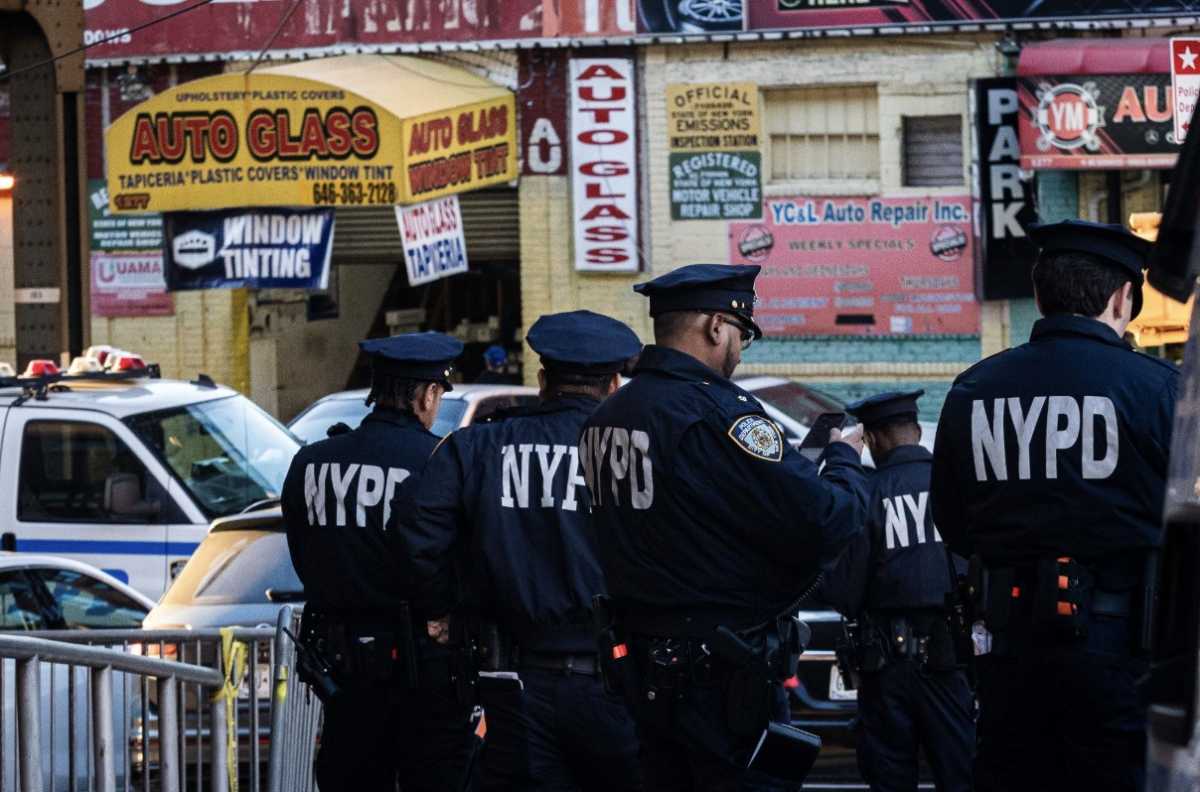
The Bronx is a considerably safer place than it was during New York City’s crime peak.
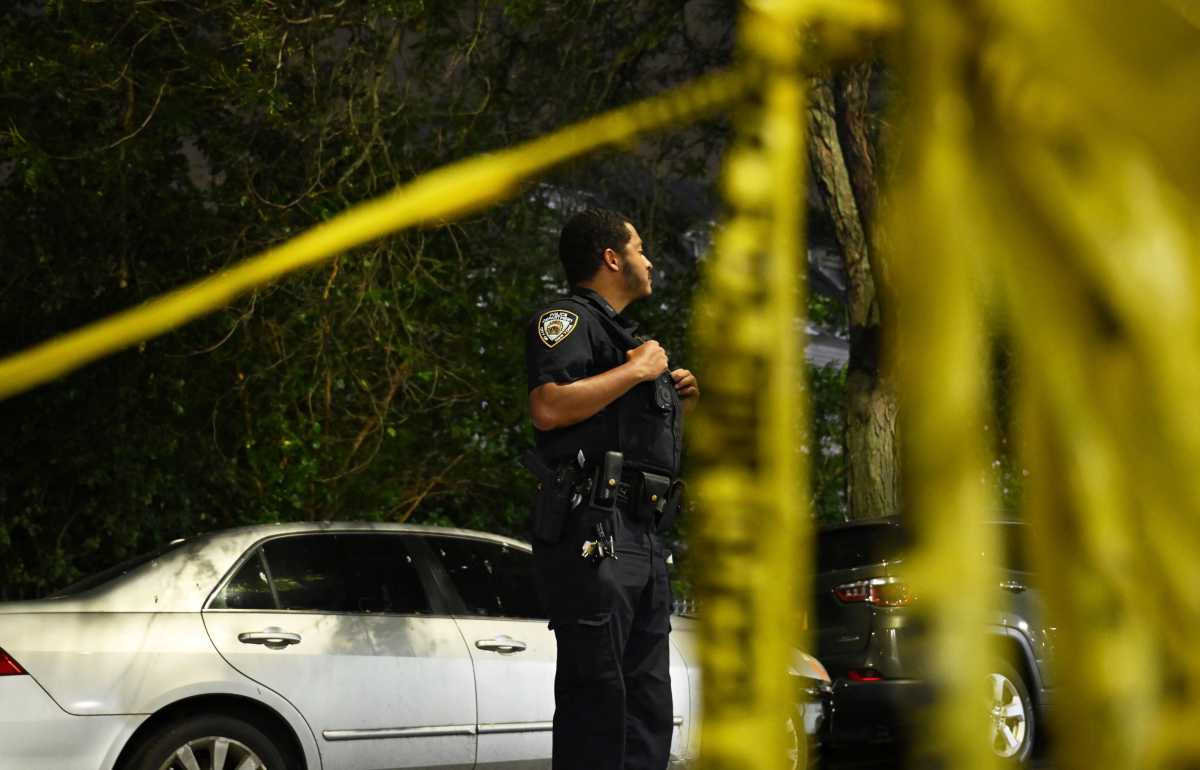
At the beginning of November, the NYPD reported the lowest number of shootings, murders, and robberies in the city’s recorded history for the first 10 months of 2026. The Bronx recorded the steepest decline, with major crimes falling by 11.6%, compared to the same period last year.
While crime has steadily dropped across the city in the last three decades, particularly in the Bronx, not every resident perceives public safety in the same way.
Although the Bronx is not the once-dangerous borough that was immortalized through the media decades ago, major crime still remains concentrated in particular neighborhoods. Some neighborhoods continue to top the city’s data with felony assaults, robberies, burglaries, and other serious offenses.
In others, residents may be less concerned about violent crime and more concerned about quality-of-life conditions such as homelessness and open drug use, or basic community necessities including proper lighting and clean streets.
Despite the Bronx being safer, residents who spoke to the Bronx Times still describe feeling unsafe, and community organizers are trying to help their neighbors bridge the gap between being safe and feeling safe.
A borough of very different neighborhoods
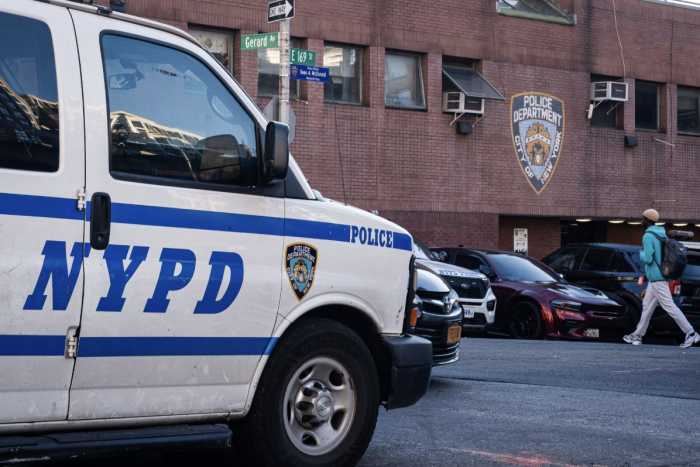
Neither the Bronx, nor each neighborhood, experiences crime uniformly.
The transformation is particularly stark in the 40th Precinct, which covers Mott Haven, Melrose and Port Morris. The precinct recorded an 84.7% decline in murders in 2025 compared with 1990, when New York City reached its homicide peak.
The trend in the Bronx reflects a larger, citywide crime decline, resulting in neighborhoods that experienced some of the city’s most severe violence during the 1980s and early 1990s seeing dramatic reductions in major crimes.
But the decline has not changed disparities between neighborhoods — or the underlying conditions that shape how residents perceive their public safety.
In some parts of the borough, serious felony crime remains a constant concern. In others, residents may be less concerned about violent crime and more focused on quality-of-life issues that make them feel unsafe such as lack of street lights and trash cans, or even homelessness and open drug use.
The contrast is particularly apparent in the 45th Precinct, which covers the northeast Bronx neighborhood of Co-op City, City Island, Throggs Neck, Country Club, and Pelham Bay.
The neighborhoods the precinct patrols are generally considered among the safer areas of the Bronx. NYPD data shows that the 45th Precinct recorded 11 murders in 2025, one fewer than the 40th Precinct. But the 45th covers a substantially larger area, including roughly seven miles of parkland and more than 10 miles of waterfront.
Its neighborhoods also differ in their physical and socioeconomic makeup from many of the communities covered by precincts farther south and west.
At a recent 45th Precinct Community Council meeting, many of the concerns raised by residents of Co-op City, where the meeting was held, focused on derelict vehicles, illegal parking and traffic around Bay Plaza Mall. Residents also raised more serious concerns about gun confiscation.
Throggs Neck, Country Club and Pelham Bay are predominantly low-density neighborhoods with high rates of homeownership. The neighborhoods vary in household income, but they generally have fewer of the concentrated economic and housing instability associated with some of the Bronx neighborhoods that experience higher levels of serious crime.
James Innis, senior organizer of public safety for New York Communities for Change, said he always draws parallels between crime and poverty when speaking with residents. Despite growing up at the peak of New York City’s crime wave, he remembered feeling safe as a child, when kids played outside until the streetlights came on, with neighbors keeping an eye out for one another.
Innis said many of the crimes residents are most concerned about are tied to people experiencing poverty, such as shoplifting, rather than the violent crimes that often dominate perceptions of public safety. While crime and the aggressive broken windows policing that followed were more visible when he was growing up in the 1980s and ’90s, the conditions underlying much of that crime have become less visible.
“I didn’t see the poverty that I grew up in as crime and violence,” Innis said. “I just saw it as a neighborhood. Now that I’m older, I’m seeing that’s not normal. That’s not how everybody lives.”
Knakisha Candanedo, an organizer with Friends of Echo Park, has seen that firsthand in the Fordham park where her community group works. Residents first approached the group with concerns about homeless people staying in the park and openly using drugs. Some said they no longer felt comfortable bringing their children there, particularly after finding needles on the ground.
Instead of looking for ways to push people out of the park, Candanedo and her colleagues in Friends of Echo Park have been looking for ways to connect residents with support services, eventually winning a grant with Fordham University to collaborate with experts, stakeholders, and the community to come up with strategies to make the park accessible for all.
Through that work, Candanedo said she has come to understand the extent of support many unhoused people need, including housing, substance-use treatment and counseling. Without those wraparound services, she said, people risk falling back into the same circumstances that left them on the streets in the first place.
Still, she understands why some residents feel uneasy and how it triggers fears that they might become violent or pose a threat, she said.
“We just have this natural fear that, oh, if we see somebody like that in the street, are they gonna flip? Are they gonna do something? Are they gonna rob me? Are they gonna hurt me?” Candanedo said. “I think it’s just a natural knee-jerk reaction.”
But she said those fears also exist within a broader context of economic hardship. The Bronx, she said, is often painted as the poorest and most underserved borough, while many residents are struggling with their own economic pressures.
“When you got a lot of people who are just struggling just to survive and get by, and you see so much happening all around you, a lot of anger, a lot of frustration, a lot of hostility,” she said.
“These aren’t criminals. These are just everyday working-class people who are just frustrated and fed up with what they got to deal with. It makes people nervous, and then when you have people who are just doing really stupid stuff, it doesn’t make it any easier.”
How the Bronx became a symbol of urban decline
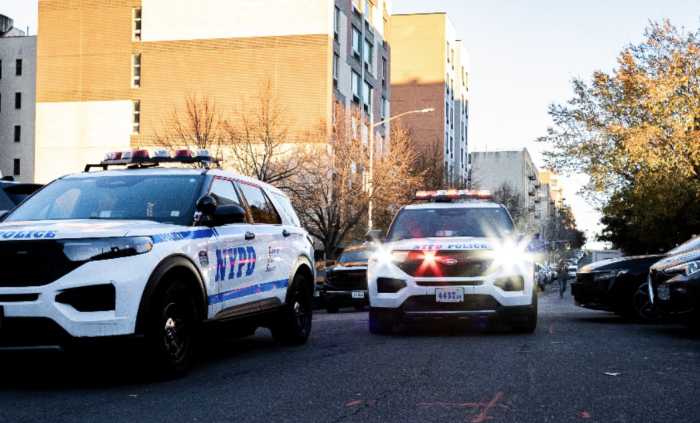
For decades, the Bronx held a reputation associated with crime, violence and urban decay.
That reputation was shaped by decades of overlapping economic and policy decisions beginning in the post-war era, when the Bronx underwent major demographic changes as Black and Puerto Rican New Yorkers moved into neighborhoods that white Bronxites had left for the suburbs.
At the same time, the federal Home Owners Loan Corporation poorly rated neighborhoods with larger concentrations of people of color through discriminatory redlining practices. The Bronx was designated as a declining borough,and banks denied applicants in the borough loans, federal mortgage and fire insurance.
The construction of the Cross-Bronx Expressway split the Bronx in half, further segregating and devaluing the neighborhoods surrounding the highway. The all-around disinvestment worsened the already aging buildings, prompting landlords to pay arsonists to burn down their buildings for insurance payouts— although residents were mainly believed to be responsible.
Citywide austerity measures during the fiscal crisis further squeezed the Bronx, cutting essential services such as firehouses and policemen, along with social services, to neighborhoods not deemed worthy of saving.
The death spiral of urban renewal, redlining, and basic service cutbacks led to a rise not only in crime, but also in the public perception of the Bronx being an unsafe place controlled by criminals and drug addicts. The 1981 film “Fort Apache, The Bronx” immortalized that stereotype for many. The crime drama starring Paul Newman as a cop working out of the 41st Precinct depicted police officers as living in a Wild West-type environment where establishing law and order was an often uphill and violent battle.
Yet real life in the Bronx was bad enough back then. By the 1970s and 1980s, images of burned-out buildings and rubble-filled, vacant lots had become synonymous with the Bronx. The crack epidemic hit Black and Brown neighborhoods, like the South Bronx.
Abandonment and arson devastated neighborhoods across the South Bronx. In Crotona Park East alone, 15,000 housing units were lost to fires and the neighborhood’s population fell by 75%.
While buildings burned and entire blocks emptied, crime and drug use rose. By the mid-1970s, the Bronx’s murder rate tripled within five years The South Bronx had become a national symbol of urban decline — an image reinforced by news coverage, photographs and films.
The conditions that led to the decline were not confined to one cause, but neither was the Bronx’s recovery.
For Innis, that disinvestment is still visible in how connected residents are to one another and to the resources in their neighborhoods. He said safety is not created only by police, but by residents knowing and looking out for one another.
“I tell them your community will only be safe and feel safe if it’s an actual community, and if we’re organized and we’re connected to one another, because that’s where that safety comes from,” Innis said. “It’s knowing your actual neighbors and knowing that you can reach out to them if something is wrong.”