For Bronx small businesses and landlords, complying with the city’s climate law, Local Law 97, is a huge challenge. But one Riverdale resident tenant and owner found a solution right on her own rooftop.
Emily Weisberg owns eight small commercial buildings in the Bronx, which have been in her family for generations, and also runs the Moss Cafe in Riverdale while leasing the space. She said she took over property management with the advantage of several long-term commercial tenants but little experience with everything required of a landlord.
“Managing real estate is my job, even if it isn’t my primary job,” she told the Bronx Times.
Local Law 97 took effect in 2019 with the ambitious goal of reducing emissions from buildings over 25,000 square feet by 40% by 2030, leading to net zero by 2050. But some of the city’s own LL97 websites are lengthy pages of links, forms, calculators, rules and exceptions, and though the city offers assistance programs, the process is daunting for most.

The law has sent many landlords scrambling to retrofit their aging buildings, purchase carbon offsets or other fixes that can be costly. Owners also face an annual May 1 deadline to file reports outlining their compliance. Though the city recently announced that 92% of Bronx building owners filed the necessary reports showing their 2024 compliance, among a citywide average of 93%, some are still receiving fines for not doing so.
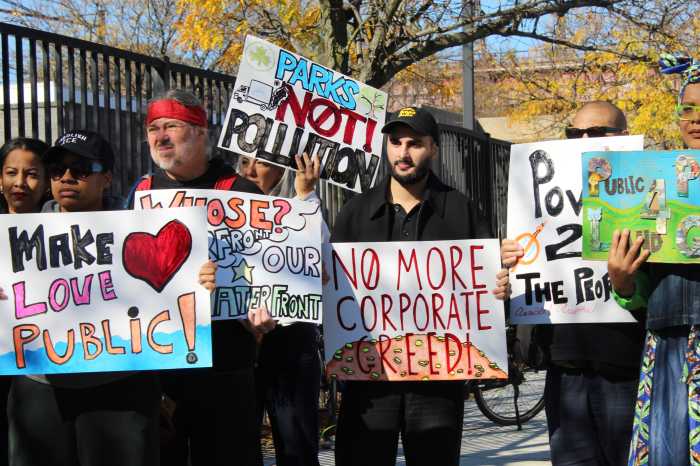
Since its inception, LL97 has sparked debate and even protests throughout the city, with some opponents calling it a punitive “unfunded mandate.”

In Weisberg’s case, she knew one of her buildings needed a new roof in order to comply with the law, but she also worried about the costs and about disrupting the longtime tenants. Minus a multimillion-dollar investment, she said she didn’t think the building could really become more energy-efficient.
Already facing high property taxes and operating costs, “It all just felt very overwhelming,” she said.
The power of community solar
Through the small landlord grapevine, Weisberg heard about Bronx-based Fieldston Power, a company that has worked to greenify old buildings in neighborhoods like West Farms, Kingsbridge, Harlem and Washington Heights.
Adam Zucker, Bronx native and co-founder of Fieldston Power, said in a statement to the Bronx Times that Weisberg’s predicament is common.
“Many Bronx building owners are facing the same challenge: aging infrastructure, rising operating costs and increasing pressure to comply with Local Law 97. Historically, making major energy upgrades required significant upfront capital, which made these projects difficult for many owners to pursue,” he said.
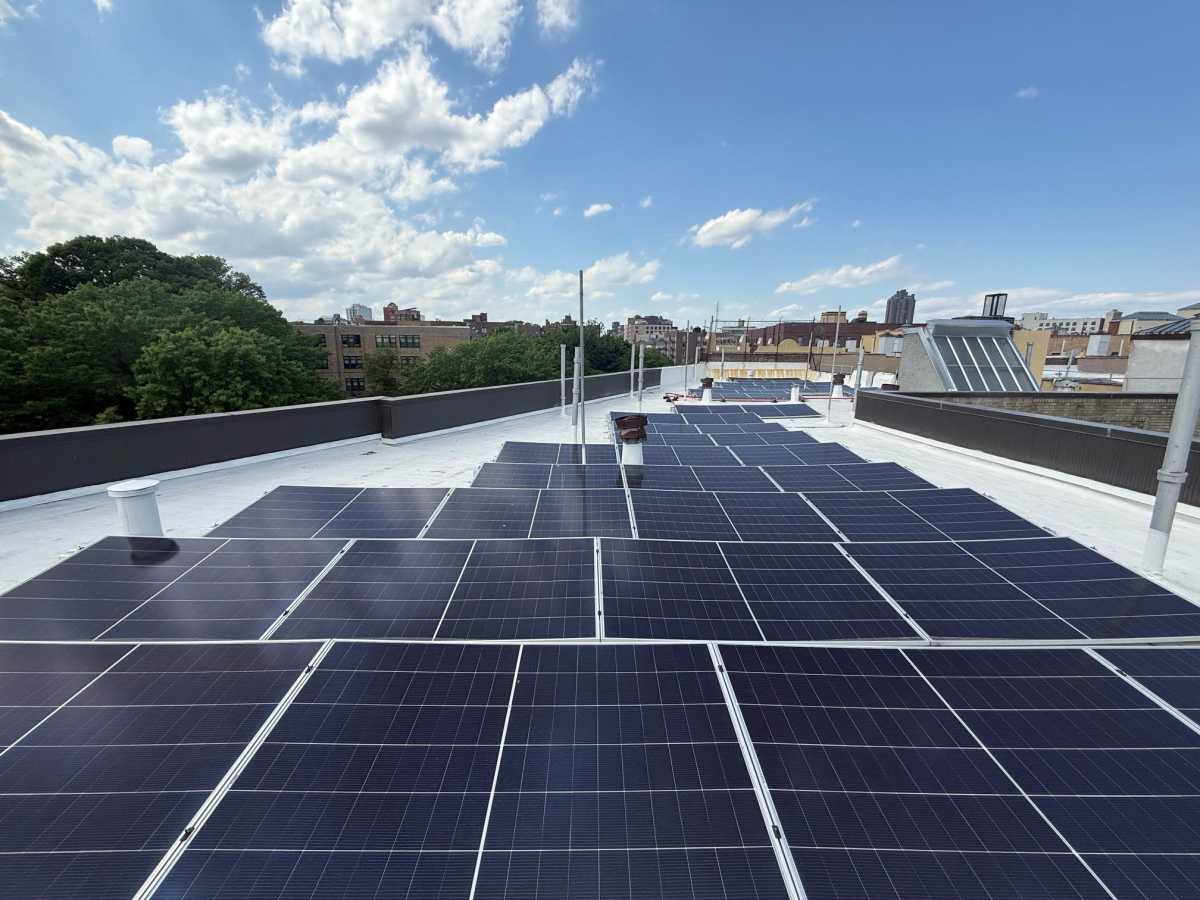
Zucker’s company finances, builds, owns and operates solar infrastructure atop other owners’ roofs — often making major repairs first, he said.
“For building owners, it’s a practical way to improve infrastructure, reduce emissions exposure, lower operating costs, and make progress toward Local Law 97 compliance. More broadly, it’s an example of how private investment can help modernize New York City’s aging housing stock while creating benefits for both property owners and residents.”
At first, Weisberg said she was hesitant, wondering, “What’s the catch?” But Fieldston Power did cover the entire cost of replacing the roof membrane and installing solar panels and now, the company essentially rents the roof from her to operate the community solar grid.
Weisberg then started subscribing at a discount to the power generated atop her building — which also flows to the space she rents for the Moss Cafe. She estimated savings of around 20% compared to last year and said community solar creates “a cool circular economic loop that I think is really special.”
Weisberg said that while the process seemed complicated on Fieldston’s end, it was “frictionless” and cost-free for her. “It was such a relief. I didn’t have to be the expert.”
Overall, Weisberg said she fully supports the goals of LL97. “I think it’s important for us to take responsibility for greening the city, and I think it’s a great initiative,” she said. However, “It’s a massive job, and there’s no funding for it at all.”
She said the costs of compliance — and the requirements to prove it — are probably challenging even for massive companies. But Weisberg said she heard of other small landlords who just sold their properties rather than figure it out. “It falls entirely on the landlord to do it,” she said.
From the outside, Weisberg said she may seem like a smooth success story. However, “Just like going to the gas station or grocery store is harder and harder, it’s also harder to run a business,” she said.
“It’s not like asset owners have barrels of cash incoming all the time. The expenses are so high for everything to stay operational, there has to be funding for these things.”
Weisberg said she remains cautiously optimistic about the future of her business and rental properties in the Bronx. She’s focused on keeping her non-corporate commercial tenants — no need for “scary” private equity investors — and reducing emissions right in her neighborhood.
As an owner, “There will always be new policies and more to learn,” she said. But given her unique experience, “I really do understand both sides in older buildings in the Bronx.”
Reach Emily Swanson at eswanson@schnepsmedia.com or (646) 717-0015. For more coverage, subscribe to our newsletter and follow us on Twitter, Facebook and Instagram!