The New York City Department of Environmental Protection (DEP) announced that work will begin this fall on the Tibbetts Brook “daylighting” project, one of the city’s largest green infrastructure investments.
The project will bring the brook above ground for over a mile between Hester and Piero’s Mill Pond to West 230th Street, creating new public parkland and improving local water quality.
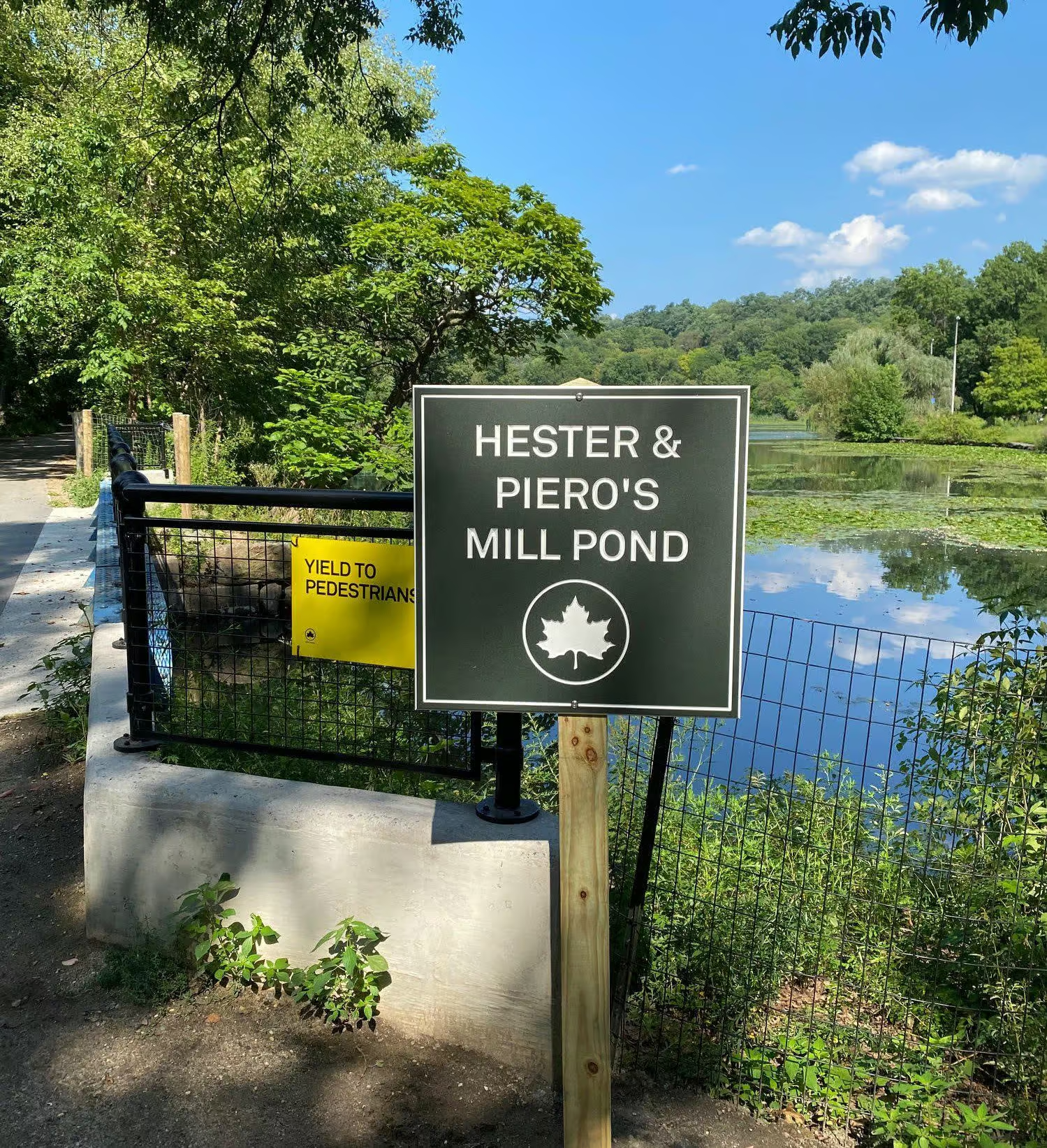
DEP announced the final steps towards beginning the work. It recently awarded a $149.5 million construction contract and reached an agreement with the Metropolitan Transportation Authority (MTA) for creating a new conduit for the brook beneath MTA property.
Local residents and organizations, including The Van Cortlandt Park Alliance and Bronx Council for Environmental Quality, have pushed for this work since the 1990s and expressed excitement about it starting soon.
“The daylighting of Tibbetts Brook has been a dream of the Bronx Council for Environmental Quality for the past 30 years,” said Karen Argenti, who served on the Tibbetts Advisory Group, in a statement.
“This project turns a vacant, garbage-strewn railroad into a natural area with water and green features. The environmental benefits and biodiversity will mitigate critical climate challenges and cool the surrounding area. We are so excited that this next step will get us closer to the completion.”
Tibbetts Brook is a small but significant waterway that begins in Yonkers and flows south into Van Cortlandt Park. It was dammed in the 18th century to create the lake within the park, and in 1912, part of the brook was buried and funneled into the city sewer system at a rate of at least 4 to 5 million gallons per day in dry weather. The water is treated at Wards Island, even though it flowed in cleanly.

The daylighting project will restore the brook’s natural connectivity to the Harlem River rather than the sewers, with several accompanying benefits.
For one, it will result in a new path for pedestrians and cyclists by extending the Harlem River-Putnam Greenway.
It will also remove clean water from the sewer system and reduce sewer overflow into the Harlem River during storms by as much as 215 million gallons per year, according to DEP. This action improves water quality while also eliminating energy costs and emissions required to treat brook water that becomes wastewater.
“We’re proud to mark these important milestones on the Tibbetts Brook daylighting project —DEP’s most ambitious green infrastructure project — and I am grateful to the local community, NYC Parks and the MTA for their partnership,” said DEP Commissioner Lisa F. Garcia in a statement. “By restoring the brook above ground, we’re reducing flooding and relieving pressure on our sewers, especially during heavy rainstorms, to create a cleaner, healthier Harlem River.”
Reach Emily Swanson at eswanson@schnepsmedia.com or (646) 717-0015. For more coverage, subscribe to our newsletter and follow us on Twitter, Facebook and Instagram!