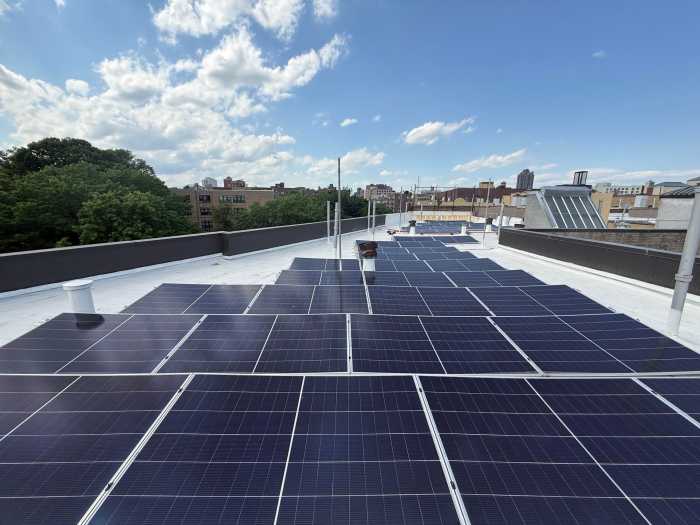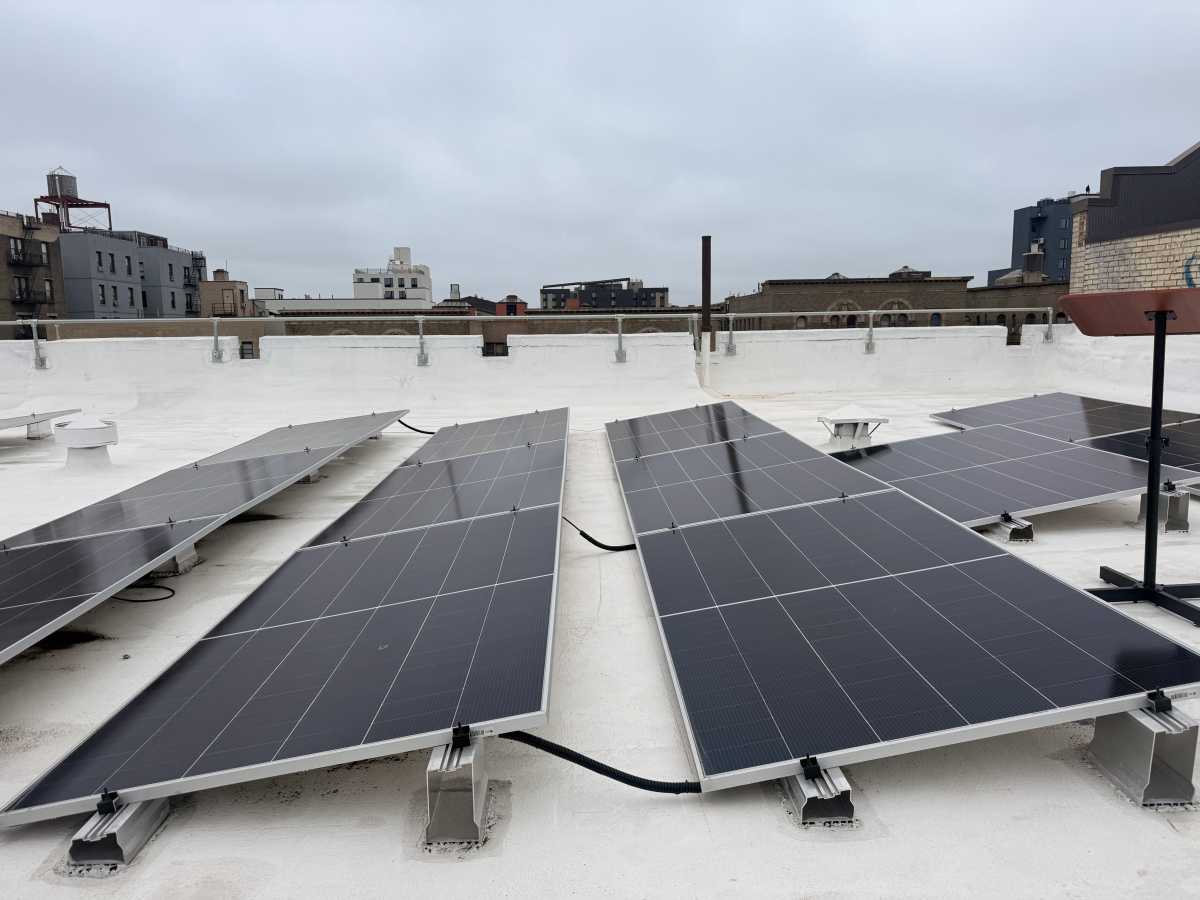
Bronx-based Fieldston Power announced July 7 the completion of a community distributed solar network serving 72 rent-stabilized buildings, including 48 in the Bronx, helping landlords comply with Local Law 97 regulations, while lowering electricity costs for tenants.
The company also unveiled a $200 million development pipeline to expand the model to roughly 1,000 additional rooftops over the next four years, with much of the investment focused on the Bronx. Co-founder Dr. Alex Weisberg said they have already purchased 72,000 solar panels and 75,000 inverters and optimizers to support the expansion.
The completed network generates more than 3.3 megawatts of solar capacity— enough to meet the peak electricity demand of about 2,000 New York City apartments on a hot summer day—and provides community solar credits to more than 550 low-income households.
Participating households receive discounts of up to 20% on their monthly Con Edison electricity bills, amounting to roughly $90,000 in annual savings, according to the company.
Many landlords may believe that Fieldston Power’s pitch may sound too good to be true. Rather than requiring property owners to front money for costly building upgrades, Fieldston leases rooftop space from landlords and finances the design, construction and operation of the systems.
“We designed a model where we’d operate as long-term energy tenants, we would finance the roof replacement, finance the solar installation, and do all the infrastructure improvements without requiring any upfront capital investment from any of our landlords,” said co-founder Adam Zucker.
Meeting Local Law 97 rules
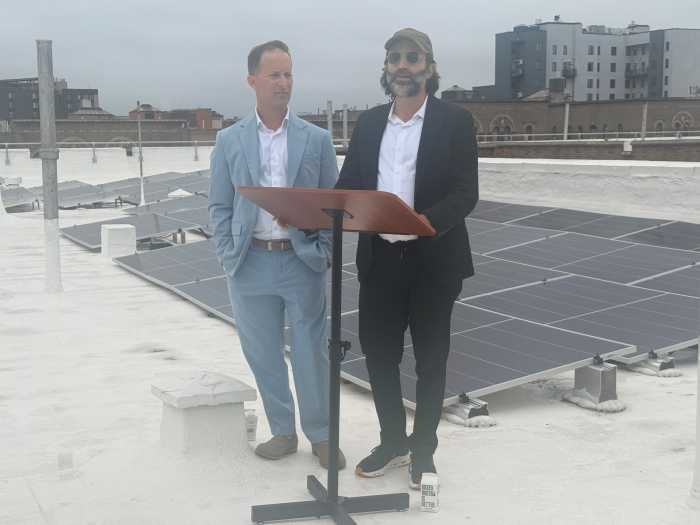
distributed solar network serving more than 70 rent-stabilized properties in New York City,
including 48 in the Bronx. Photo by Marina Samuel
Fieldston’s business model comes as many landlords grapple with the cost of complying with Local Law 97, New York City’s landmark climate law aimed at reducing emissions from the city’s largest buildings as part of its goal of achieving carbon neutrality by 2050.
Passed in 2019, the law sets increasingly stringent greenhouse gas emissions limits for most buildings larger than 25,000 square feet, which account for nearly two-thirds of the city’s building emissions.
For many owners of aging buildings, meeting those standards has proven expensive, as the upgrades often require investments in new heating systems, insulation, windows or renewable energy while operating costs continue to rise.
The first compliance period began in 2024, requiring covered buildings to file reports to confirm that their buildings are under their emission limit, or that compliance efforts are underway. Property owners face a fine of $268 for every metric ton above their limit.
About 92% of covered property owners in the Bronx filed compliance reports, according to an April report from the Department of Buildings. The city is expected to release the findings later this year.
Expanding solar rooftops in the Bronx
The expansion builds on the company’s financing model, which relies on a combination of private construction loans, company equity and government incentives. Zucker said federal tax credits and state renewable energy programs help offset construction costs while allowing the company to expand renewable energy projects in low-income communities.
“We find that roofs like this are largely underutilized and often a cost center and in sore need of repair,” Zucker said in an interview with the Bronx Times.
“We’ve done a bit of work in terms of remediating the roof, giving the landlord a nice 20 year warranty to make sure it no longer leaks, and they benefit also with other incentives from property tax abatements and energy reductions as well.”
U.S. Rep. Ritchie Torres credited both the federal Inflation Reduction Act and New York City’s Local Law 97 with helping incentivize clean energy upgrades, though some property owners have argued that available incentives do not fully offset the cost of required building upgrades.
“Neither the private sector alone nor the public sector alone can solve the climate crisis. It requires a public-private partnership.,” Torres said.
“Together those two laws have unleashed a wave of private investment in clean energy, especially solar, and we know that solar works, it is rapidly deployable and scalable, it’s the fastest growing electricity source in history”
Reach Marina Samuel at msamuel@schnepsmedia.com. For more coverage, subscribe to our newsletter and follow us on Twitter, Facebook and Instagram!