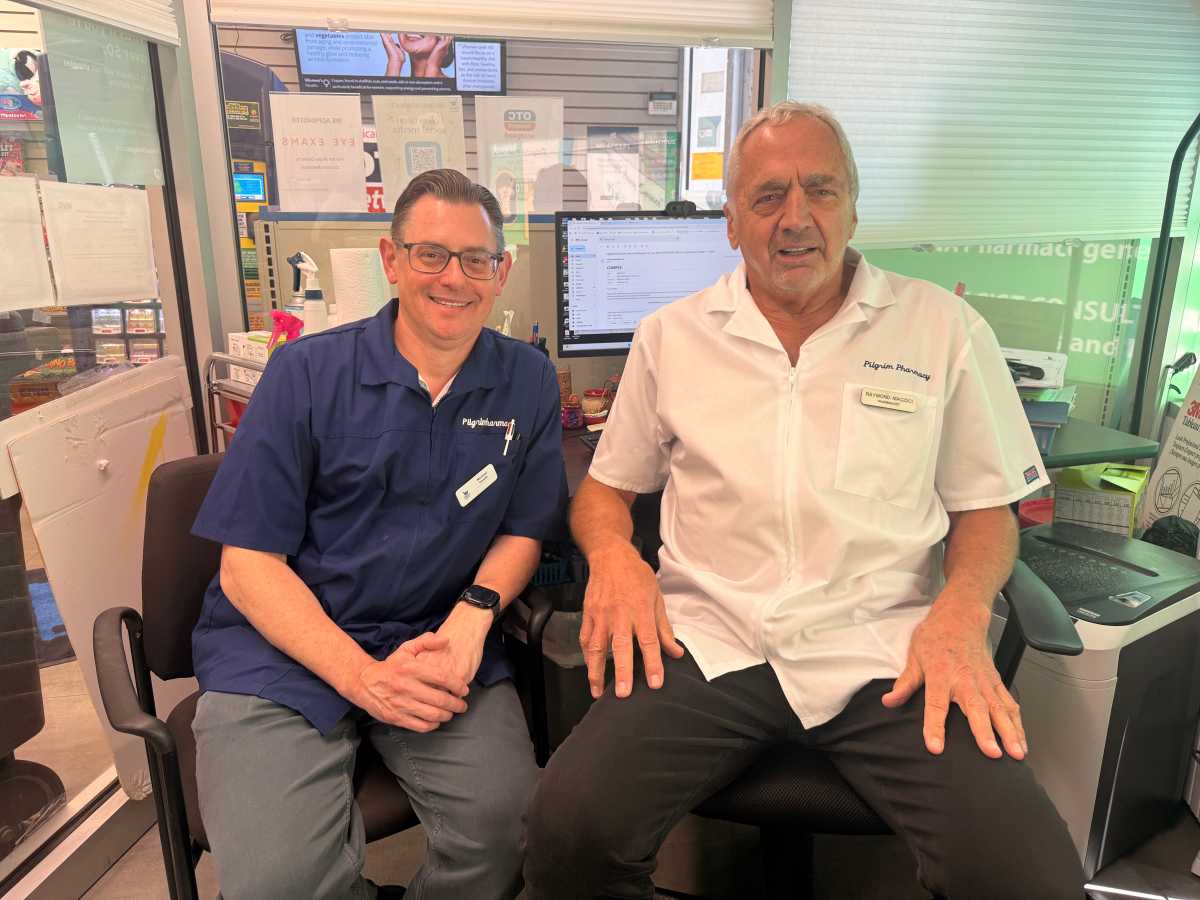
Tucked beneath the Buhre Avenue station on the 6 train sits a store that feels like a step back in time.
Pilgrim Pharmacy, identified by a nostalgic red neon “Drugs” sign, is a rarity in an era when a trip to the pharmacy often means locked merchandise, long lines and too few employees. Instead, the brightly lit store is filled with customers — many of them regulars — chatting with staff members who have spent years, and in some cases decades, working there.
Inside, Pilgrim blends old-fashioned customer service with modern conveniences. Behind the pharmacy counter, employees know not only their customers, but often their families as well.
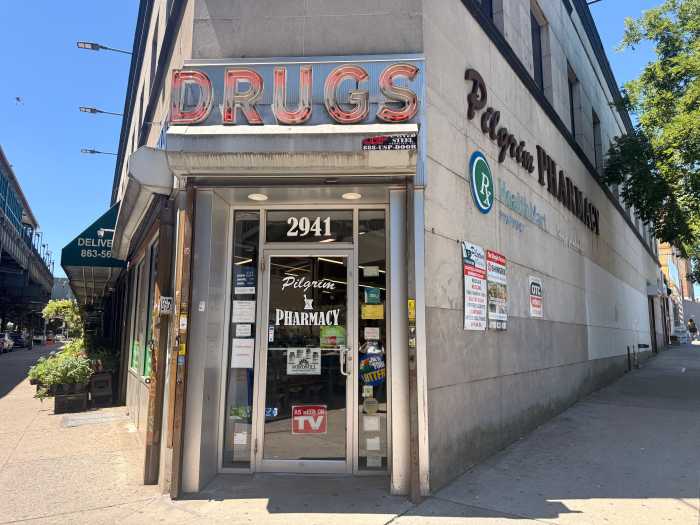
The pharmacy was founded in 1934 by Wilfrid Scher, who owned and operated the business for 42 years before selling it in 1976 to Ray Macioci and his former business partner, Roger Paganelli.
Macioci’s path to ownership began long before that. As a teenager growing up in the Bronx, he worked in two neighborhood pharmacies before graduating from Fordham College of Pharmacy in 1971. After working for Paganelli at Mount Carmel Pharmacy, he took the leap into ownership just five years after graduation.
“Watching what my previous employers and mentor did as a routine kind of whet my appetite for wanting to own,” Macioci said. “So, five years after I graduated, I became the owner of Pilgrim.”
Macioci’s current business partner and co-owner, Michael Coscia, also got his start in the business as a teenager, delivering medications and working around the store beginning in 1987. The two became business partners in 2002.
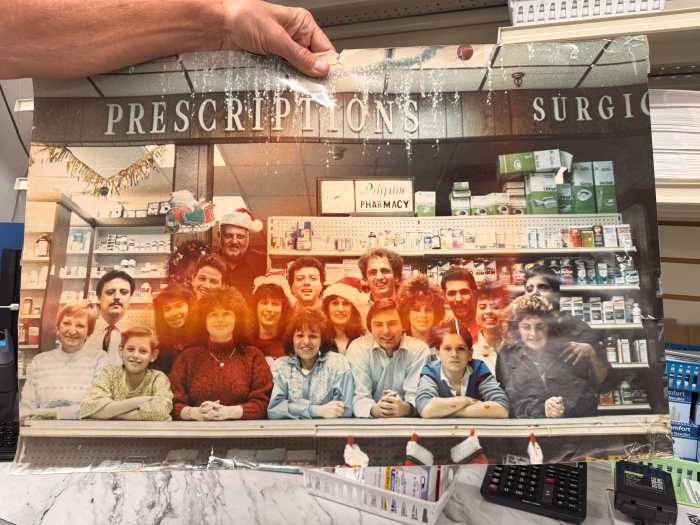
While Pilgrim serves customers from across the Bronx, it has also maintained relationships with longtime patrons who have moved away. The pharmacy even conducts seasonal outreach to residents of City Island, which no longer has its own pharmacy.
The pharmacy’s longevity has required adapting to changing community needs. Pilgrim supplied medications during the early years of the HIV/AIDS epidemic and continues to do so today. Decades later, the pharmacy opened a COVID-19 testing center and administered vaccinations during the pandemic.
“It has very much of that family atmosphere that you associate with a mom-and-pop pharmacy, but it’s still mobile enough to cater to the ever-changing needs of pharmacy,” Coscia said.
Over the past five decades, Macioci has watched independent pharmacies steadily disappear as national chains expanded their footprint.
“When I first got to Pilgrim in 1976, there were about seven or eight independent pharmacies in the immediate area,” he said. “They’re not there anymore. It’s a tough industry.”
One challenge facing independent pharmacies, Macioci and Coscia said, is the growing influence of pharmacy benefit managers, or PBMs — middlemen that negotiate drug prices, determine which medications are covered by insurance and decide how pharmacies are reimbursed. Three companies — OptumRx, Express Scripts and CVS Caremark — dominate the industry, handling approximately 79% of prescription claims in the United States.
Macioci has also been an advocate for the industry as a whole. He previously served as president and chairman of the New York City Pharmacists Society, chairman of the Pharmacists Society of the State of New York, and chairman of the Pharmacy PAC of New York State. In those roles, he has focused on educating the public about the impact of pharmacy benefit managers on the healthcare system.
“As we move toward a world that’s going to be dominated by AI, the depersonalization of things is going to increase,” Macioci said. “Instead of making things easier, it’s going to make them more complex.”

Despite those challenges, Macioci believes Pilgrim has endured because of the relationships it has built over generations.
“I think people appreciate personal contact and the accessibility of an independent pharmacy,” he said. “The loyalty people have had to us and the loyalty we’ve had to them comes from providing personal service.”
That connection often extends beyond individual customers.
“I’ve had patients who worked for us and then their children worked for us,” Macioci said. “When you’re around that long, things like that happen.”
In an increasingly impersonal retail landscape, Macioci said Pilgrim’s strength lies in knowing the people who walk through its doors.
“It’s not only knowing the individual you’re dealing with at the counter filling the prescription,” he said. “We often know the entire family. I don’t think you get the same connection in the chain environment.”
Macioci and Coscia liken Pilgrim Pharmacy to the television sitcom “Cheers” — a place where everybody knows your name.
Reach Marina Samuel at msamuel@schnepsmedia.com. For more coverage, subscribe to our newsletter and follow us on Twitter, Facebook and Instagram!