The power of a story is metaphysical, transcending the constraints of arbitrary human delineations like medium, race, and genre. A founding reference for most modern narratives, Homer’s classic is often considered one of those stories that, if only due to a profoundly daunting aura, is functionally impossible to adapt.
Christopher Nolan’s “The Odyssey” works best because of Nolan’s understanding that the pervasive ability of stories to connect with human hearts —whether sang, written, performed, or whispered— is matched only by the never-ending capacity of humankind to needlessly condemn themselves and others, to violence in the name of selfish greed.
Matt Damon stars as Odysseus: the equally deceitful and wise king of Ithaca, who led the Greeks to victory in the Trojan War. The film’s narrative is overwhelmingly told in memories. Recounting his journey, Odysseus’ journey plays out in fragments, building to his eventual return home. Taxed both by his mission to get back home to his family and his commitment to protect his men, what burdens him most is a deep-rooted guilt.
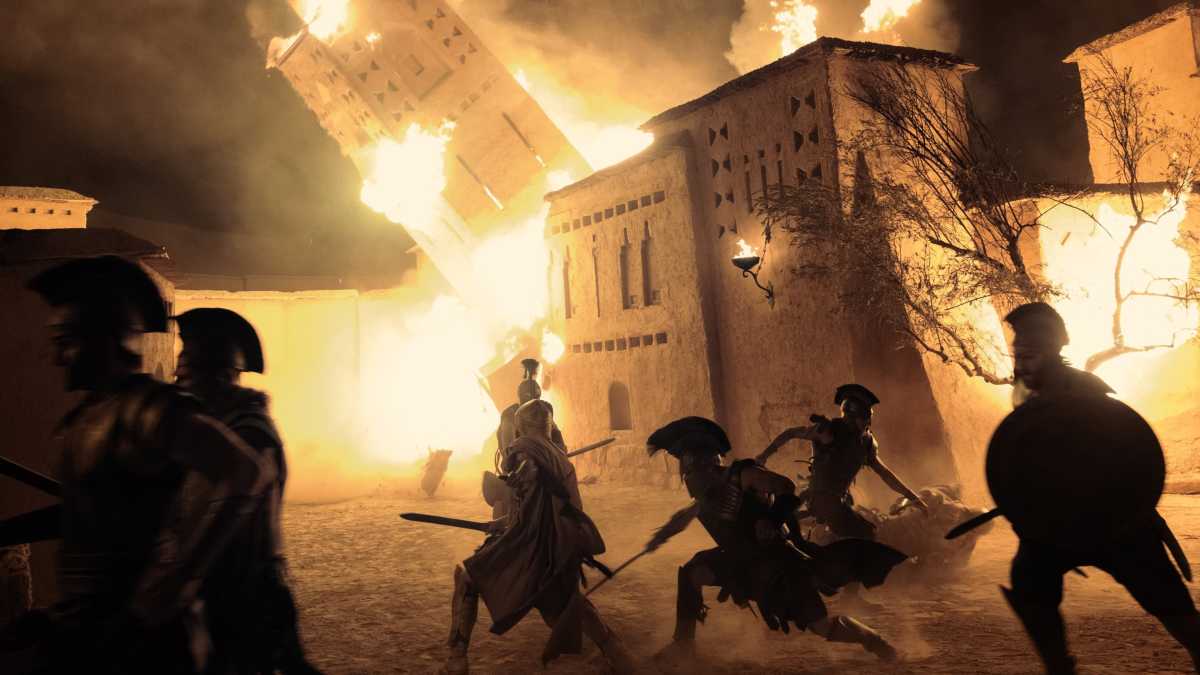
Not unlike many glorious victories of war, Odysseus’ master plan of using a Trojan horse to sneak into the city of Troy is easily idolized. Initially, in brief glimpses, Nolan frames it as the unquestionable act of heroism all Greek warriors strive for. But as the story unfolds and the true nature of this violent onslaught is revealed, it becomes clear that this is unlike many of the original poem’s successors. Rather than another tragic tale of heroism, this is a tale of the deepest darkest depths.
Not just in caves with horrific creatures, but the sort that lives in all of us; more readily drawn out at a moment’s notice than can be suppressed.
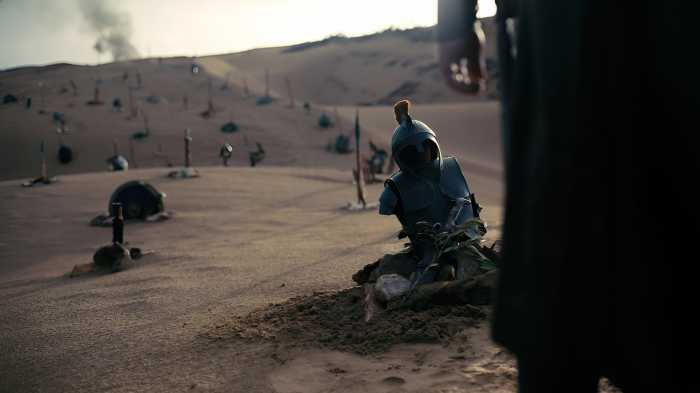
Nolan’s commitment to building a magnificent world which surely rivals what the Ancient Greeks envisioned when enjoying the original story provides a beautiful landscape to depict the commonality of these violent urges. Even those of the more logical and sympathetic variety —a wife killing her lover after he sacrificed their daughter, or a witch graphically turning morally corrupt men into animal creatures befitting their true nature— are an unfortunate consequence of the violent cycles which continuously follow our kind throughout generations.
In secluded caverns: the urge to further exert your own strength on an already-fallen opponent. In vast beaches: the urge to keep that which doesn’t wish to be kept. In abandoned kingdoms: the urge to take kindness for weakness. In battle cries: the urge to wreak havoc for a taste of glory. In confining forests: the urge to belittle someone half your size.
It’s no mystery to most how the original odyssey ends, yet Nolan’s adaptation remains undeniably compelling for the entirety of its near-three hour runtime. As Odysseus recounts and endures his journey, a number of characters drift in and out of his peripheral. Few have more than a couple scenes, but all that need to indeed leave a lasting impression. In a manner that’s true to life, it takes as little to capture someone’s memory as it does (just one night) to usurp a city.
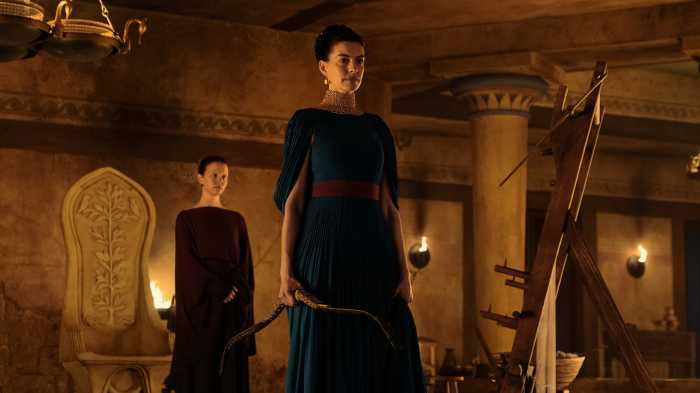
With the careful coordination of multiple excellent supporting performances (Anne Hathaway, John Leguizamo and Robert Pattinson to name a few), surreal sound design that emphasizes the epic nature of the text, and costumes which consistently allude to the shallow confidence that wins wars yet curses souls, “The Odyssey” is a thrilling (if occasionally hurried) adventure that proves modern sensibilities and ancient traditions can co-exist fruitfully.
Nolan leaves us an offering, with a sincerity that contrasts the brutally manipulative essence of his protagonist. Such how vulgar sins are an inherent flaw of human nature, comparable is our persisting ability to atone for our wrongdoings. Though the privilege of grief is often left to those who once inflicted suffering rather than the souls that endured it, the never-ending journey of atonement is one we all must incessantly trek through.
“The Odyssey” may have originated as a poetic myth, but the Greeks were correct in that true glory is possible. not in honoring oneself, but in honoring others.
Rating: 9/10
Christopher Nolan’s “The Odyssey” is now available in Bronx theaters, including AMC Bay Plaza Cinema & Regal Concourse.
Maurice Burbridge is an intern at the Bronx Times. He can be reached at mburbridge@schnepsmedia.com. For more coverage, subscribe to our newsletter and follow us on Twitter, Facebook and Instagram!