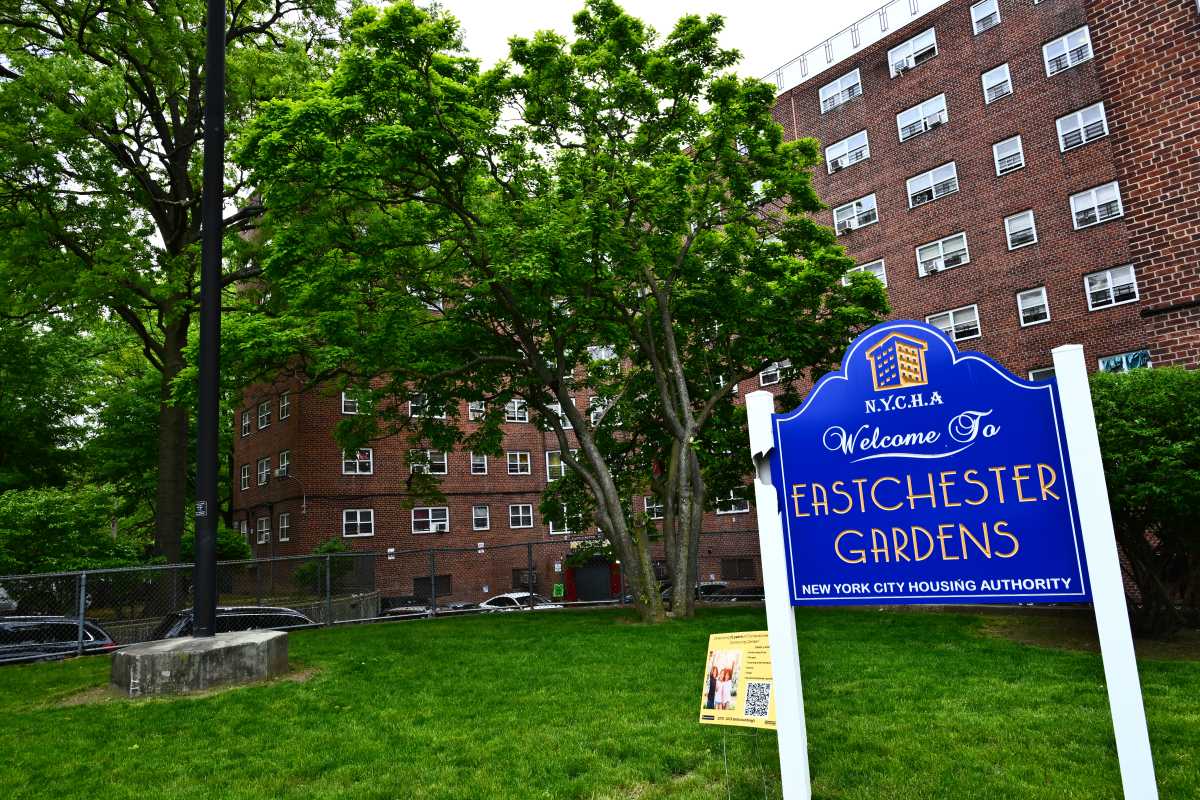
NYCHA buildings are home to more than 500,000 residents, making it the country’s largest public housing authority.
But it is also highly distrusted, especially in the Bronx, where residents have witnessed the partial tower collapse at Mitchel Houses, an apartment flooded with raw sewage-contaminated water, daily outages of heat, gas and elevators, and other problems, large and small, that worsen their health, safety and quality of life.
NYCHA also has a history of corruption, both among individual employees and on a broader scale.
For instance, 70 NYCHA workers were charged in a 2024 scandal that set a U.S. Department of Justice record for the most bribery charges in a single day. All defendants pled guilty or were convicted at trial of accepting $2.1 million in bribes in exchange for awarding NYCHA contracts totaling over $15 million.
“All 70 charged defendants have now been convicted for attempting to criminally leverage the contracting process of work for affordable housing for New Yorkers to line their own pockets,” U.S. Attorney Jay Clayton said in 2025. “NYCHA residents deserve better.”
In addition, the authority has historically not been transparent about conditions in its properties. Housing inspection and violation records were only made public starting last fall, long after changes to city code required NYCHA to publicize them starting in 2023.
Amid the turmoil, the federal government determined that NYCHA is incapable of policing itself.
In 2024, the authority was placed under federal monitorship after being sued by the federal government for failing to maintain its properties, causing irreparable harm to its most vulnerable populations.
“The people who suffer as a result of NYCHA’s misconduct are its residents, including lead-poisoned children; elderly residents without heat in winter; asthma sufferers whose condition is worsened by moldy and pest-infested apartments; and disabled residents without functioning elevators,” the 2018 complaint read.
Neil Barofsky and Matt Cipolla of Jenner & Block LLP are now the independent co-monitors
overseeing NYCHA’s work to resolve issues of lead-based paint, inadequate heat and hot water, mold and moisture, broken elevators, pests and waste disposal, along with capital projects, property inspections, repairs and organizational reform.
Despite NYCHA’s dysfunction, its CEO, Lisa Bova-Haitt, earns a salary of $393,180, and the agency said salaries for its senior leaders are “commensurate with their civil service titles, and reflective of the size of the agency, the scope of their responsibilities, and their level of experience.” Bova-Haitt earns about 15 times the average income of public housing households, at $26,129.
As tenants’ quality of life in the Bronx and citywide has deteriorated, sometimes to disastrous conditions, NYCHA faces an estimated $80 billion in capital repairs —many of them urgent— across 264 properties over the next 20 years.
One major issue is that state and federal funding has not kept up with the need, according to NYCHA leaders. The authority is currently facing a 14% cut in operating dollars, Bova-Haitt said at an April 19 roundtable with NYCHA tenant leaders.
Mayor Mamdani said during the campaign that when it comes to investing in public housing, the federal government “will not save us.”
His administration held Rental Ripoff hearings this spring to hear from tenants of privately-owned buildings and has launched a similar series for NYCHA residents, starting in the Bronx on May 20.
At the event, Bova-Haitt said the city is investing “historic” amounts into NYCHA preservation and filling vacancies.
“Tonight is about you,” she said to residents. “It’s your participation and partnership that help the work we do every single day.”
But today, the reality remains that many tenants, taxpayers and public officials have lost trust in NYCHA.
Public Advocate Jumaane Williams has said that amid the city’s many notorious private owners, NYCHA is just as bad or worse. “Perpetual mismanagement of NYCHA has made the city itself the worst overall landlord for hundreds of thousands of New Yorkers,” he said in announcing the most recent Worst list.
A NYCHA spokesperson said in a statement to the Bronx Times that Williams’ assessment does not account for “significant progress” made towards improving residents’ quality of life.
“The number of open public housing work orders used by the Public Advocate’s Office in their assessment does not provide a comprehensive snapshot as NYCHA actively encourages residents in need of assistance to submit work orders, which are used to capture and trace information and bring issues to a resolution.”
But housing troubles are not unique to NYCHA. Whether public, Mitchell-Lama or privately-run housing, lawmakers and courts have called for increased independent oversight into the places where New Yorkers live and breathe every day.
“People gotta fight back”: The case against privatization
The Permanent Affordability Commitment Together (PACT) program allows NYCHA buildings to be transferred to private management, converting from Section 9 traditional public housing to federal Project-Based Section 8 under the Rental Assistance Demonstration (RAD).
Under these agreements, NYCHA still owns the land and buildings but leases to private firms, who take over repair and management duties.
The growing PACT portfolio includes 170 properties citywide that are in pre-development, under construction or completed, totaling $16.93 billion in investments, according to NYCHA. These figures include least 23 Bronx developments, and the program shows no sign of slowing down. In 2025 alone, 6,664 apartments citywide converted to privatization — the most in a single year to date.
The program is controversial among NYCHA residents. Whereas some embrace the prospect of a new and more responsible landlord, others will stop at nothing to protect Section 9 and safeguard the public housing legacy, especially for Black and brown communities.
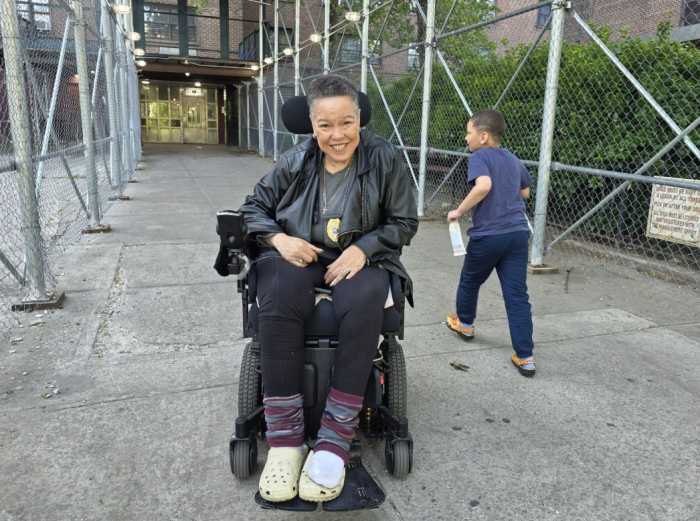
Dana Elden, 69, who lives at St. Mary’s Park Houses in the South Bronx, is among those who will never support privatization.
In 2019, someone from outside NYCHA visited her building to try to convince residents to privatize, she told the Bronx Times. As the tenant association president, she agreed to hear him out, joined by her treasurer and secretary.
The man “gave a sales pitch unlike any other,” promising remodeled kitchens and bathrooms, cameras and extensive infrastructure repairs at St. Mary’s Park Houses, she said.
As Elden recalled it, the man said PACT would bring “wonderful things.” But she responded, “Sorry, but we think St. Mary’s is wonderful already.”
“You can’t buy everybody,” Elden said. “I told them, ‘Don’t come back here, or I’ll be on the 6:00 news.’”
St. Mary’s Houses was completed in 1959, and even back then, its location near parks and transit and not far from Manhattan made it a highly desirable place to live, Elden said.
Her own family had been fairly well-off and lived in a Harlem brownstone before eventually being priced out. Her father worked for a dressmaking company and always kept her in the latest fashions, she said. Those early experiences and sense of pride and legacy strongly shaped her refusal to consider privatization today.
“I’ve been fortunate,” Elden said. “So a shiny refrigerator and glass top stove don’t move me. You act like I grew up in the gutter.”
To her family, St. Mary’s Houses was almost as nice as a brownstone. Back then, it was considered middle- to upper-middle-income housing, and families had to meet minimum — not maximum — household incomes in order to live there, Elden said, adding that many NYCHA properties were once highly desirable.
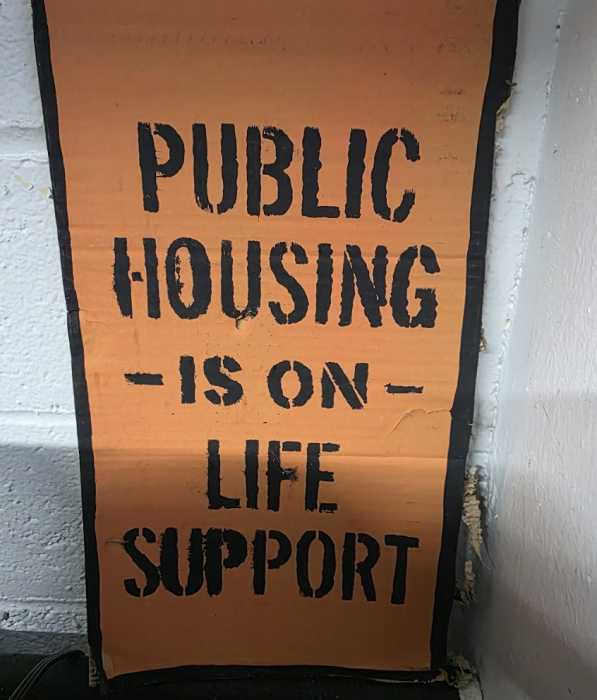
But today, she keeps multiple bright orange signs in her office that read, “Public housing is on life support.”
To Elden, the growing privatization movement tips the power scales too far in private managers’ favor. She finds them impossible to trust, despite limitations on what PACT developers are allowed to do.
For instance, PACT managers cannot raise rents beyond 30% of adjusted gross household income or evict residents for no reason, and tenants are still allowed to organize, among other rights, according to a program fact sheet.
Yet Elden expressed fears that private managers would get random friends or relatives to do repairs, perform only “cosmetic surgery for bricks and mortar,” and possibly try to demolish developments “if they can say it’s warranted.”
Elden was also concerned about eviction rates under PACT. A December 2024 audit by then-City Comptroller found evictions at PACT developments occurred at a “significantly higher rate” than at traditional NYCHA developments.
According to the report, the PACT eviction rate was 1.4% in 2021 and 2022, but jumped to 9.5% in 2023 with the end of a pandemic-era moratorium. That year, NYCHA’s eviction rate was only 1.9%, and the citywide average was 5.8%.
When it comes to safeguarding their homes, Elden said more NYCHA tenants should get involved in their tenant groups and discuss possible alternatives to privatization.“People gotta fight back,” she said. “We’ve been paying rent forever and still don’t own anything. What else do you want?”
As for those who do elect to go private, Elden said they should generally prepare for disappointment. “Everything comes with a price. What it will be, you’ll find out.”
Eastchester Gardens: Privatized and loving it
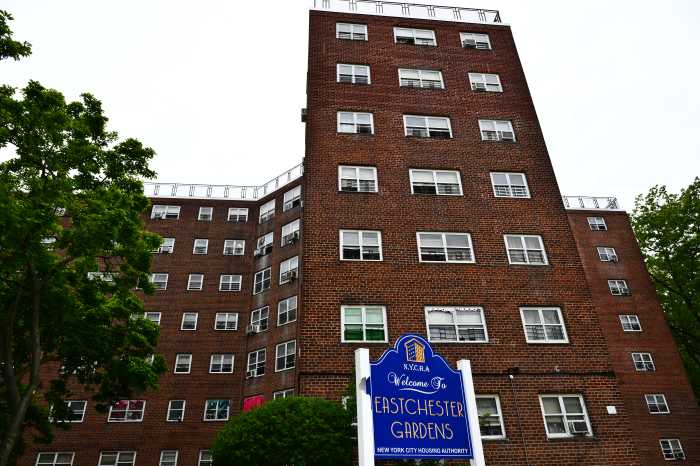
Eastchester Gardens opened in 1950 and is the second-oldest NYCHA development in the Bronx, located in a suburban-type neighborhood surrounded by single-family homes.
Over the decades, the property needed major costly repairs. While its listing on the National Register of Historic Places limited the kinds of changes that could be made, there was plenty to do, from the ground up.
The 10-building, 1,850-resident campus had some built-in advantages, such as a senior center, community center, active resident association and low turnover, with 10,000 on the wait list, according to Wavecrest Management. But it faced a whopping $441 million in capital needs, including façades, plumbing, heating and more — in addition to the deteriorating apartments, many of which had broken tile, cracks in the walls, water damage and outdated appliances.
Residents told the Bronx Times during a May 6 visit that over time, their beloved community began to fall apart, with no help in sight.
Cristal Brown is vice president of the tenant association and has lived at Eastchester Gardens for 54 years, since age 11.
The campus was “like heaven” in her childhood, Brown said. “Years ago, this place was something you were proud to live in.”
But gradually, she said she began seeing people throwing trash out the windows and not paying rent, and the campus was dirty and neglected. She also stopped seeing caretakers on the property and even witnessed physical fights among NYCHA groundskeepers.
“One day, I woke up, and this place was a mess,” Brown said.
She also felt that NYCHA wasn’t stepping up to make improvements and that managers began avoiding her complaints. “We couldn’t even shame NYCHA.”
Brown said she vaguely knew about PACT and was intrigued but wasn’t sure how Eastchester Garden could get involved. But Keith Ramsey, the longtime tenant association president, already had the wheels turning.

Ramsey, who previously worked for NYCHA, the Legal Aid Society and the district attorney’s office, said he was warned long before that NYCHA was losing money.
“I had to prepare,” which he said meant “weaning” residents off the idea that NYCHA would save Eastchester Gardens.
He said he asked PACT representatives to visit the campus years before the monumental decision to privatize, which was “15 years in the making,” according to Ramsey.
The process of selecting a PACT developer was a huge undertaking. Ramsey said the pressure of developer interviews, site visits and constant phone calls and meetings to determine the permanent fate of thousands of residents at a multimillion-dollar New York City property made him physically ill.
Ultimately, in 2023, he and his neighbors selected MDG Design + Construction and Wavecrest Management, who assumed responsibility as of March 2025 as its sixth New York City PACT project.
Wavecrest took over on a Thursday, and by that Saturday, the grounds were so clean, “I could not believe,” Brown said. Ramsey added that a few residents called 311 because the common areas of buildings suddenly smelled of cleaning products.
Even early on, the transformation was “almost like a miracle,” Brown said. Most importantly, residents’ sense of pride in Eastchester Gardens, which had been missing for years, started to return.
“If you show them something different, they will act different,” Brown said.
Historic tenant agreement
The full renovation of Eastchester Gardens did require substantial sacrifice from residents.
For one, they’ve had to relocate to other campus apartments while their apartments are worked on for 4 to 5 months. Though management covers all moving expenses, it’s still a challenge, especially for the many who have spent decades in their homes.
Relocating is one of residents’ top fears about PACT, Ramsey said. But he said at Eastchester Gardens, all residents are moving back into their same units after repairs are completed, no one has been evicted and rent remains capped at 30% of their income, as it was under NYCHA.
Management now actually allows residents to pay rent anytime during the month —not just on a preset date— which many have found helpful, Brown said.
Ramsey and his colleagues trusted their new manager, but as a safeguard, he worked to create what he called a first-of-its-kind tenants’ rights contract.
He collaborated with Wavecrest and MDG on the Little Lamb Agreement, named after Dr. Samuel Little, a prominent national advocate for the rights of public housing tenants, and Gerri Lamb, a former Castle Hill Houses resident and chair of the Citywide Council of Presidents, who passed away in 2018.
The agreement holds the private managers legally accountable for the quality and timely completion of all work — and provides funds for consultants or lawyers if necessary. It also established the Resident Inspector program, a paid opportunity for residents to monitor conditions on the property.
But why would management sign on to this agreement? Matt Rooney with MDG told the Bronx Times that he understands residents’ distrust of new operators and felt Little Lamb secured promises that developers should keep anyway.
“Some people hear private management, and that’s worrisome. Other people hear getting rid of NYCHA management, and they say hallelujah,” he said. “It really depends on the resident body that you’re working with.”
Major upgrades
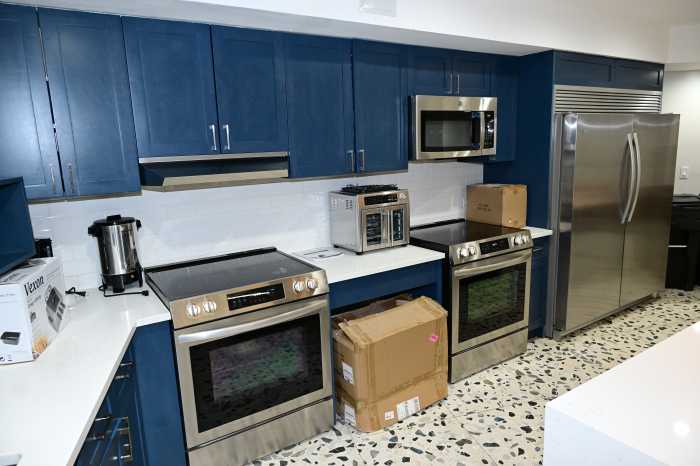
The massive renovation at Eastchester Gardens is now 44% complete and expected to be fully finished by the end of 2028.
The remodeled apartments are almost beyond recognition, Brown said.
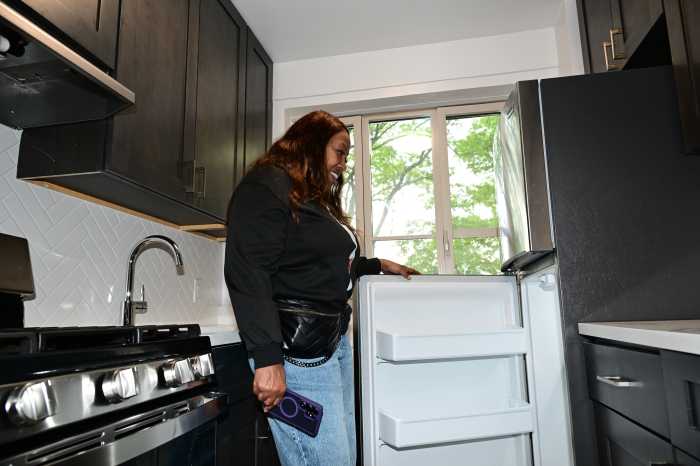
In each unit, the team replaced small wall sconces with overhead lighting and added herringbone tile in the kitchen, quartz countertops, new energy-efficient windows, radiators with adjustable heat, free wi-fi, a large washer-dryer and more.
They’re also working on each building’s plumbing and electrical infrastructure and façade and making over each lobby, adding artwork, cameras, textured wallpaper and dramatic light fixtures and restoring the historic terrazzo flooring.
Much work has also begun in other common areas, including the tenant association meeting room, which was completely redesigned under Brown’s direction.
Across the campus, management brought in modern trash and recycling receptacles, new playground equipment, signage and lighting, plantings, including new trees, and more. The nonprofit BronxWorks, chosen by the residents, also has an office on campus, and the senior center, community center and resident association office have been completely overhauled, or will be.
As Eastchester undergoes a complete transformation, Ramsey said it’s worth it — though he knows he’s in the minority among NYCHA leaders.
The decision to privatize almost literally killed him, but Ramsey said it came down to one question: “Do the people of Eastchester Gardens deserve it? And I said yes, they deserve it.”