Congestion pricing was sold as a public health victory: fewer vehicles in Manhattan, reduced congestion, cleaner air, and a more efficient transportation system. But one year after implementation, many Bronx residents are asking a difficult question: why does seemingly cleaner air in Midtown appear to coincide with worsening conditions in communities that have carried New York’s air quality burden for generations?
The South Bronx historically has faced some of the worst air quality in the country, contributing to some of the nation’s highest asthma rates. It has endured being the dumping ground for Manhattan’s waste. A recent New York Times report confirmed what residents already knew: while Manhattan reaps the benefits of congestion pricing, the air quality in the Bronx has only gotten worse.
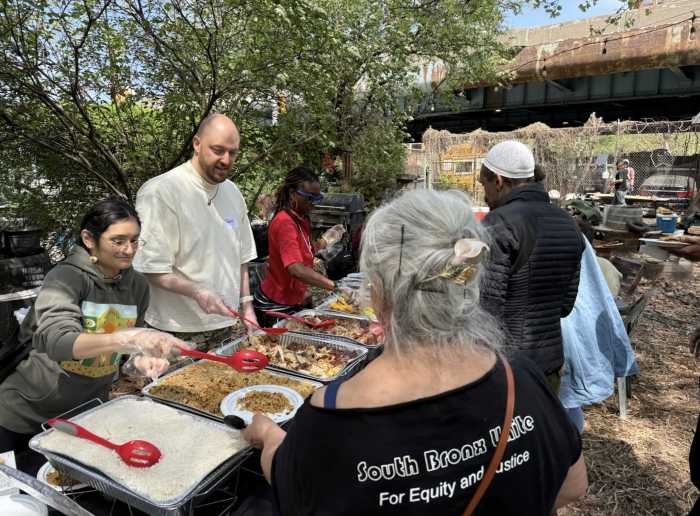
In 14 of the 19 community air monitors tested, there was an increase in fine particulate matter most closely linked to asthma and respiratory disease. It’s not hard to see the correlation; traffic on the RFK Bridge recorded nearly 365,000 more vehicle crossings in 2025 than the year before the toll took effect. Without proper investment from the City, that growth comes at the Bronx’s expense, leaving community groups like South Bronx Unite to claim that congestion pricing is “not working for us.”
By charging trucks at rates up to 2.4 times higher than passenger vehicles, and on a per trip basis, the program created a financial incentive to reroute freight around the toll zone. This means that trucks that once efficiently entered Manhattan via the Holland and Lincoln Tunnels are now inefficiently weaving their way through the Bronx.
Bronxites, whose children saw asthma rates nearly double that of the other boroughs in the City, deserve a better shot at a healthier future. One year into congestion pricing, they still aren’t getting it. Thankfully, we have the solutions at our fingertips to help immediately create change.
Bring pricing parity to the congestion pricing program.
Let’s start with what we have been advocating for since the congestion pricing program was announced—implement pricing parity between trucks and passenger vehicles. The current rate structure is undoubtedly the largest driver of freight rerouting through the Bronx. If the MTA equalizes what trucks and cars pay, this financial incentive disappears.
Additionally, the trucking industry continues to make strides to build momentum behind clean freighting. Since 1974, the trucking industry has reduced pollutants by 99 percent through advances in clean diesel and renewable fuel technology. There are tangible next steps in this process for both trucks themselves and the infrastructure which supports freight maintenance and storage.
Scale what is already working.
New York State deserves credit for its highly successful Hunts Point Access Improvement Project. This forward-thinking infrastructure project reconnected communities in the South Bronx, created new green space, and streamlined truck access to the Terminal Market. The $15 million investment to replace outdated Transport Refrigeration Units (TRUs) at the Hunts Point Market is a direct, measurable intervention, which was championed through public-private partnership.
This single move is the equivalent of eliminating fine particulate emissions from an estimated 6,600 daily truck trips on the Cross Bronx Expressway, a clear win for the borough.
The same goes for the $405 million all-electric intermodal food distribution facility project at the Hunts Point Market, which was announced last year. This project could fundamentally reshape the emissions profile of one of the city’s busiest freight corridors, and together, these are exactly the kinds of investments that make a difference.
On top of that, revenue from congestion pricing is flowing into New York City’s Clean Trucks Program, which has taken a page from NYSERDA’s incredibly successful Truck Voucher Incentive Program.
Charging trucks at parity with passenger vehicles is the ultimate win for the South Bronx, it will eliminate unnecessary truck trips, while still providing enough revenue to support fleets who have the operational ability to incorporate electric vehicles.
The South Bronx is every bit as important to vibrancy and economic vitality to New York City as Midtown Manhattan is, and it is time for congestion pricing to fully reflect that.
Kendra Hems is President of the Trucking Association of New York.