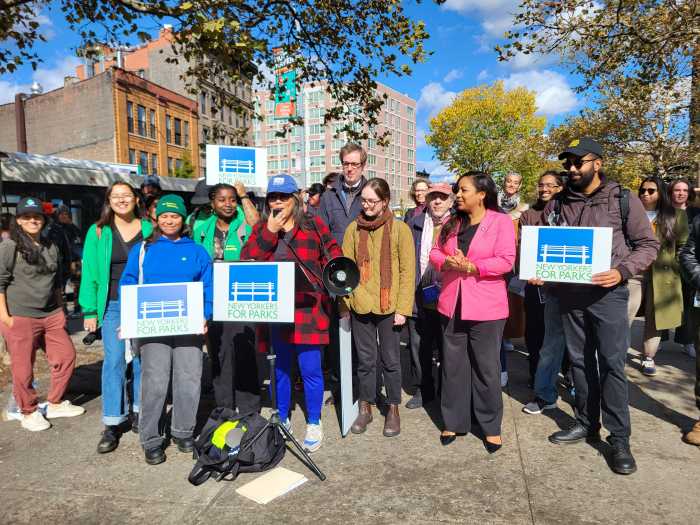
The Local Action Committee at South Bronx Unite held their monthly in early April to discuss their findings of one year of congestion pricing.
Organized by Jada Tulloch, environmental justice educator for the non-profit and Alexander DeJesus, a PhD candidate at Columbia whose research focuses on the effects of congestion pricing, South Bronx Unite discovered that drivers drove more through the South Bronx than before and that the South Bronx has experienced an increase in air pollution.
At the beginning of the meeting, Tulloch set the tone, “we started this presentation off with a kind of a spicy question, congestion pricing,” she said. “Who is it actually working for? And spoiler alert, it is not working for us.”
The congestion pricing program started in January 2025 to reduce traffic congestion and to raise revenue for better public transportation. After one year of congestion pricing, community members from the South Bronx expected results.
Before the start of the MTA run program, South Bronx Unite expressed their concern about how: if drivers want to avoid the toll, they could go through the Bronx and then to Queens to then enter Manhattan.
In 2022, when Markus Hilpert, a researcher from Columbia, examined the effects of high traffic, he found that traffic congestion causes high air pollution levels and high asthma rate. In the same study, researchers also highlighted how the opening of the Fresh Direct Warehouse in 2018 in Mott Haven has, “likely contributed to the overall increase in traffic congestion.”
In 2020, a researcher from Nancy, France highlighted in her study how traffic-related air pollution in general “represents significant risk factors for asthma development in children.”
This high traffic in the Bronx and other factors such as housing quality, access to green spaces, have led the borough to bear a high asthma rate for children. In 2023, the rate of asthma-related emergency department visits for children aged 5 to 17 was twice as high as the one for children in this age group citywide.
More traffic in the zone would worsen this health burden.
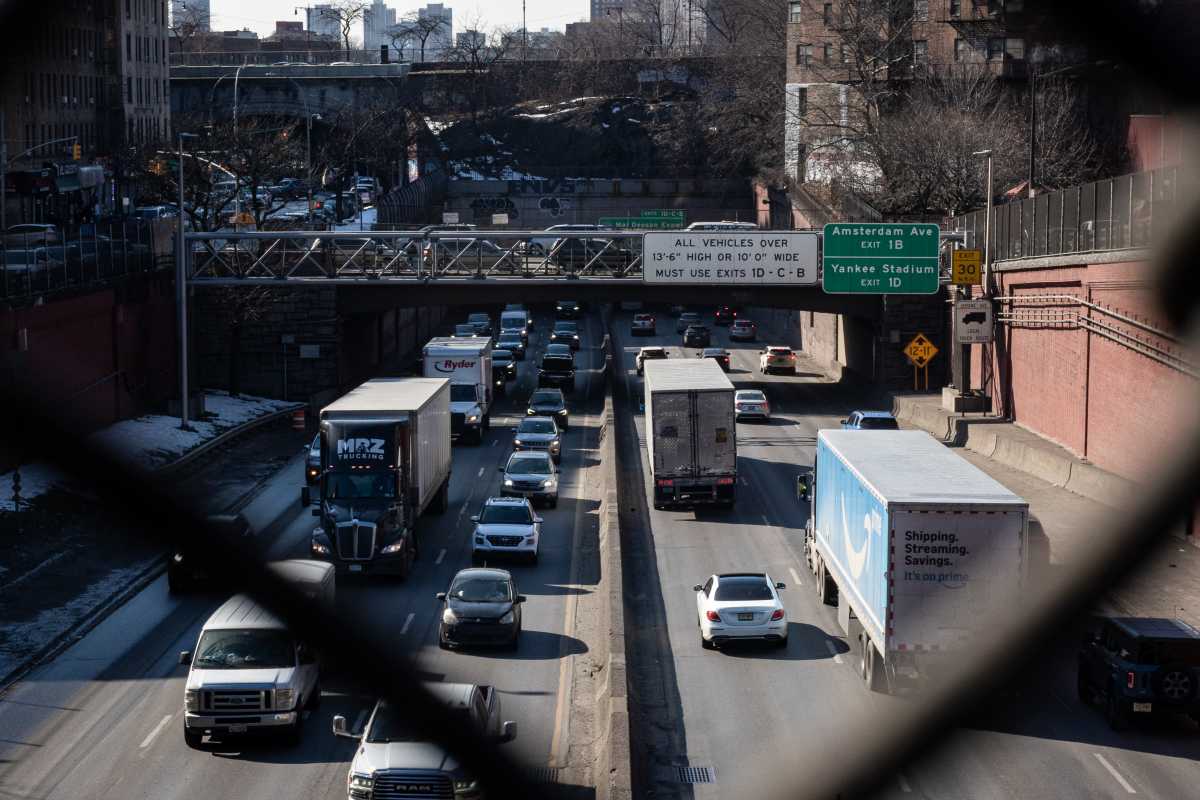
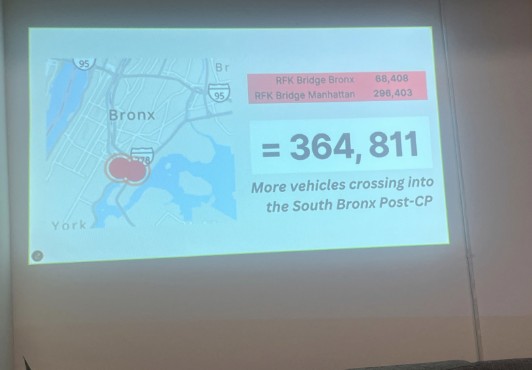
During the presentation, Tulloch mentioned the increased number of cars entering the South Bronx. The environmental justice educator at the non-profit looked at the MTA data showing monthly traffic on New York City’s bridges. She said that monitors on the RFK Bridge near Manhattan and near the Bronx both recorded an increase in traffic in 2025 compared to 2024, compared to 2024, with 364,811 more cars than the year before, when congestion pricing was not in effect.
Yet, the MTA findings contradicts with the one from South Bronx Unite.
“The possible increases in traffic through Environmental Justice Communities in the Bronx have not materialized,” the MTA said in a statement.
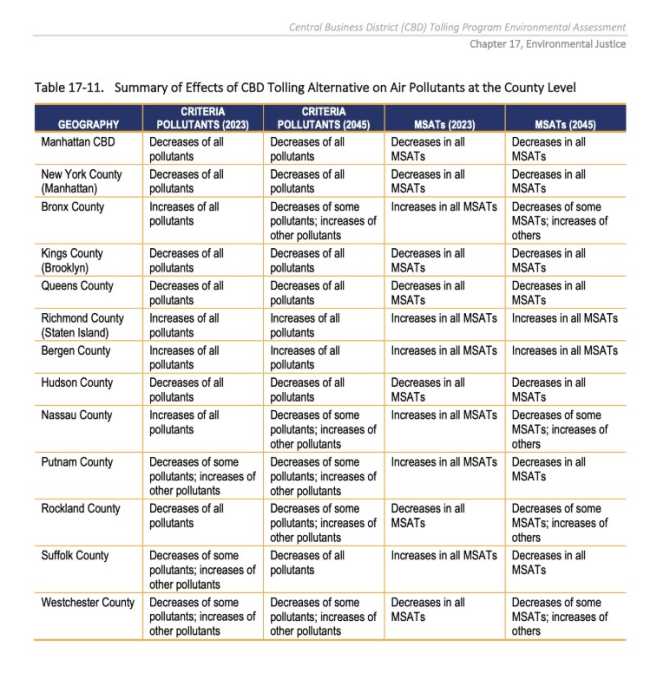
The MTA in their Environmental Justice analysis mentioned that air pollutants are produced in several different ways.
“They generate brake and tire particulates, they can disperse roadway dust into the surrounding air and most importantly, they burn fossil fuels in their internal-combustion engines.”
The MTA also found that with the implementation of the CBD Tolling Alternative, traffic patterns would shift because of drivers who divert to avoid the new toll. It also predicted an increase of all air pollutants for the Bronx.
Alexander De Jesus, a 3rd-year PhD candidate at Columbia University’s Mailman School of Public Health, currently studies the air pollution due to congestion pricing in the South Bronx. He used the data of 19 air quality monitors installed through the South Bronx. Among the 19 locations, he found that the proportion of PM2.5 – the particulate responsible for air pollution – increased.
“It seems like a small number (but) when those averages are being discussed, especially over a long time period that is pretty substantial,” DeJesus said. “It’s about 2% of the air pollution that that neighborhood is experiencing at any point during the year.”
Among the 19 locations monitored, 14 of them showed an increase in air pollution. The monitor located in front of South Bronx Unite’s office and the middle school Highbridge Green School experience the most increase in air pollution.
The proximity of a school with a high pollution zone raised concern for Chaunsey Young. He directs the Parent Action Committee for District 9 and brought up how the South Bronx has one of the highest asthma rates in the city.
But, according to DeJesus’s findings, two community gardens, La Finca del Sur and El Coqui Garden, could help with the air pollution.
“Certain trees, because of the density of their leaves, are able to trap the air pollution and make it drop to the ground before people breathe in it,” DeJesus said.
With the revenue from congestion pricing, South Bronx Unite hopes to get funding to fund more community gardens and parks. In October, the MTA had $468M in net revenue raised through October from congestion pricing.
Aware of the effects on congestion pricing on Environmental Justice communities, MTA promised funding for mitigation efforts. The mitigation projects are for communities already experiencing pre-existing high pollutant and chronic disease burdens that could experience increases in highway truck traffic because of tolls.
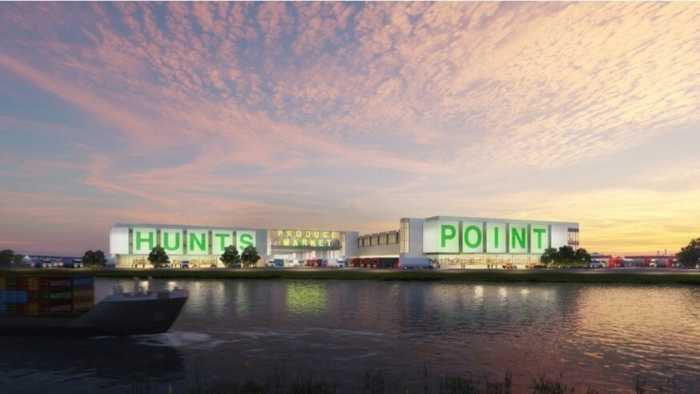
Mott Haven and Hunts Point received $22.3 million of funding from the MTA to address environmental injustice. $15 million of that funding will be used towards the Transport Refrigeration Unit replacement at the Hunts Point Market. This would remove fine particulate matter emissions from 6,600 truck trips on the Cross Bronx Expressway every day, according to a statement from Kathy Hochul’s office.
The replacement would work as an incentive for companies to switch their old refrigeration units to newer diesel or hybrid refrigerated units. The New York City Department of Transportation told the Bronx Times that they are working to replace 75 units.
Yet, South Bronx Unite said they are still disappointed by the mitigation measures proposed by MTA. “This initiative is only if they want to,” Tulloch said. “It’s only voluntary.”
The nonprofit was hoping to get more funding for green access or more tree coverage. Since 2012, South Bronx Unite works to build a park around the waterfront plan as Little Island in Manhattan. “We have an entire waterfront plan that we spent years working on,” she said. “They have not listened to our calls for that.”
South Bronx Unite wants to get the word out about how congestion pricing affects everyone, not only Manhattan.
“The congestion pricing is not working for us,” Tulloch said. “The South Bronx is choking and we will not hold our breaths any longer about what we’re experiencing.”