Delivery operators in the Bronx are speaking out against the Delivery Protection Act, which would effectively eliminate delivery contractors in the city. The proposed legislation would also create a licensing system for distribution facilities and establish new safety standards.
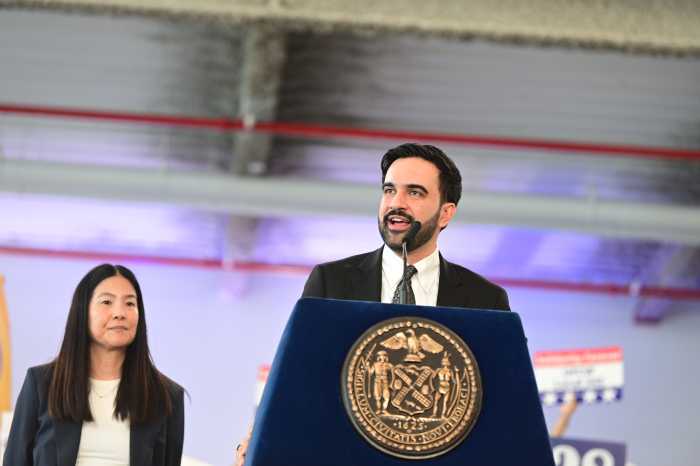
Last month, Mayor Mamdani announced his support for the bill, claiming that Amazon utilizes the practice to skirt accountability.
“Subcontracting has become a way to outsource labor and accountability, putting last-mile delivery drivers in danger, creating income instability, and making our streets less safe,” said Department of Consumer and Worker Protection Press Secretary Stephany Vasquez Sanchez in a statement to the Bronx Times.
“We cannot allow giant corporations and their lawyers to design working arrangements that let them reap the rewards while workers and the public bear the risks. New York City must pass the Delivery Protection Act.”

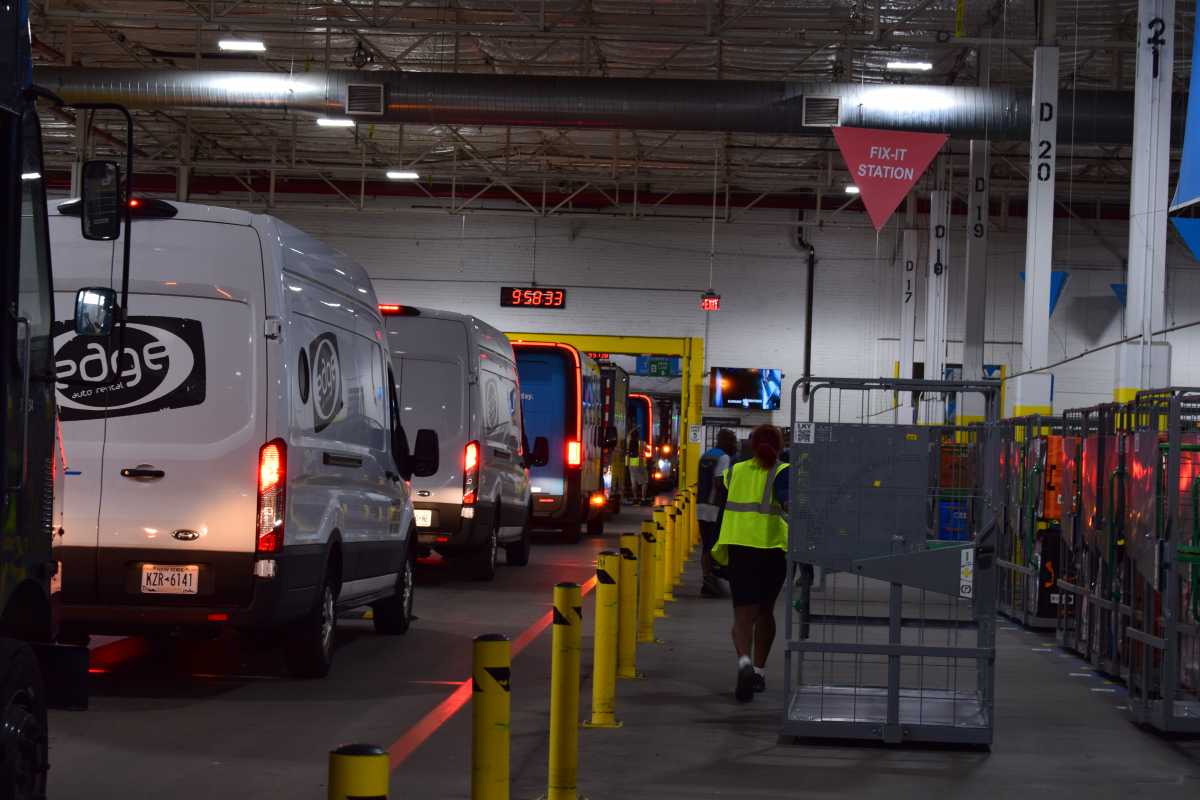
The bill has supermajority council support, but has yet to be called up for a vote amid intense lobbying from Amazon, which has said that it would consider relocating its warehouses outside of the city. Over 40 Delivery Service Providers (DSPs), Amazon’s last-mile delivery contractors, operate out of New York City, and employ over 5,000 workers.
The Bronx Times met with two DSP operators in the South Bronx, who argue that ending the subcontractor structure would endanger jobs and remove a community-oriented layer between delivery workers and corporations, which could result in fewer training and education opportunities for drivers.
Ty Barnes, CEO of NorthStar Logistics, which oversees drivers at Amazon’s DYN9 location in Hunts Point, said that he takes out extensive insurance to ensure worker safety.
He said that his connection to the neighborhood motivated him to use his DSP to provide unique opportunities to Bronxites, his “Investing in our NorthStars” program, for example, covers civil service exam fees for his employees, dozens of whom live in the NYC shelter system.
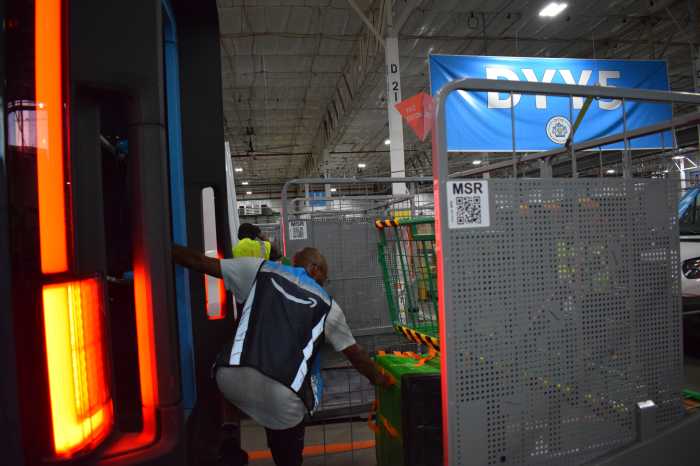
Barnes grew up in the North Bronx and said he remembered struggling to take civil service exams as a college student in need of better healthcare. After 25 years of working his way up from a meter reader to manager at Con Edison, he saw Amazon’s Delivery Service Partner network as an opportunity to give back to his community.
“I tell all my employees, if you’re here for more than a year, I feel as though I personally failed you. Because I want you to come here as a stepping stone,” Barnes said.
Supporters of the bill argue that DSPs are already at risk of shutting down due to Amazon’s business practices.
A complaint filed by the Teamsters Union found that 30% of closures in the transportation and warehousing industry in New York between 2023 and 2025 were Amazon DSPs, and that at least thirteen DSPs failed to give their employees adequate notice upon termination during the same time period.
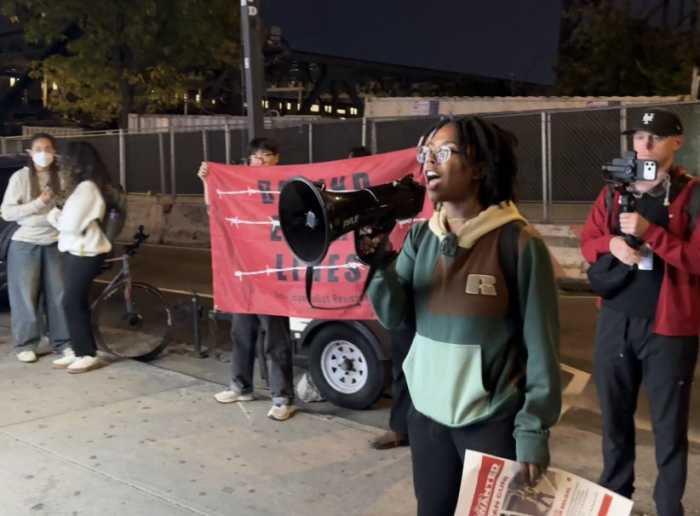
Safety of workers and road safety in general has also been a concern of activists fighting to get the bill passed. ALIGN, an alliance of labor and community organizations, recently released a map documenting the street safety impact of Amazon delivery vans.
“Amazon is already driving mass layoffs and closures of DSPs, wholly unrelated to this bill,” said Daisy Chung, ALIGN’s campaigns director.
“This is a way for them to walk away from any sort of responsibility or liability. Workers are driving Amazon branded advance leased from Amazon, wearing Amazon vests, taking orders from Amazon on their entire delivery routes, and delivering Amazon packages,” she added.
A 2025 report from the Office of the Comptroller found that 78% of areas surrounding last-mile facilities had more injury-causing crashes after they opened, with truck-related crashes increasing by 146%.
“Amazon’s trying to do, not just one day delivery, but, they’ve already launched a one hour delivery service in many parts of the country. And you can imagine the kind of crushing pressure that puts on delivery workers,” Chung said.
“These become possible when your system has to rely on cutting corners. This is not just about workers, but it’s about keeping other motorists, cyclists, and pedestrians safe on the road.”
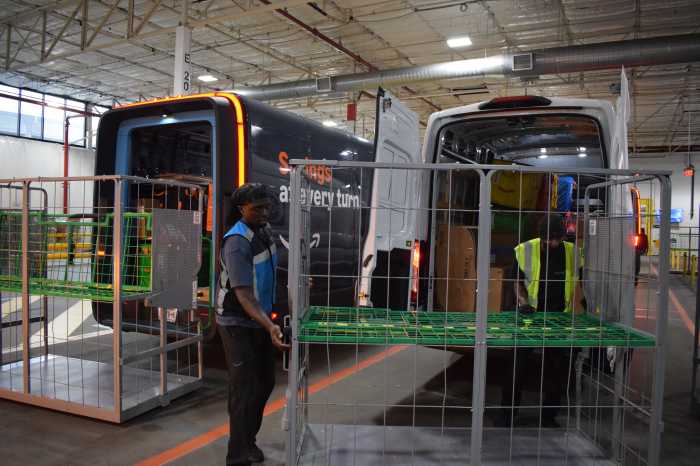
Luc Albert Rene, a delivery driver at Amazon’s DBQ4 location in Maspeth, Queens, said that he supports the bill because of the lack of accountability he’s seen from Amazon and DSPs during his four years with the company.
“I don’t have proper insurance, benefits, or wages,” Rene said.
In 2023, he slipped and fell on his knee as he was walking out of a house after delivering a package in the rain. When he reached out to his DSP, they said that they wouldn’t pay him for the rest of his shift if he stopped working. So he kept on working.
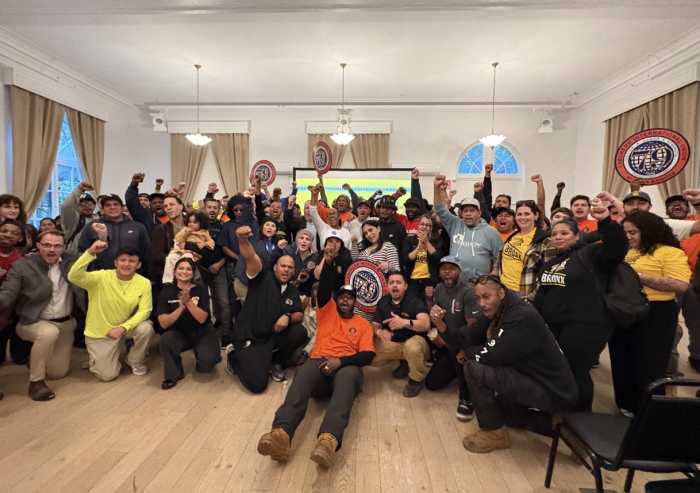
He began organizing with the Teamsters Union three years ago, after seeing Amazon fire one of his coworkers without even notifying the DSP that they worked for.
Rene said that he’s used to driving unsafe vans with broken air conditioning and that DSP owners will often let such issues slide for weeks after being notified about them.
“They don’t even clean the vans,” Rene said.
“It’s really difficult, but you don’t have to lose hope. It might look a little pointless, but the real hope is through our coworkers. Worker power. That’s the main thing that kept me for that long with the same DSP.”
Rudy Cazares, CEO of Cazar Logistics, runs his DSP operation out of Amazon’s DYY5 warehouse in Morris Park. He was born and raised in Queens to immigrants from Mexico, and went to public school in the city before serving three combat tours in the Marines.
After arriving home, he decided to start working in the logistics business. He said that he’s never been asked to terminate employees and that Amazon isn’t the only company that would be impacted by the bill. He also contracts with FedEx at another location in Nassau County.
“Amazon’s a trillion dollar company. I’m not worried about Amazon. Amazon’s gonna be okay. For them, this is a business line or a market. For me, it’s my team. It’s my family. This is my business,” Cazares said. “This is what I’ve dedicated myself to now for almost seven years. For me, this is the American dream, which right now is turning into an American nightmare.”
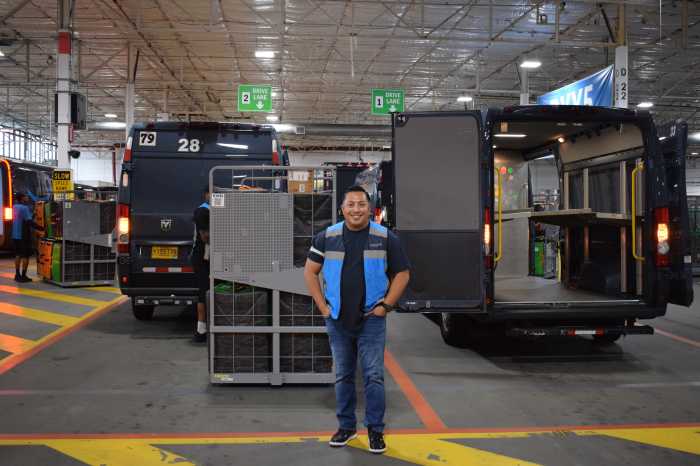
In April, Amazon testified to the NYC Council that 25% of New York DSPs are owned by Black or Hispanic entrepreneurs, and 10% are veteran-owned.
Cazares said that DSPs are already regulated by many city agencies, and that he doesn’t oppose adding new regulations to the list. But he argued that the bill would eliminate the small business owners who helped the city survive the COVID-19 pandemic.
“While people were stuck at home ordering packages, we were the ones on the street making those deliveries happening. We kept this city going,” he said. “If this bill goes through, small businesses will be destroyed, jobs will be eliminated. Bottom line, end of story.”
Both DSP owners said that they wanted to meet with the mayor to discuss concerns around worker safety.
“Talk to us, come see it, talk to our drivers unsolicited, and look at all the programs that we offer,” Barnes said.