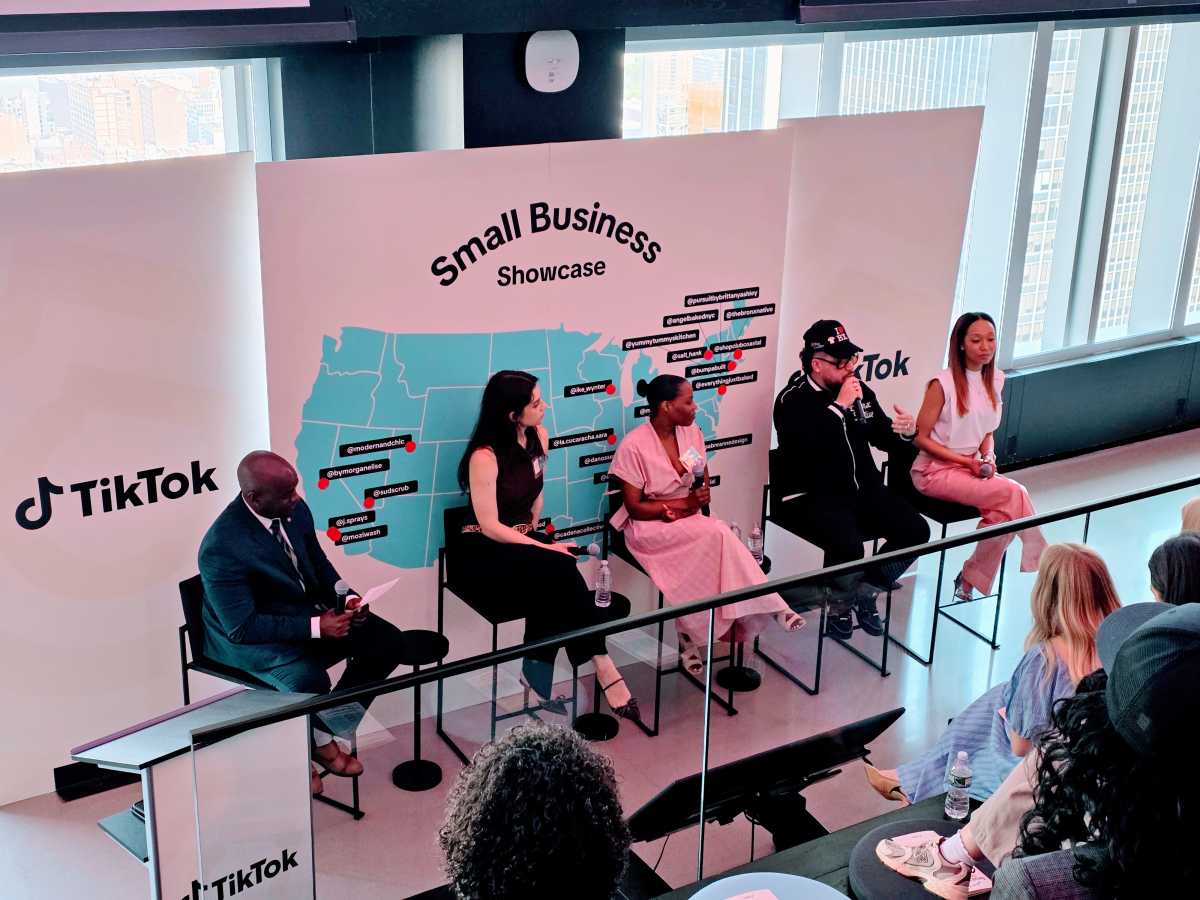
A diverse group of entrepreneurs and content creators from New York City and 19 states recently gathered at TikTok’s Manhattan headquarters, where they showcased their unique brands and discussed the power of social media in the independent business ecosystem.
City Council Speaker Julie Menin and Bronx Council Member Kevin Riley joined the May 19 event in support of TikTok’s ability to help entrepreneurs take their brands to the next level despite high operating costs and other industry challenges.
TikTok, the short-form video creation and sharing app, has survived its own drama. In Jan. 2025, it briefly went dark in the United States under a law passed during the Joe Biden administration that raised national security concerns about TikTok’s Chinese parent company, ByteDance. If the company remained Chinese-owned, it faced a permanent ban.
But when President Trump took office, he immediately signed an executive order to keep TikTok running while a U.S. sale was worked out. Today, the company is now majority-owned by U.S. firms but remains partially owned by ByteDance.

At the local level, the app was also banned from city workers’ devices under the Eric Adams administration, but Zohran Mamdani reversed the ban after taking office.
With TikTok apparently here to stay, more entrepreneurs should jump aboard — and the city should help facilitate, Riley said. “I have seen firsthand how just a viral video can take a business from point A to point Z.”
For potential new customers, TikTok has numbers on its side. The app is overwhelmingly popular, with close to 200 million United States users, at least half the country’s population.
At the same time, TikTok Shop, where users make purchases from within the app, is helping drive a boom in “social commerce.” Company research shows that 3 in 4 users are likely to buy something while scrolling on TikTok, and 70% discover new brands there.
At the event, TikTok’s headquarters was filled with many creatives who started in-home microbusinesses and used authentic social videos to promote their brands and connect with customers. From all across the country, these entrepreneurs are showcasing their baked treats, candles, chocolates, florals, hats, hot sauces, leather goods and more using TikTok videos.
Riley, a member of the Economic Development committee, moderated a panel of New York City-area content creators that included Amaruys Grullon of Bronx Native, whom Riley said “turned Bronx art into viral sensations.”
Grullon said social media was key to taking his brand years beyond its originally planned two-week pop-up and that TikTok helps him share his Bronx merch with a wider audience. “I’m a firm believer that the world needs to know who we are,” Grullon said.
Others in Riley’s “Concrete Jungle, Digital Dreams” panel were Abbey Kowalec of Angel Baked NYC custom cookies; Melissa Johnson of Yummy Tummy’s bakery in Brooklyn; and Brittany Ashley from Long Island, owner of Pursuit by Brittany Ashley, a natural skincare line.
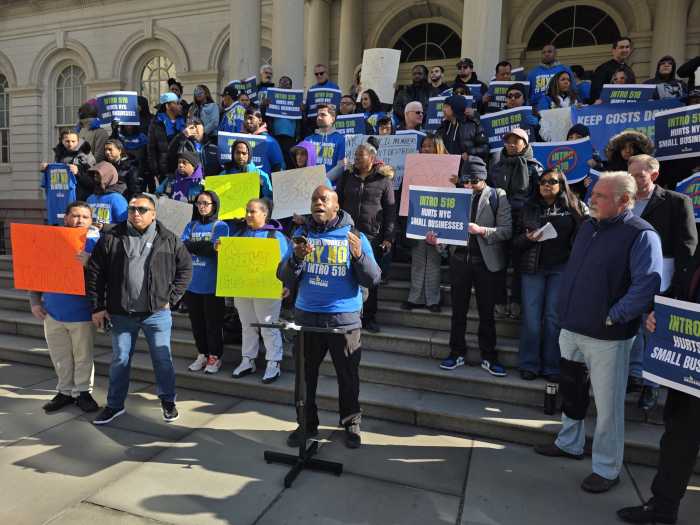
Riley spoke about a new bill aimed at helping New York City business owners like them, as well as those on the content creation side.
His bill, Intro 408, would require the city Department of Small Business Services (SBS) to create a pilot program pairing content creators with small business owners who want marketing and advertising assistance.
Under the bill, SBS would conduct public outreach, promote the program, make matches between creators and businesses and submit a report to the council after the pilot concludes.
The legislation was co-sponsored by fellow Bronx members Althea Stevens and Elsie Encarnacion, along with several more in Brooklyn, Queens and Manhattan.
Speaker Menin, former chair of the Small Business Committee, told the group that Riley’s bill could be “revolutionary” in helping local entrepreneurs persist in a challenging environment.
Menin said she understood the feeling firsthand, as the former owner of a restaurant and catering business in lower Manhattan that was “completely decimated” by the Sept. 11 attacks. Unable to operate, she pivoted into public service, establishing a nonprofit that helped more than 600 businesses affected by the tragedy.
But today, Menin pointed to a troubling trend: last year in New York City, more than 5,000 small businesses shuttered, and more businesses closed than opened, she said.
Social media is an important tool, and yet many entrepreneurs are too busy to develop a strong online presence, and one-third have none at all — which is where a program created by Riley’s bill could help, according to Menin.
“You are all the messengers who can help get small businesses where they need to be,” she said.
Reach Emily Swanson at eswanson@schnepsmedia.com or (646) 717-0015. For more coverage, subscribe to our newsletter and follow us on Twitter, Facebook and Instagram!