![IMG_8617[2737]](https://www.bxtimes.com/wp-content/uploads/2026/04/IMG_86172737-rotated-e1776183689124.jpeg?quality=51&w=1200)
When Ken and Helene Orce bought their Edgemont home 33 years ago, they didn’t know it held a hidden piece of Holocaust history.
While renovating their home, Ken and Helene found a case filled with 26 colored pencil drawings done by concentration camp survivor Marcel Roux weeks after liberation tucked away with newspaper clippings in a small space above a closet.
“When we found it, we were in awe. We knew we had to do something with it,” Helene said.
They contacted Ruth Epstein, the wife of Dr. William Epstein, who had lived in the house, only to hear that she didn’t want the drawings back.
“We were a little bit stunned,” she said. “Whatever was left, was left.”
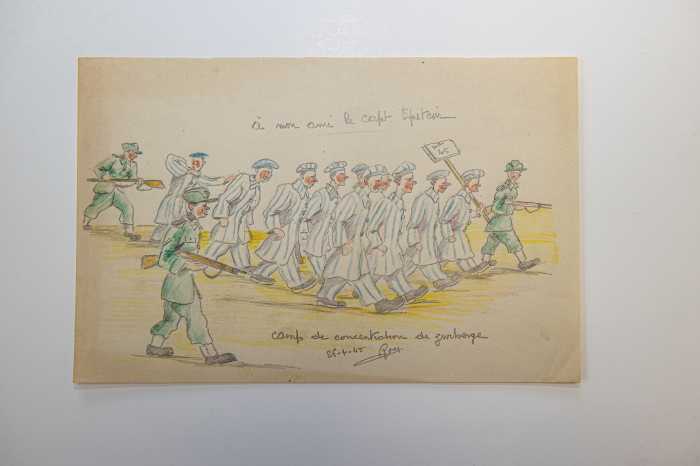
The drawings, done in the two weeks following the liberation of the Langenstein-Zwieberge concentration camp by American troops, had been given to a U.S. Army Captain William Epstein, who went on to attend Cornell University Medical School.
The Orce’s ended up donating the artwork to Ken’s alma mater, Manhattan University, a Catholic University in Riverdale. They are now on display at Manhattan University’s O’Malley Library Gallery.
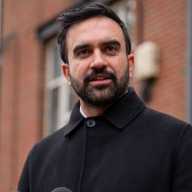
“The drawings represent an important form of primary source documentation, and they will now serve the very purpose for which Roux created them,” said Professor Mehnaz M. Afridi, director of the university’s Holocaust, Genocide and Interfaith Education Center.
“To ensure that the suffering and crimes of the Holocaust, and the stories of its survivors, are remembered and documented for future generations.”
Afridi described the pictures, on display along with panels explaining the images and how they had been found, as an account of life in the camp.
“We know he wanted to tell his story at least in terms of these sketches,” she said. “These sketches have never been seen in public before. You see the sequence of what happened to the victims. This is a visual representation. It also shows that non-Jews could risk their lives.”
Helene also believes the images were done to provide a kind of record, transcending language, by a French resistance fighter given to an American.
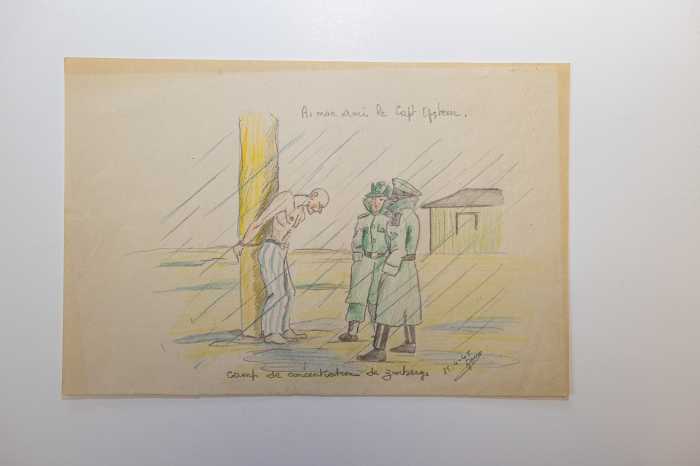
“I think it was to preserve history,” she said. “What could he do while he was there? This way he had some artwork. You could get a feeling of what was going on.”
The Orce’s kept the drawings for decades, periodically looking at them and then returning them to a kind of limbo.
“We had them here for 30 years,” Helene said. “We would show them to people. They would say you’ve got to sell them. We were very much against selling them.”
The Orce’s tried to donate the drawings by a French resistance fighter, who wasn’t Jewish, to Holocaust organizations who didn’t indicate the intention of maintaining an exhibit.
“The answer was they’d be happy to take them, but would not display them,” Helene said. “They already had too much in their archives.”
Ken graduated from Manhattan University, once he contacted Tom Mauriello at Manhattan University, he said they would love to get the drawings.
“I am so happy that they have a home now,” he said. “And that people will be able to see them and see this part of history.”
Afridi said the word ‘Kuenstmahler’ or artist, but not professional, was on Roux’s identity card along with a red triangle, which stands for resistance.
The Orce’s saw Manhattan University’s Holocaust center, which already further investigated the drawings’ origins, as an ideal home.
“Manhattan College is in our hearts forever. When he was a sophomore in Manhattan, his father died of a massive heart attack,” Helene said. “He withdrew from Manhattan. Two days later, he got a call from Manhattan saying they would provide a full scholarship.”
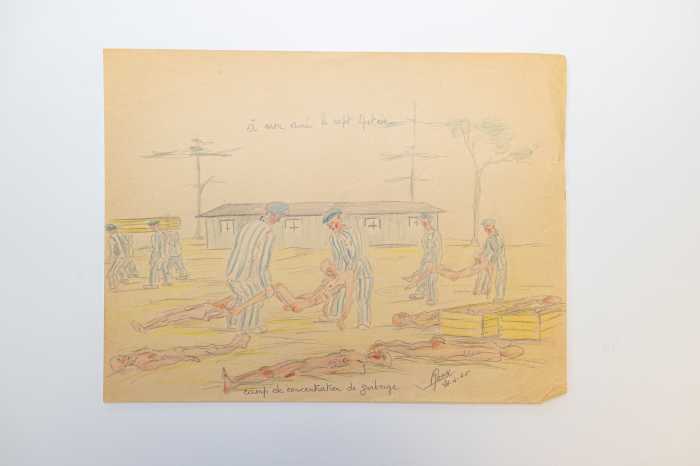
Afridi said Roux was born in 1904, did the drawings in 1945 and died in 1982. “He was not a known artist,” she said. “He was somebody who was very talented.”
They found out Roux was a French resistance fighter who along with his wife fought against fascism. She was sent to Ravensbrook, where she was killed. He spent three years in Sachsenhausen and time in Buchenwald in early 1945 before being moved to Langenstein-Zwieberge.
“The French resistance movement from 1940 to 1945 was huge,” Afridi said. “It had in its membership not only Jews, but Protestants, Catholics, Muslims and others.”
The drawings show guns pointed at inmates and other scenes from the living hell of a Nazi labor and concentration camp.
Afridi said she “created an exhibit,” because she doesn’t like things to be just sitting in a box.
“We are located in the Bronx, but also in Riverdale,” Afridi added. “Many Holocaust survivors went there after World War II.”
Manhattan University created its Holocaust resources center to serve the community and tell an important story.
For additional information and hours on viewing the artwork, you can call 718-862-7743 or email ManhattanUniversityDKC@DKCNews.com.