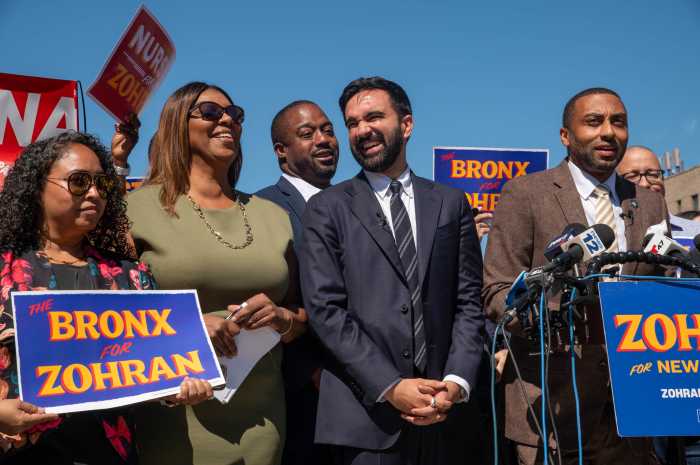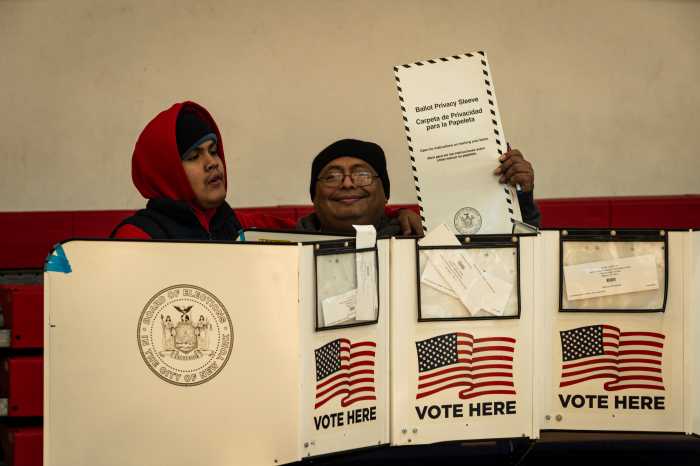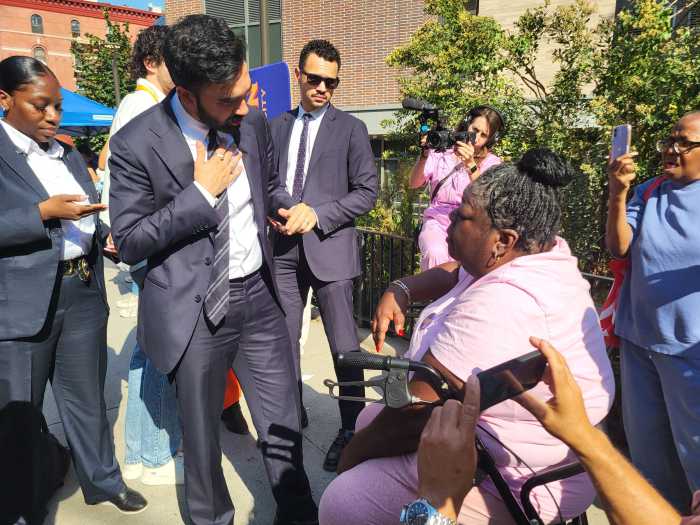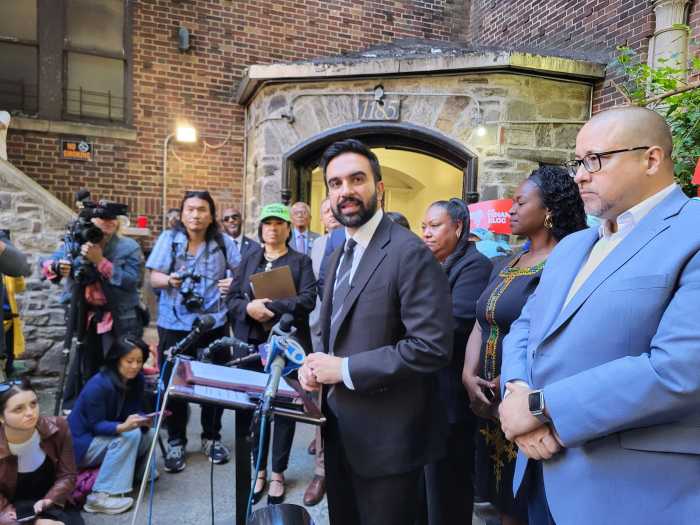

In New York City, the political joy being felt in the wake of this year’s mayoral election right now has not been this strong since Barack Obama’s victory in 2008. But the lesson this time, is different from believing in one person. This time, the lesson is about recognizing the power New Yorkers already have and if they are willing to wield it to make government be responsible.
For New Yorkers, day-to-day life has become a non-stop experience of compromises and trade-offs. Transit prices just keep going up and up. Childcare remains unaffordable to families who work. Healthcare has become more precarious and less affordable. And now even middle-class families—once the bedrock of the city and the state—are starting to see that the affordable is not available.
It is against this backdrop that the recent election result, which has electrified New York, has happened. There will be parallels to 2008 in what comes next, but the one comparison that needs to be highlighted is what came before the civic engagement.
In 2008, Americans went to the polls and put their trust in a person who symbolized change. Today, New Yorkers would be wise to put their faith in each other and their collective action to create the conditions that change demands.
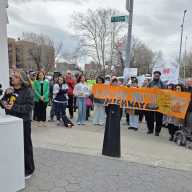
The NYC mayoral election result did not happen because of the personality. It happened because New Yorkers showed up. Organized. Mobilized. And showed up again to make conscious choices about the direction that they want the city to go. The difference matters. It is not just that voters showed up for a set of ideas. They showed up to show that they can move results.
The real challenge is whether that power can be sustained beyond election day. I believe that it can. The affordability crisis is real. The affordability crisis is structural. The affordability crisis is historical and the product of policy decisions.
The affordability crisis arises from decisions about what the government will value and subsidize and what will be left to the market to provide. The affordability crisis is about whose humanity is at the center of public systems and whose is pushed to the margins. Conversations about transit, affordable healthcare and childcare should not be aspirational. These and other basics are the foundation of a healthy economy and a sustainable city.
Policy proposals like those that the incoming administration is putting forward now give us an opportunity to reimagine and reduce un-affordability. Momentum alone will not drive policy decisions forward. In addition to momentum, what is needed are continued public participation, advocacy and engagement—especially after the honeymoon period wanes.
This is where efforts so often lose steam. Elections become treated like ends or results rather than beginnings or inputs. Energy fades. Voters slip into individual survival mode as organizations return to business as usual.
The result is disillusionment—not because change is impossible but because the civic infrastructure to advocate with and for fades, is no longer cultivated, watered and cared for.
New York cannot afford to go through that cycle again.
A winning issues platform and the diverse coalition of New Yorkers whose shared destiny propelled them from invisibility to visibility were what set New York City’s mayoral election apart.
Communities that bear the brunt of the cost-of-living crisis the most—transit riders, healthcare workers, renters, caregivers—whose lived experience grounds them in knowing that their civic participation was and is a source of power.
The next steps need to be about translating that participation into governance power. Meaning, among other things, continued engagement during budget negotiations and timelines for execution. This election result is a sign that people recognize that progressive wins are not inevitable when a candidate is elected, but when policies are funded, carried out and implemented on a regular basis.
It is a sign of turning away the idea that disillusionment is to be expected because government is complex.
This moment is hopeful especially because it signals a shift in voter expectations. New Yorkers are not just going to settle for token wins or symbolic gestures. They want functional systems—affordable and reliable transit, childcare that allows families to keep working, healthcare that is not tied to employment or location.
And that expectation is a form of accountability.
It is real to feel jubilant about this election, and to do so is warranted. But what this moment means will be defined not by how people feel after the high, but by what New Yorkers do going forward.
If the takeaway from 2008 is that hope alone is insufficient, then the lesson today should be more obvious: power is not invested in one office holder.
Power rests in those who made this result possible — and who now have the opportunity, and the responsibility, to ensure that it leads to change that lasts. New Yorkers, do not let your moment pass you by.
Dr. Lessie Branch is an award-winning author, a U.S. Navy Veteran and a public and urban policy scholar with a focus on racial socioeconomic and political disparities.