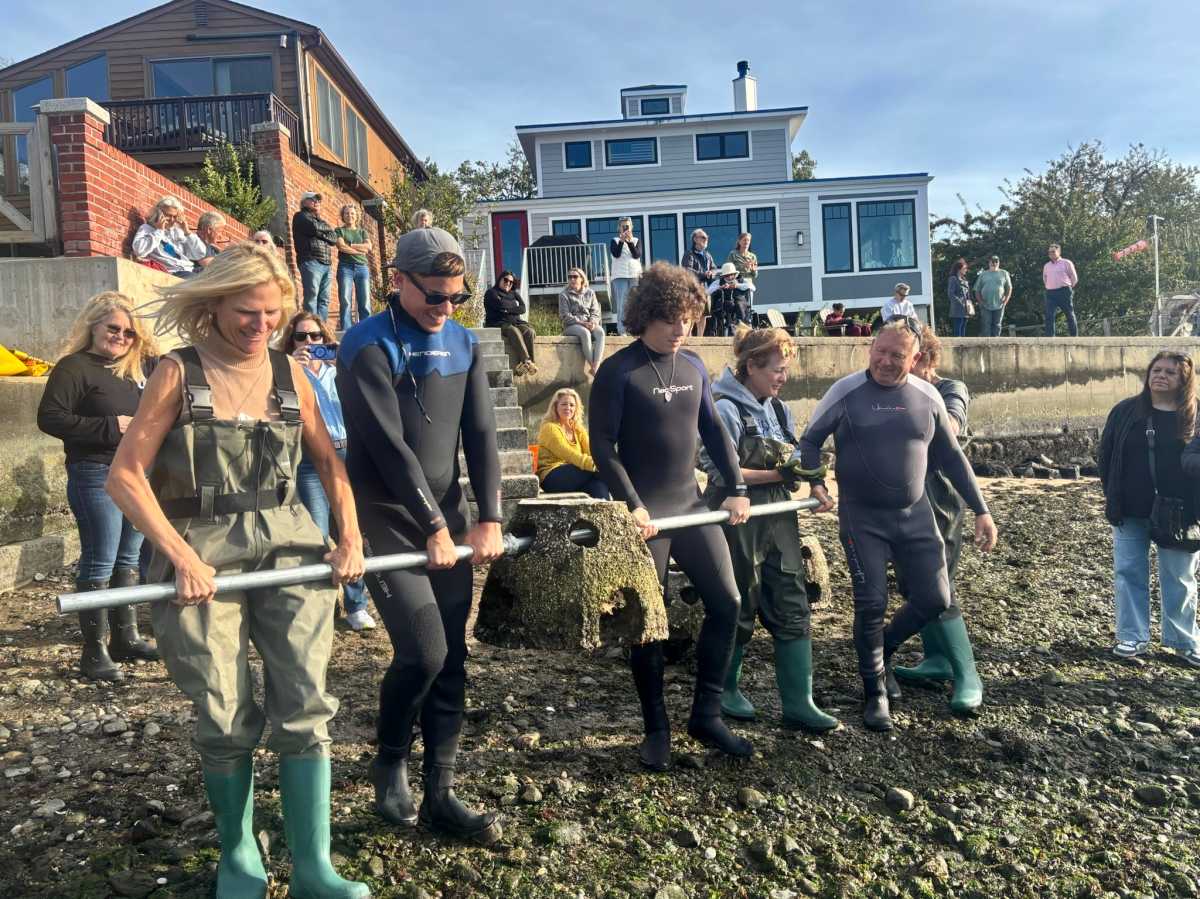
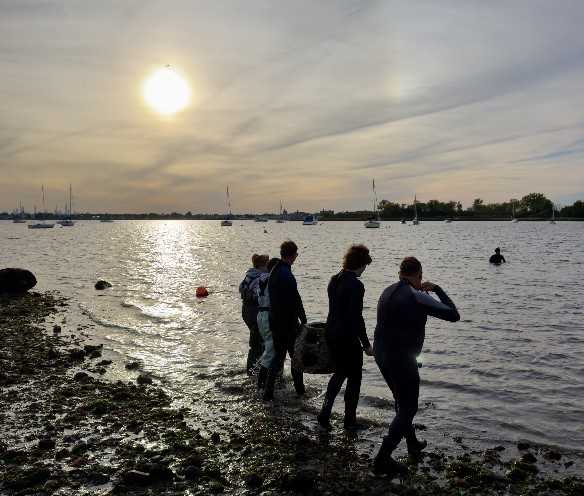
After more than seven years of research and planning, City Island Oyster Reef reached a major milestone on Oct. 9, placing its first six permanent oyster reef balls into Eastchester Bay.
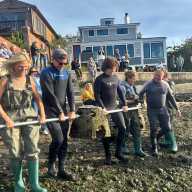
The installation took place off Tier Street near Delmour’s Point, where volunteers and family members waded into the water carrying concrete reef balls weighing approximately 175 pounds each. For the organization, founded in 2019, it was a chance to celebrate how far its efforts to restore native oysters have come and remember eight people who helped make it possible.
City Island Oyster Reef Chair Sally Connolly said the organization received its long awaited permit from the New York State Department of Environmental Conservation on Oct. 8, just one day before the installation.
Getting there took seven years of work, Connolly said. Volunteers and researchers tested water quality, monitored oysters and fish, conducted underwater surveys and studied the seafloor to determine whether the area could support a permanent reef. The project also received approval from the U.S. Army Corps of Engineers.
The six reef balls had been at Cornell Cooperative Extension’s marine hatchery in Southold since June, where they were seeded twice with oyster larvae before being transported to City Island.
Once they arrived at the Tier Street waterfront property of Hailey Clancy, the organization’s lead scientist, the team began documenting the oysters growing on them.
Researchers counted oysters on two reef balls, comparing one with an open bottom to another with a closed bottom. They also used photogrammetry, taking photographs from different angles to create detailed three dimensional images, giving them a way to track growth over time.
The reef balls provide a permanent, hard surface for young oysters to attach to and grow. As more oysters settle, the structures can develop into living reefs that shelter fish and other marine life while helping filter the surrounding water.
Clancy said the new reef is already showing encouraging signs.
“Our volunteer SCUBA team inspected the newly installed reef balls this week and observed fish, crabs, and shrimp living in the new habitat. The oysters are healthy and busily filtering the water,” Clancy said.
That work is especially relevant in Eastchester Bay, where water quality remains a concern. In Save the Sound’s 2026 beach ratings, American Turners New York, White Cross Fishing Club and Trinity Danish Young People’s Society received failing grades tied to bacteria measurements.
Oyster restoration cannot solve pollution on its own from sewage and stormwater runoff, but the organization hopes its work will help strengthen the bay’s marine ecosystem.
There are already other signs of how oyster habitats can benefit wildlife. During a recent monitoring session at American Turners New York, volunteers observed and recorded nine blackfish using an oyster cage and surrounding shells as shelter.
The Oct. 9 installation was also a deeply personal occasion. The organization dedicated the reef balls in memory of eight contributors who have died: Dr. Heike Neumeister, Walter Rodstrom, Malcolm Campbell, Dr. Patrick Gannon, Mike McElroy, John Garisto, Daniel Sterman and Adam Calbo.
Connolly and Mike Carew, the organization’s vice chair, reflected on the work of those honored, whose contributions included science, public outreach, diving, marine expertise and years of volunteer service.
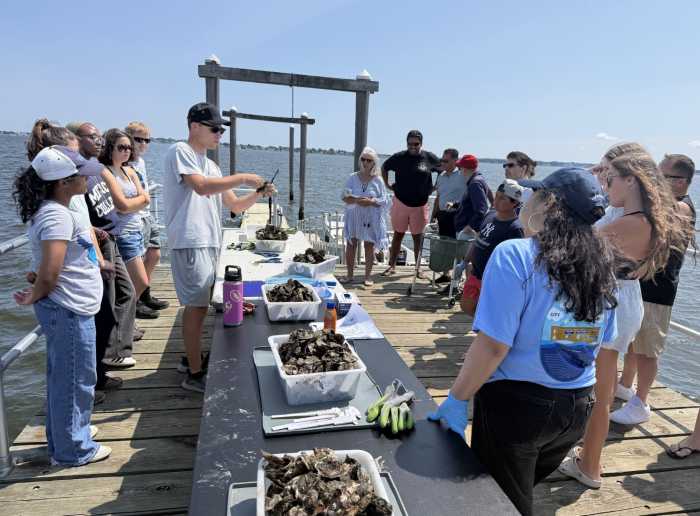
Clancy explained the reef ball design with models and oyster shells along her seawall before relatives of the honorees joined volunteers to carry the structures into the bay. Each ball was fitted with a steel bar so four to six people wearing waders and wetsuits could share the weight.
The eight names were engraved on identification tags attached to the six reef balls. Designated family members removed the tags before receiving them as keepsakes.
Connolly called the process of walking the reef balls into the water “a moving experience for the families and friends,” offering a moment to remember those whose work helped bring the project to this point.
The reef balls were placed in a subtidal area, where they will remain submerged as oysters continue to grow.
Among those invited to the dedication were representatives of P.S. 175, P.S. 583, P.S. 94, Save the Sound, Cornell Cooperative Extension, Hudson River Foundation and the Reef Ball Foundation, along with residents who took part in years of field work.
The installation is a step toward the organization’s larger plans for reef restoration at Delmour’s Point and Pilot Cove, intended to support oyster populations and marine habitat in the western Long Island Sound.
After the final reef ball was placed, those gathered shared drinks and brief toasts. It was a celebration of a long awaited achievement and a remembrance of the eight people whose contributions helped bring a living reef one step closer to reality.