
In December, the Department of Education proposed new caps on federal loans for graduate students that would have very real, harmful consequences for New York City communities already stretched thin.
As part of the One Big Beautiful Bill Act (OBBBA) implementation, the Trump administration is preparing to finalize guidelines that narrow the definition of “professional” graduate programs, which would exclude fields like nursing, teaching, and physician assistantship, dramatically reducing how much students in those programs can borrow.
That decision compounds the impact of other OBBBA provisions, including aggregate borrowing caps for Federal Direct Loans across undergraduate and graduate programs, as well as the elimination of the Graduate PLUS loan program, effective July 1, 2026, which many students rely on to cover basic living costs.
The culmination of these changes would create a significant barrier for students from economically disadvantaged backgrounds to pursue high demand and essential careers.
The situation wouldn’t just hurt students. It would hurt the neighborhoods that need their skills in their schools and hospitals.
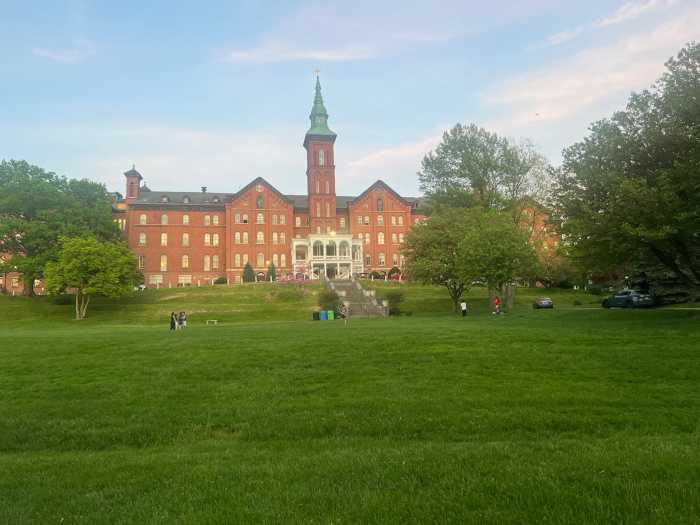
At the University of Mount Saint Vincent (UMSV) in the Bronx, we educate more than 1,000 master’s students preparing for careers as teachers, physician assistants, and family nurse practitioners.
As a result of the change in loan policy, those students will only be able to borrow $20,500 per year, when our physician assistant program’s direct and indirect costs, for example, total about $92,000 per year.
We are doing everything we can to help students navigate this uncertainty, including explaining alternative loan options and identifying institutional or private resources. But private loans come with higher interest rates, fewer protections, and far greater risk, especially for first-generation students.
No amount of financial counseling can replace the stability and safeguards of the federal loan system our students were promised when they enrolled.
UMSV’s nursing and physician assistant graduates often work in the Bronx—and anything that makes that harder will have negative impacts on a county with the lowest health outcomes of all 62 New York State counties and a state already facing nursing and primary care workforce shortages.
Our physician assistant program is the only registered physician assistant master’s program in a borough whose hospitalization rate is five times the national average. The Bronx desperately needs the physician assistants and nurses trained right here by institutions committed to serving the borough and city.
In December, Congressman Ritchie Torres, whose district includes UMSV, introduced the Professional Degree Access Restoration Act, which would restore full federal loan limits up to the cost of attendance.
The bill is intended to ensure that students in fields such as medicine, law, social work, engineering, education, and public health are not forced to rely on higher-cost private loans or abandon their studies because of reduced federal support.
In a borough of New York City where nearly half of all residents are foreign-born and median household income lags behind the national average, educational opportunity is essential, and life-saving.
Congressman Torres’ bill has a long path to potential enactment, and alternative proposals that have been introduced offer a legislative compromise. However, the Torres bill reflects something everyone in the Bronx knows but Washington is missing: you can’t fix workforce shortages by making it harder to enter the workforce.
Limiting student loan access will disproportionately hurt low-income, first-generation, and working-class students, and will prevent them from staying in and serving in their neighborhoods.
New York City and the Bronx cannot meet workforce needs if the federal government makes it harder for residents to become educators and healthcare providers. Congress should pass the Professional Degree Access Restoration Act. Our student-loan system should expand opportunity, not close doors for those who passionately want to serve.
Dr. Susan R. Burns is president of the University of Mount Saint Vincent in Riverdale, where 90% of undergraduate and graduate students are preparing for public service careers in healthcare or education.