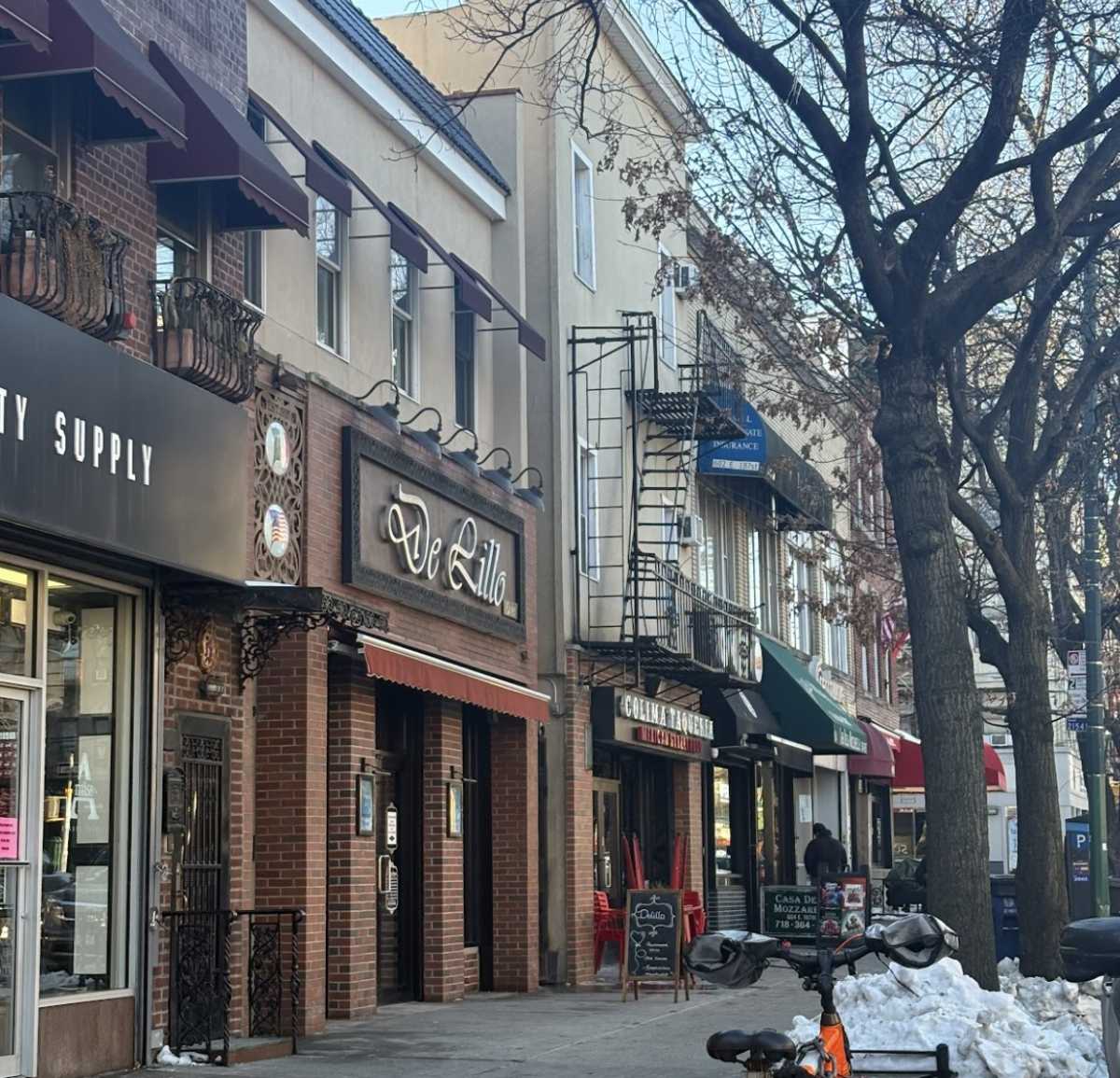
Arthur Avenue in the Bronx is often called New York City’s “real Little Italy,” a distinction from Manhattan’s Little Italy. Longtime business owners say this “comes from generations of Italian immigrant families who continue to live the American Dream.”
Unlike Manhattan’s Little Italy, which has become a tourist commodity, the Bronx’s Little Italy remains defined by family-owned bakeries, butcher shops and sandwich counters with roots extending back more than a century.
The neighborhood dates back to the 1700s, when Pierre Lorillard established P. Lorillard & Co., the first tobacco company in New York, on the site that would become Arthur Avenue. Families all over Italy began immigrating to the Bronx in the early 19th century and continued to arrive throughout the late 20th century.
As a result, they established family-owned bakeries, butcher shops, and restaurants over several generations, creating a tight-knit community where neighbors knew each other by name and supported one another.
Today, Belmont showcases a wide variety of regional Italian cuisines and distinctive culinary influences, reflecting the ongoing legacy and diversity of its Italian immigrant population.
Two of those businesses — DeLillo’s Pastry Shop and Casa Della Mozzarella — tell that story through the people who run them.
Josephine Florio has worked at DeLillo’s Pastry Shop since 1984, carrying on a legacy passed down through her family after they immigrated from Italy’s Amalfi Coast in the early 20th century.
“My uncle worked with the original owners, The DeLillos, and when their daughter, Rose, did not want to keep the business, my family was allowed to take it over,” Florio said.
“Opening in the Bronx felt right because this is where the Italian community really was.”
As Italian immigrants settled throughout the Bronx decades ago, Arthur Avenue became a cultural hub where families could preserve language, food and tradition. A haven away from home. Florio said her family arrived with limited English, depending entirely on their culinary knowledge and heritage to build a livelihood.
“They came with their culture and hands,” she said. “That is what they had to offer.”
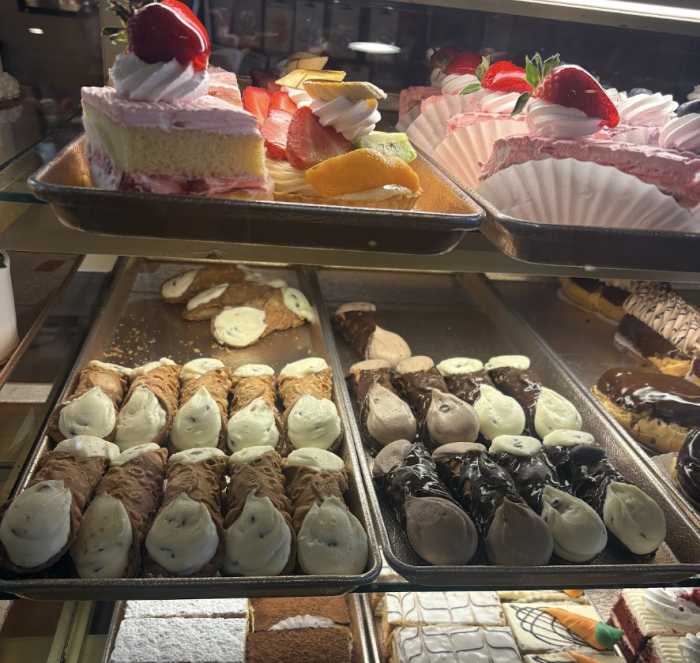
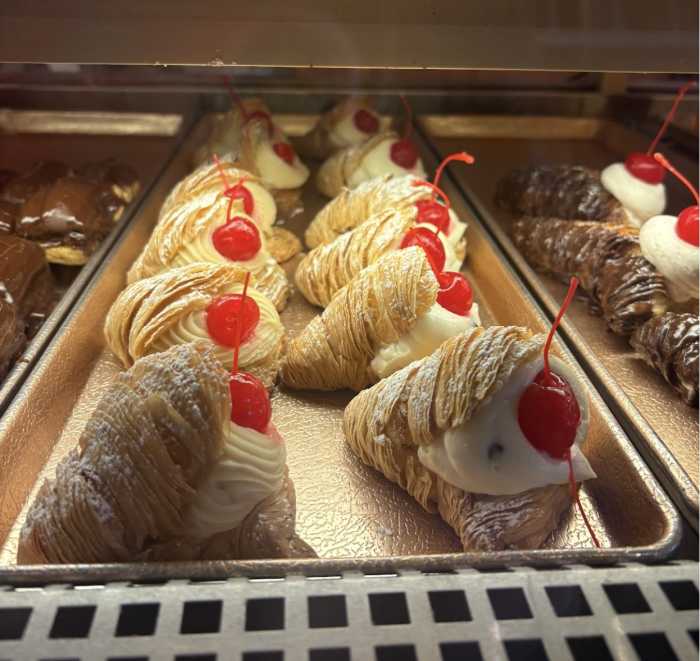
Today, DeLillo’s is famous for its classic Italian pastries, each made from family recipes carried down through generations. Handcrafted pignoli cookies coated with toasted pine nuts, lobster tails filled with rich mascarpone cream and delicate cannolis in espresso, chocolate and classic flavors.
Not only do these sweets showcase Florio’s pastry skills, but they also reveal her deep personal connection to her heritage. She says these recipes and traditions represent her family’s legacy, which she upholds with pride and passion.
“If you do not have that, you will not make a good pastry,” Florio said. “When you really love what you are doing, the dessert feels it. And the judge, our customers do too.”
The bakery’s pignoli cookies – typically made with almond paste and pine nuts – have become a signature item. Pine nuts are costly, Florio said, but the shop keeps prices accessible to maintain a sense of home for customers.
“I want people to feel like they are coming to their grandmother’s or aunt’s house,” she said.
“Have a coffee, have something sweet, gossip about everyone. Those slow yet calm moments are what people miss while living in the country’s busiest city. We are all desiring connection at the end of the day.”
Just a door down, Casa Della Mozzarella continues a similar tradition, centered on fresh cheese and simple, authentic sandwiches.
Carlo Carciotto, whose father immigrated from Sicily, said the shop opened in 1993 with a single goal: make mozzarella by hand, every day.
“My father came here with nothing,” Carciotto said. “He did not even know how to make mozzarella when he arrived. He built everything from a bowl of milk.”
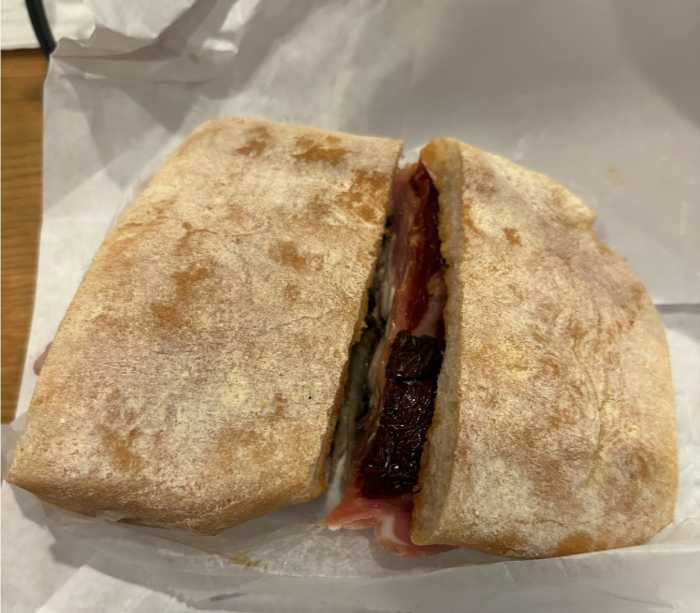
More than three decades later, Casa Della Mozzarella pulls fresh mozzarella every 20 to 30 minutes and has gained national recognition.
Its signature “Casa” sandwich was named one of the top Italian sandwiches in the city by The Infatuation and ranked among The New York Times’ best sandwiches in New York City.
“We try to do it like in Italy,” Carciotto said. “Simple sandwiches. Thin prosciutto di Parma, fresh mozzarella, sun-dried peppers from Italy, a little oil and balsamic. The simplest ingredients — that is the Casa.”
Carciotto said working alongside his father has shaped his feelings of identity and responsibility.
“Everything I do represents the Carciotto name,” he said. “This is my legacy. It is our culture.”
Together, businesses like DeLillo’s and Casa Della Mozzarella continue to define Arthur Avenue’s identity, even in such a modernized city.
For families who have worked there for generations, the Bronx’s Little Italy is a community that embodies family ties, history, plus a commitment to culture.
These family-owned businesses show that maintaining tradition is possible through community connections. This enduring feeling of community not only accentuates the collective identity of Bronx Little Italy but also its strong cultural presence amid a city that is always evolving.
By maintaining these family-run businesses in the Bronx, the community continues to embody what many consider the “real” Little Italy of New York City. Each street continues to carry a distinctive charm shaped by decades of immigrant life in the birthplace of the melting pot.
“This neighborhood holds history,” Josphine said. “And it holds people.”
Bridgette Leahy is an intern at the Bronx Times. For more coverage, subscribe to our newsletter and follow us on Twitter, Facebook and Instagram!