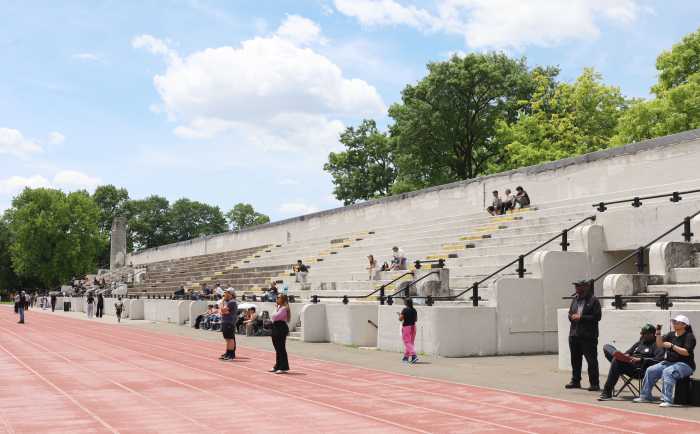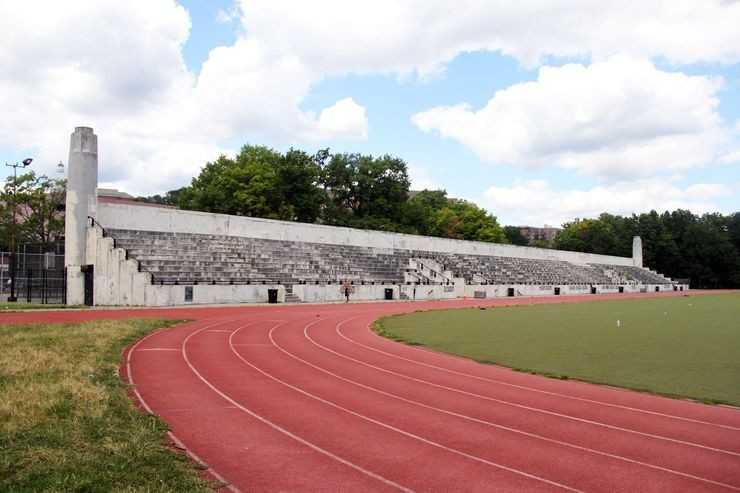
The deteriorating Van Cortlandt Park Stadium has reached a point where it can no longer be repaired and will require significant funding for demolition, according to officials from the New York City Department of Parks and Recreation, who returned to Community Board 8 on the results of a structural assessment.
“There is no way to repair it,” said Maralisa Wise, director of architecture for NYC Parks, told board members during the Parks and Recreation Committee’s final meeting before its summer recess.
“Saving the building would mean demolishing it, and [we] cannot save the building.”
The findings stem from a planning study first unveiled at an April 22 Community Board 8 meeting, where residents and board members first learned the extent of the stadium’s deterioration.
According to Parks officials, the study identified a range of structural deficiencies. The building’s foundation is too shallow, causing recurring concrete cracking that would continue to require repairs every four to five years. The mechanical, electrical and plumbing systems have not been replaced since the stadium was built and would require complete replacement.
The study also found asbestos, lead and PCB contamination within the building, along with what officials described as a sizable rat infestation. In addition, the facility is not ADA-accessible and does not comply with modern building and energy codes.
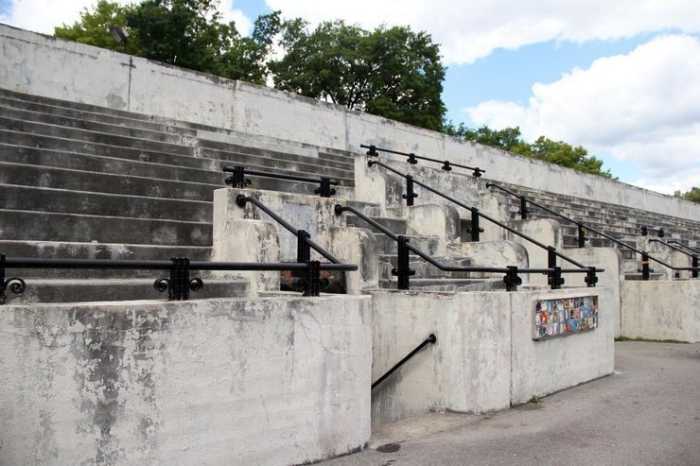
“The immediate need is for us to address the stadium building,” said Wise “We have learned through this study that it is in such a state of deterioration that it will continue to worsen.”
Wise warned that continued deterioration could eventually force the city to close areas surrounding the building, including the heavily used handball courts.
“We really don’t want to get to that point because we see how important the handball courts are,” she said.
Despite the urgency, the project currently has no funding for either demolition or redevelopment. Wise said Parks sought funding through the city’s most recent budget process but did not receive it. Because the agency has not yet solicited bids from contractors, officials do not have a cost estimate for demolition, though Wise said the process itself could take between six months and a year once funded.
For now, Parks plans to continue monitoring the building’s stability, which has been closed since 2021. Structural engineers are expected to inspect the facility again within the next two months while the department works to keep surrounding recreational amenities open.
“Our next steps are doing the structural investigations annually, making sure that we keep the facility safe and keep as much recreation around the stadium open for as long as possible,” Wise said. “At the same time, advocating for money. That is definitely a place where the agency and the community can work in tandem so elected officials hear that this is an important thing that they should advocate funding for.”
When asked why Van Cortlandt Park Stadium has not received the kind of restoration funding that recently helped reopen Orchard Beach Pavilion, Wise said the stadium faces unique structural challenges. The facility was originally built on an unstable landfill in what had once been swamp land filled with trash.
Parks officials also presented two possible concepts for redeveloping the site. One option would create a membership-based recreation center featuring a gymnasium, indoor fitness spaces and other amenities. A second option would establish a non-membership community center while preserving historic elements of the original stadium.
Officials said the existing building footprint, approximately 15,000 square feet, is too small to accommodate many of the amenities residents requested during community engagement sessions conducted in 2024. Survey respondents identified walking, jogging and handball as the park’s most popular activities, followed by track and field, soccer and baseball. Community members also expressed interest in additional restrooms, lighting and seating.
“We want to keep hearing from the community what scope is most important for any future building so that we can together advocate for funding for the right scope,” Wise said.
Several board members raised concerns about the redevelopment concepts, particularly the prospect of a membership-based facility that could limit access for some residents. Deb Travis, chair of the Parks and Recreation Committee, encouraged the department to conduct another round of community engagement before moving forward with any plans.
Alberto Milan, chief of staff to the Bronx Parks Commissioner Jessenia Aponte said that they have been in talks with local elected officials and are actively trying to get funding but first need to finalize what redevelopment option they will be proceeding with.
Reach Marina Samuel at msamuel@schnepsmedia.com. For more coverage, subscribe to our newsletter and follow us on Twitter, Facebook and Instagram!