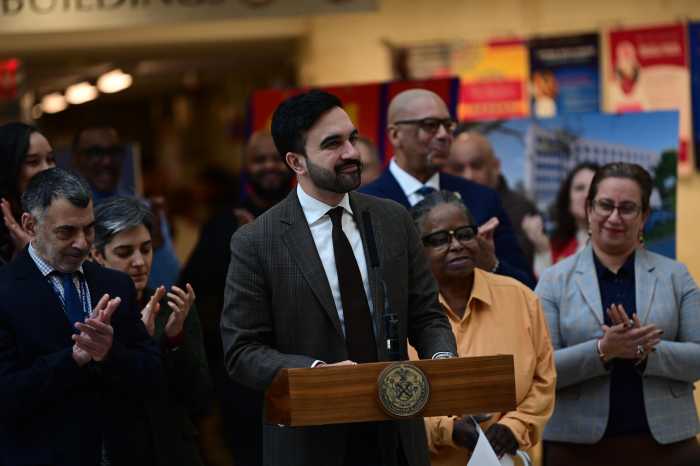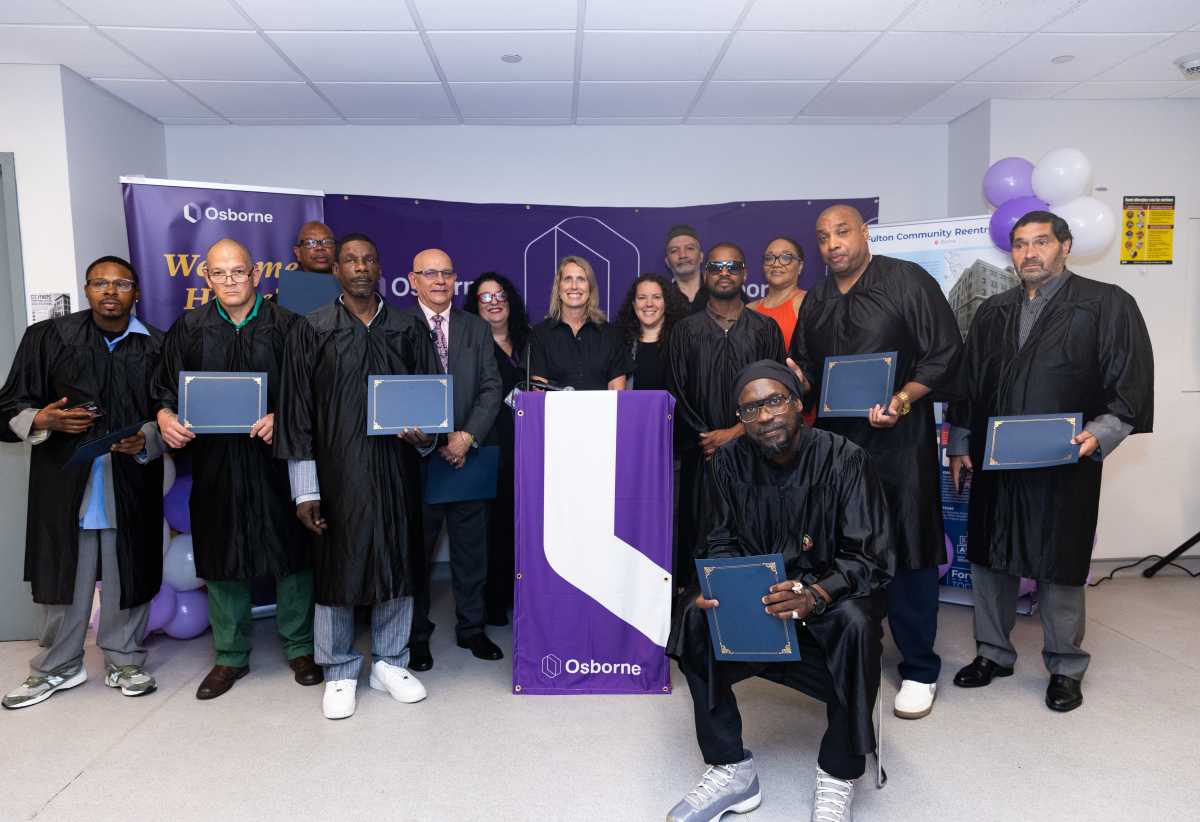
Many have celebrated graduation city-wide recently, including a small group of previously incarcerated men on August 7, after completing the workforce development program at the Bronx’s Fulton Reentry Community Center.
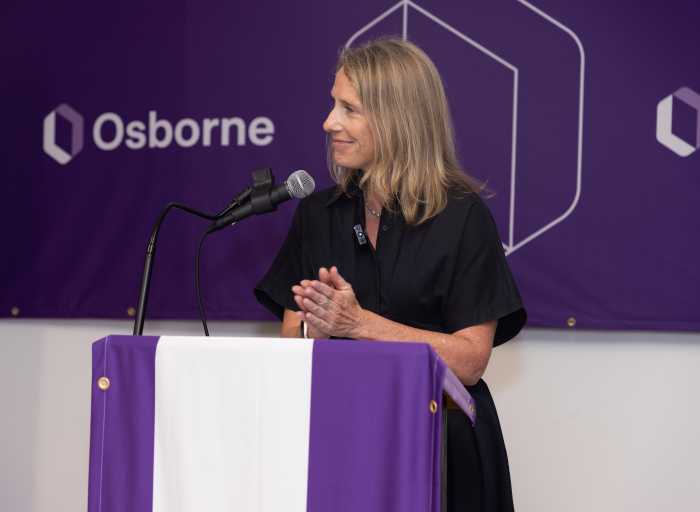
Christina Greene, Vice President of Housing Operations and Projects at Osborne Association, expressed immense pride in the graduates, particularly as she’s an alum of the workforce development program herself.
“Every graduate we celebrate today represents resilience, determination, and the belief that a person’s past will not define their future. To our graduates, today is not the finish line. It is the beginning of a new chapter. We are proud of what you have accomplished. We look forward to seeing what you will achieve,” Greene said.
Graduate Angel Fabian, who has been hired as a supervisor at non-profit Women in Need, expressed deep gratitude for the Osborne and Fulton staff that aided him.
“Osborne has given me a platform that I can transition into the man that I am today. A positive environment filled with quiet, discrete hope, success. Man. So many dreams all over the place, but you have to have your eyes open to see them, obtain them, and live it,” Fabian said.
In 2015, New York State granted Osborne Association the ability to repurpose the seven-story Fulton Correctional Facility into a space with 140 transitional reentry housing beds, as well as spaces to share meals and hold classes for men over the age of fifty who are acclimating back into public life after an extended experience in incarceration.
Fulton Reentry Community Center welcomed its first resident in back in May of 2024 and has since successfully placed over 140 individuals into permanent housing.
“Even places can have redemption and places can have a next chapter in their lives, and so it’s particularly beautiful that a program like this would be in such a place,” said Erin Dalton, Commissioner of the New York City Department of Social Services.
Dalton lamented that though her work doesn’t always involve people with histories of jail incarceration, their needs remain important.
“It’s really important to me that our system work for people that have the most barriers. This system was set up as an emergency system. It was set up for people coming off the street. It was set up for people re-starting their lives, and it really needs to work for them,” Dalton said.
Aside from mental and physical health issues, these barriers can include difficulties finding housing and employment, as well as technical changes of missing certain modern developments. Some of the men in the program went to prison before the MTA discontinued the use of tokens in the subway in 2003, and the use of devices like smartphones became commonplace.
“Oftentimes people returning from incarceration don’t have, or are at a lack of family support and other social support. So we become their family,” Greene said.
The site is pivotal to the Mamdani administration’s goal to ensure safe and dignified accommodations for unhoused single adult men.
“Y’all [Fulton and Osborne staff] don’t know, just by watching y’all put your best foot forward, what that has done for me quietly. Y’all mean the world to me because y’all doing what’s right for us,” Fabian said.