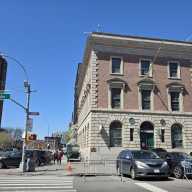
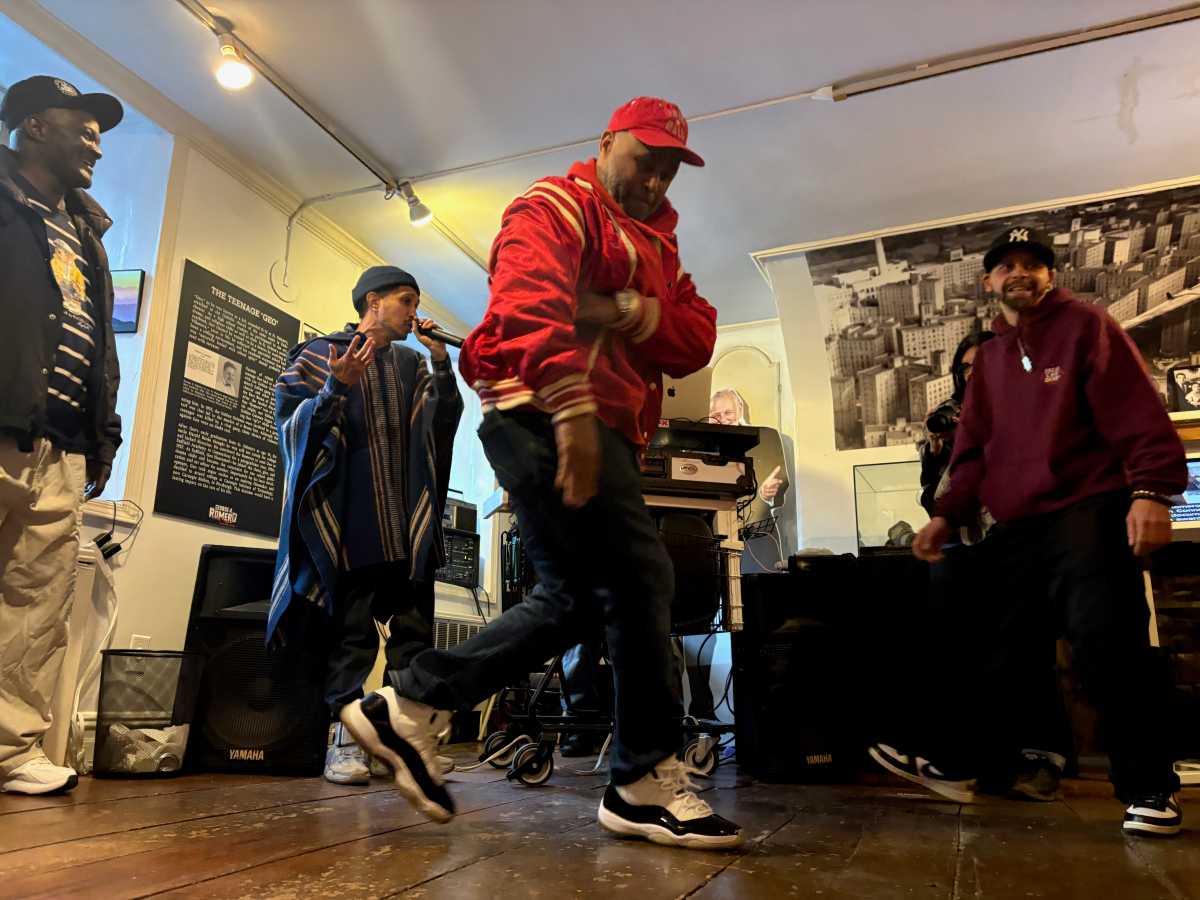
During the opening night of the Bronx County Historical Society’s “When The Bronx Moved” exhibition in February, every room of the colonial-era building was packed with dancers who grew up learning from the legends celebrated on its walls.
“All of these people are my family,” Edgardo Encarnacion “Kamakaze” said, spreading his arms to encompass the crowd gathered and pointing out people who helped him break into the South Bronx dance scene in his early 20s.
Kamakaze was part of the third generation of the New York City Breakers, and got his name after jumping in to battle anyone regardless of their status in the dance community.
“When you’re around family, you know who they are,” he said. “Even though you haven’t seen them for like 20 or 30 years, you still have a historic connection with that person.”
Kamakaze started dancing after losing his brother as a teenager. “That’s what kept me alive, the dancing.”
The Bronx County Historical Society, a non-profit educational and cultural institution chartered by the New York State Board of Regents, was founded in 1955. The group is dedicated to the preservation of the history of the Bronx and lower Westchester County, from its habitation by Indigenous communities through the present.
“These exhibits are extremely important because they are a portal into the most significant cultural renaissance of the last 50 years,” said Jorge “Popmaster Fabel” Pabon, who led a guided tour of the exhibit.
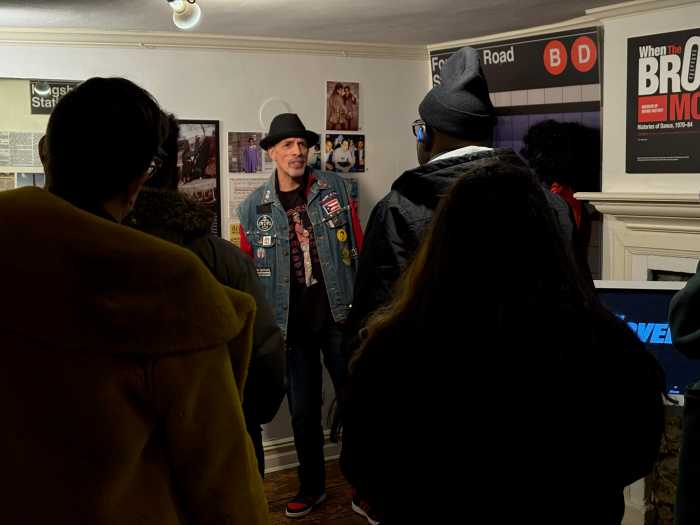
He described what it was like to chart out a path in the dance scene while navigating life amongst the ruins of dilapidated buildings.
Fabel, who was born and raised in East Harlem, transformed the photos on the wall into a living experience with gripping stories of the vibrant and chaotic time period, stopping at times to break out into dance.
One of the dance forms celebrated by the exhibit is “The Hustle”, whose path from basement parties to “Saturday Night Fever” was cemented at St. Mary’s Recreation Center, where pioneers like Willie Estrada worked with staff to create a rare safe haven.
Fabel’s stories evoked scenes from “West Side Story” and “Sinners.” New Yorkers of all backgrounds gathering to dance in fiercely competitive battles that sometimes erupted in violence, or coming together in carefully planned community events to let off steam amidst the destruction around them.
“We were the phoenix that rose from the ashes,” he said.
Since 1982, Fabel has been internationally recognized for his contributions to the culture, gaining world renown as a featured dancer in the hip-hop cult classic movie “Beat Street.”
Fabel is also known for his work as an aerosol artist and muralist in the early 1980s, and as the creator of signature styles of art on canvases and clothing.
“I was born dancing,” he said, pointing to the African and Taíno roots that make up his Puerto Rican identity. “It’s instilled in the house at a young age to express yourself culturally. There’s a cultural imperative. It’s like eating and breathing.”
The exhibit features rare personal photos, clothing, oral histories and video clips documenting the emergence of Hustle, Rocking, Burning, Breakin’, and Boogying in the Bronx.
Attendees nodded along as he called out the erasure of Puerto Ricans from hip-hop history, shouting out names of Black Puerto Rican dance legends and jumping in to complement his retellings with their own stories.
“Being given this platform here is priceless. It’s priceless,” Fabel said. “To be given the privilege and honor of sharing some of the past history and sprinkle in my own history basically keeps me alive.”
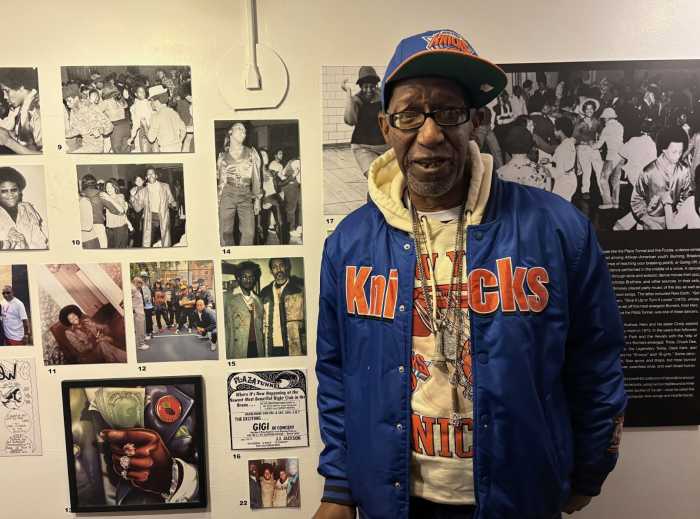
One of the attendees on the exhibit’s opening night was Coke La Rock, widely recognized as hip-hop’s first MC.
He described how hip-hop came out of people speaking over beats in recreation rooms and one-upping each other’s fashion trends. They didn’t have hip-hop legends to lean on and had to come up with it by themselves, he said, explaining how young people put together dancing, beats and fashion to create something new.
“We were the patent and everybody else was the product, and look where the product went, it went around the world,” Coke La Rock said.
London Reyes, also known as B-Boy London, is the president of the New York City Breakers and curated the Breaking portion of the exhibit.
Reyes, who grew up in the South Bronx, reflected on the suffering due to the destruction of parts of the Bronx during the 1970s fires.
“How do you respond to adversity? Because everybody goes through it. It’s your response that determines your character.”
To him, that’s what hip-hop is – learning to deal with challenges in a way that’s accessible to everyone. “Some people are visual learners. Some people are audio learners. Everyone learns differently.”
Along with the Bronx Museum of History, the Bronx County Historical Society operates a research library and the Edgar Allan Poe Cottage, a national landmark historic house museum.
“There’s a lot of people that have wonderful stories, we just haven’t heard their version or their side yet. So it’d be nice to get them all to come out,” Reyes said. “The point of the exhibit is for people born and raised in the Bronx to document their own culture.”
Siddhartha Harmalkar is a freelance writer for the Bronx Times. For more coverage, subscribe to our newsletter and follow us on Twitter, Facebook and Instagram!