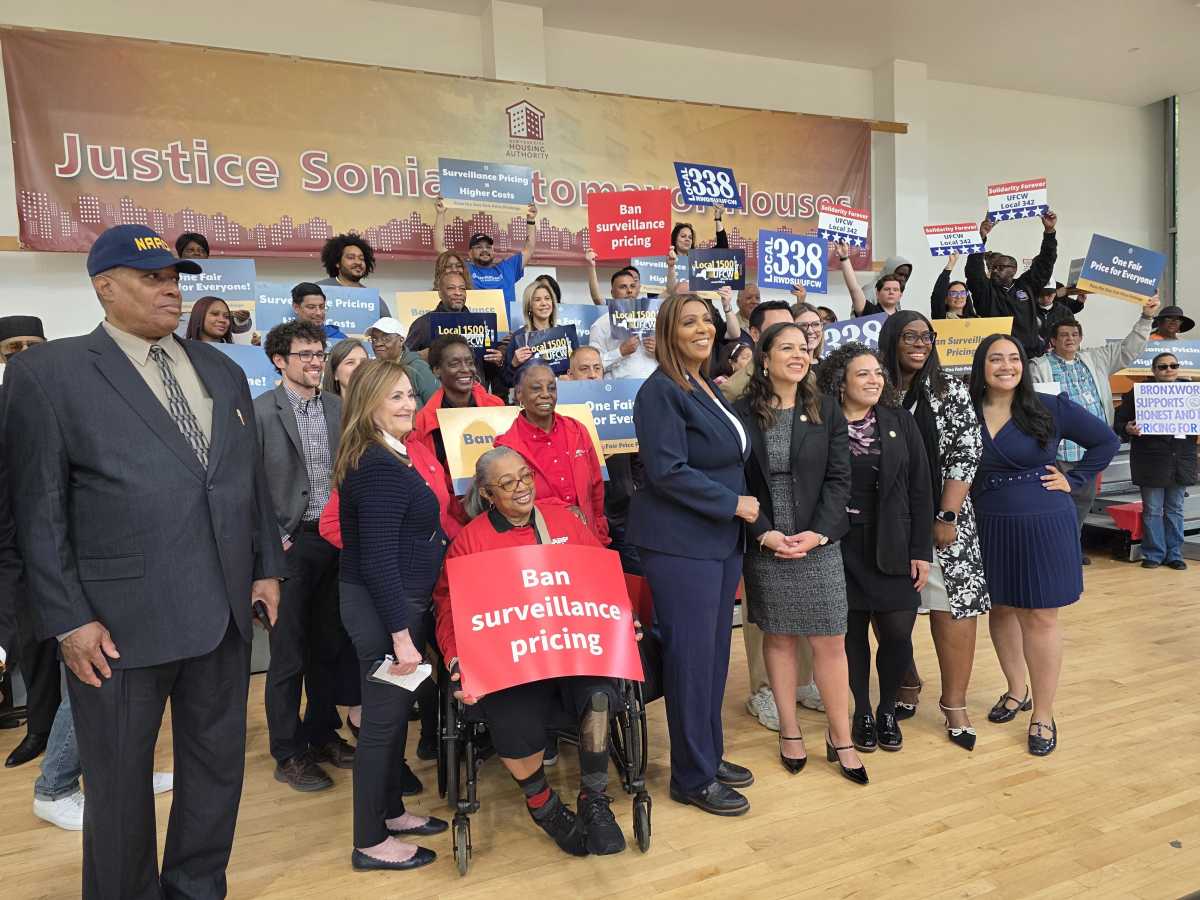
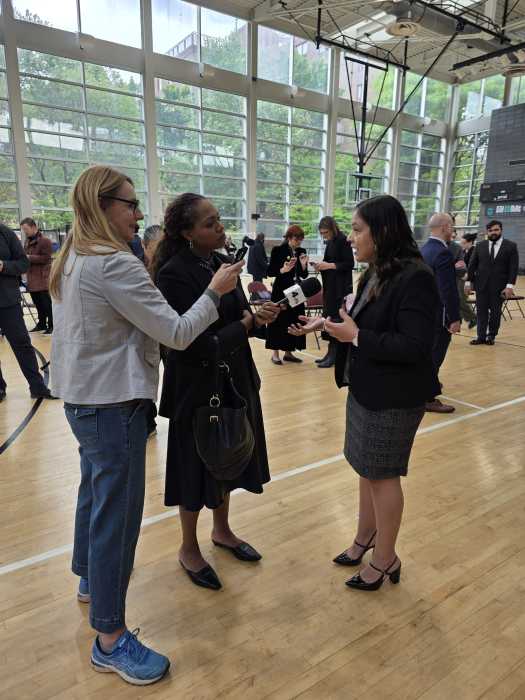
Attorney General Letitia James led a rally against surveillance pricing on May 8 at the Justice Sonia Sotomayor Community Center in Soundview, calling on the legislature to pass bills that would ban what she called “predatory” business practices.
James, joined by Bronx elected officials, union workers and community groups, called on the legislature to ban the practice in New York State by passing two bills collectively known as the One Fair Price package.
Surveillance pricing —or what retailers often call “dynamic” pricing— occurs when businesses use algorithms to analyze customers’ data and adjust prices. Under this system, prices for the same item may change based on demand, how long the customer spends looking at the item, or other factors that tip the scales in favor of companies’ profits, according to James.
She specified that store loyalty programs, promotions and senior discounts, for instance, would not be affected by the proposed ban. But surveillance pricing systems can cost customers up to $1,000 per year as they buy items that vary in price by as much as 23%, according to research cited by her office.

“We cannot allow big corporations to squeeze our families for every last penny,” James said during the rally. “New Yorkers are struggling as it is.”
Joining the event were representatives from NAACP, AARP and BronxWorks, and union members from the United Food and Commercial Workers (UFCW) and Retail, Wholesale and Department Store Union (RWDSU).
Also attending were Council Members Amanda Farías and Justin Sanchez, Borough President Vanessa Gibson, State Senator Nathalia Fernandez and Assembly Member Emerita Torres, who joined Senator Rachel May to sponsor the One Fair Price Act to ban surveillance pricing in the state and grant the attorney general enforcement powers.
A companion bill, the Protecting Consumers and Jobs from Discriminatory Pricing Act, would prohibit grocery stores and pharmacies from using electronic shelf labels.
Surveillance pricing is already common in e-commerce — for instance, airlines and rideshares notoriously show different prices to different customers. But James and others said that surveillance pricing could also become more common at brick-and-mortar stores that implement electronic shelf labels, allowing them to change prices at the push of a button.
Assembly Member Torres said surveillance pricing is a “hidden, horrible practice” that amounts to “price gouging, plain and simple.”
Torres said that seniors and people with disabilities who rely on online shopping may be especially susceptible to paying more, which worsens existing inequities, she said.
Surveillance pricing and digital shelf labels are not technological innovations but a means for businesses to “extract the highest possible price,” Torres said. “It’s not based on supply and demand, but it’s based on who you are as an individual, and that’s not fair.”
Gibson said passing the two bills is necessary to promote “equity, fairness, transparency and consistency” in the retail sector, where customers feel little power.
“Two shoppers should never visit the same website or store and see two different prices for the exact same item. That ain’t right,” she said.
The group also expressed concern that electronic shelf labels and surveillance pricing would not only gouge consumers’ pocketbooks but also eliminate union jobs.
For instance, in Walmart’s recent announcement that all U.S. stores will use electronic shelf labels by the end of the year, the company decried the hours employees currently spend “walking up and down aisles swapping out paper tags by hand.”
But at the rally, union leaders questioned what would happen to those workers if prices could be changed electronically.
Deborah Wright of RWDSU said that any technological advancement should be met with the question, “But at what cost?” and added that union workers are also consumers, hurt on both ends by corporate opportunism.
At the rally, James said she expects the One Fair Price bills to pass and that research already shows strong consumer support for the ban.
Her office cited a survey finding that 66% New Yorkers support banning both surveillance pricing and electronic shelf labels, and two-thirds “do not trust companies to use these tools responsibly.”
The practice is especially egregious given the widespread affordability crisis and high rates of poverty in the Bronx, James said.
She pledged to make New York the first state to prohibit surveillance pricing and electronic shelf labels, and said if the bills pass, she would follow up on customer complaints and crack down on corporations when needed.
Reach Emily Swanson at eswanson@schnepsmedia.com or (646) 717-0015. For more coverage, subscribe to our newsletter and follow us on Twitter, Facebook and Instagram!