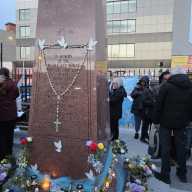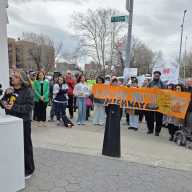

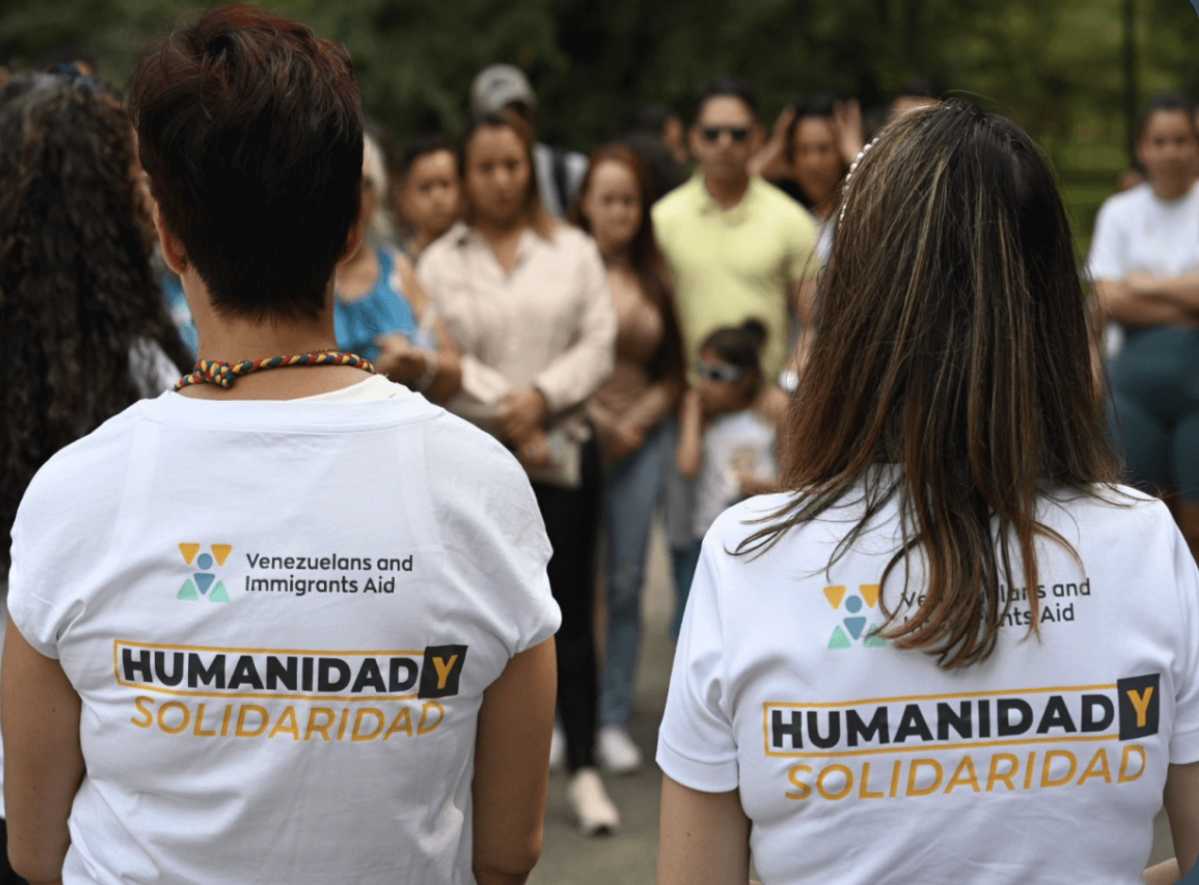
Venezuelans in New York City are expressing anxiety and mixed feelings over President Donald Trump’s abrupt capture of Nicolás Maduro on Jan. 3. Some Venezuelan New Yorkers wept with joy outside the court building, but many have also expressed unease and worry for loved ones who remain in the country.
Under Maduro’s rule, which began in 2013, Venezuelans who publicly oppose him have been detained, exiled and killed, and residents have faced inflation as high as 50% for food and other essentials. Nearly eight million have fled the country under Maduro’s rule, according to the UN Refugee Agency.
Following the audacious overnight capture, Maduro and his wife, Cilia Flores, were arraigned in Manhattan Federal Court on Jan. 5. They pled not guilty on charges of narcotics trafficking and weapons possession, as Trump has accused them of working with cartels to traffic cocaine into the United States for their own profit.
However, Maduro has said he was “kidnapped” and that the charges were an excuse for the United States to go after Venezuela’s rich oil supply — which Trump has said he wants to do.
Although the Bronx Venezuelan population is relatively small —about 2,400, according to one research firm’s estimate— Trump’s decision to take Maduro has drawn strong criticism from some local elected officials.
Rep. Alexandria Ocasio-Cortez, who represents parts of the Bronx and Queens, said in a post on X, formerly known as Twitter, that Trump’s actions were not about stopping a drug trafficker but about “oil and regime change. And they need a trial now to pretend that it isn’t.”
State Senator Gustavo Rivera said the situation was an unwelcome reminder of past U.S. interventions in Puerto Rico.
“Two things are true: Maduro is an authoritarian who has irreparably harmed his country. But it is also true that the United States has no business kidnapping the sitting head of state of any sovereign nation,” Rivera said in a Jan. 7 post on Instagram.
‘Finally, justice came to the country’
The Bronx Times spoke with two New Yorkers living in upper Manhattan who felt the anxiety of their loved ones back in Venezuela.
Héctor Arguinzones, who lives in Harlem, said he was glad to see Maduro taken down. In 2014, Arguinzones and his wife were granted asylum from Venezuela and came to New York City with their son, who was six at the time.
Before long, Arguinzones began working to help displaced families like his. He founded the nonprofit Venezuelans and Immigrants Aid (VIA) 10 years ago to assist new migrants by connecting them with churches, attorneys, English classes, mental health support and other resources.
Arguinzones said VIA is not a political organization, but it’s impossible to fully set aside his experience as a Venezuelan in response to recent events.
“Finally, justice came to the country,” he told the Bronx Times. But at the same time, people in Venezuela “are not celebrating.”Arguinzones said Venezuelans are still living in fear, with a curfew in place and government officials “menacing the people” by searching their cell phones and asking to see identification.
Residents are living “almost in quarantine,” he said.
Maduro’s regime is effectively still in place, Arguinzones said. People are still afraid to speak out against him and are also worried about more practical concerns, such as power outages and potential food shortages.
Arguinzones’ family and friends in Venezuela are “not okay,” he said. “They are scared. They don’t know what is going to happen the next day.”
Arguinzones said he is among those who believe that Maduro was actually born in Colombia, making him an illegitimate leader from the start. Regardless, Maduro’s regime was a “criminal organization,” and the person arrested under Trump’s orders was “not a president,” in his view.
Since removing Maduro, Trump has said the United States will “run” Venezuela — and Arguinzones said he will watch to see if the U.S. will “lead or at least supervise the transition.” Only experts would know how that would work, he said.
But he said the situation is not a true invasion because no U.S. troops remained in Venezuela after its leader was taken. Since then, “The situation for people inside has worsened because there is not that supervision,” Arguinzones said, adding that some stabilizing force is needed.
As he continues to work with hundreds of migrants each week, mostly in Manhattan and Queens, Arguinzones said he expects many more to take advantage of VIA’s emotional support program, which is led by two Venezuelan psychologists trained in trauma counseling.
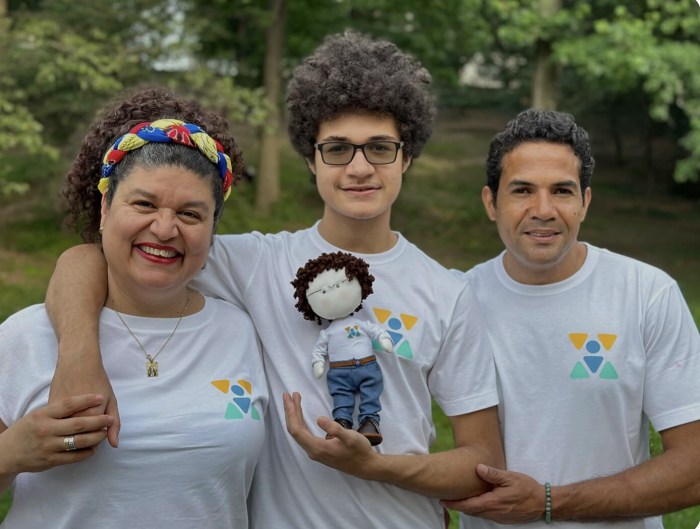
Venezuelans in New York City are feeling anxious and uncertain, and many are grappling with the reality that they may never return to their homeland, Arguinzones said.
He said he hopes to return to Venezuela someday and that his 18-year-old son has been the main reason he has stayed in New York City. Arguinzones said his son is “more American than Venezuelan, but he’s Venezuelan in his heart.”
Despite the turmoil, he said he feels optimistic now that his country has seen “the beginning of the end of that regime that has oppressed Venezuelans for almost three decades now.”
‘Historic moment’
The United States’ capture of Maduro prompted one 37-year-old Venezuelan New Yorker to engage in protest for the first time, joining a crowd of hundreds who rallied against Trump in Times Square on Jan. 4.
Fernando Hernandez, who immigrated to Washington Heights in 2017, told the Bronx Times he attended the protest because his country is facing a “historic moment.”
“A country, a colony, what is it?” he said. “It’s the beginning of an occupation that we don’t know when it’s gonna end.”
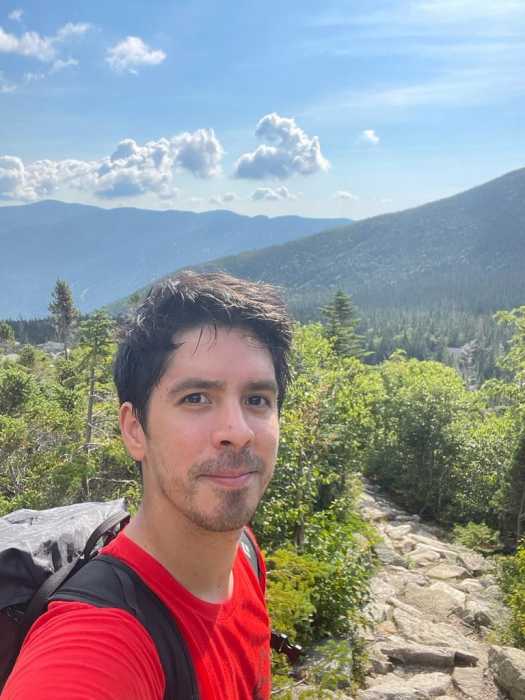
Hernandez said he fled a “very bad” economic situation in Venezuela, which went rapidly downhill in 2015 and 2016. He had been working in accounting for an opposition newspaper and “Little by little, the subsidies that allowed the newspapers to exist were getting cut,” he said.
The news outlet closed, and the economy collapsed, said Hernandez. “I wasn’t going to be able to participate in any economy in the future in Venezuela because everything was going to disappear,” he said.
When he married his wife, who was born in the U.S. to a Venezuelan family, they decided to stay in the States. “I just fell in love with the city and how diverse it is,” Hernandez said. “I feel like this is my home now.”
As the United States began bombing Caracas in the middle of the night, Hernandez said his first thought was not of Maduro or Trump but for the safety of his family in that city.
He was especially worried about his elderly mother and his brother who has disabilities, but he could not reach them from 1 a.m. until 9 a.m. due to power outages, he said, adding that that anxiety is something he hopes to never experience again.
Hernandez eventually found out his family members were okay. However, “They feel like the government’s still in power. The same government,” he said.
His family has told him that collectivos —armed civilian militias— are roaming the streets. His mother is retired and worried about her pension, food access and affordability, and his sister, who works a government job, was forced to attend a protest against the U.S., he said.
Venezuelans worry that more U.S. bombings could come anytime. But even so, “Everybody is trying to live normally, trying to stop worrying every second about this,” Hernandez said. “Otherwise, they will not be able to function.”
Hernandez called Maduro “a criminal” but said the United States did not have the right to use military power against him — especially since the move appeared to be “an economic transaction,” he said.
Hernandez said Trump has not spoken of supporting new elections in Venezuela or stabilizing the government. Instead, the motive for operation appears to be to “recover oil that Venezuela stole from the U.S.”
“I just find that argument absurd,” Hernandez said.
Even though the Maduro regime was illegitimate, “I never read something like a country bombarding my country,” he said, calling it “an act of war and a kidnapping of a head of state.”
Hernandez said he understands why some Venezuelans are overjoyed with Trump’s actions. But the problem is how he took those actions, he said.
With Maduro gone, Homeland Security Advisor Stephen Miller and President Trump have suggested that “they’re just gonna run the country — they just own the country,” Hernandez said.
He said he is worried about what U.S. intervention means for the future of his country.
“Venezuela lost their self-determination,” Hernandez said. “And now, some people who are not Venezuelan are going to decide what’s gonna happen to the people and to the resources.”
Reach Emily Swanson at eswanson@schnepsmedia.com or (646) 717-0015. For more coverage, subscribe to our newsletter and follow us on Twitter, Facebook and Instagram!