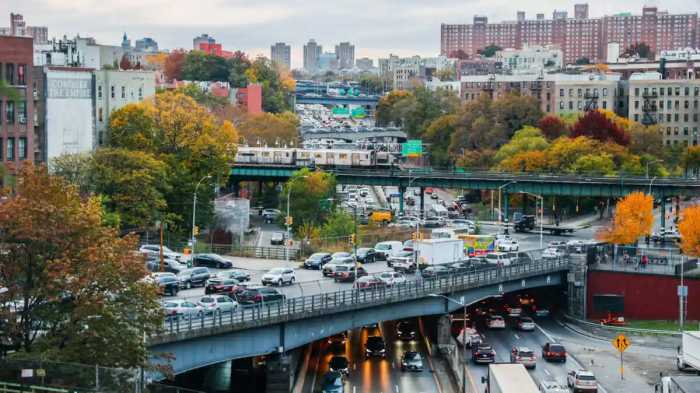

A proposal to rezone portions of the South Bronx waterfront was voted down by Community Board 1 after residents raised concerns that the project was not affordable for the neighborhood and would continue a pattern of development that they say has failed to benefit longtime residents.
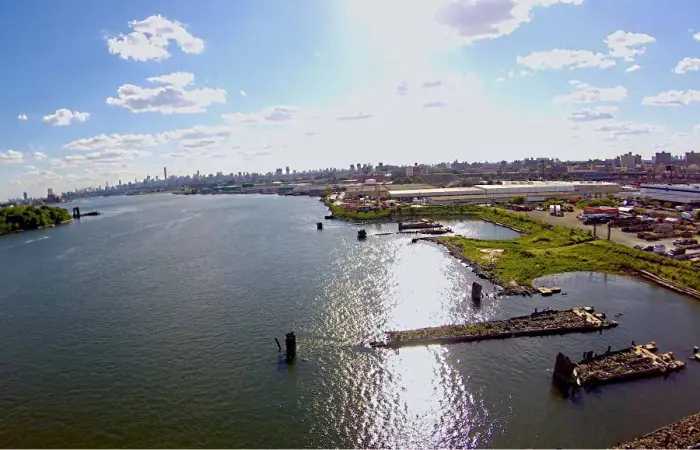
The proposed project, first introduced to the board by affordable housing developers Phipps Houses and Douglaston Development in 2021, would bring 537 affordable apartments to two parcels at 110 E. 138th St. and 63 Exterior St., just west of the luxury Bankside towers along the Mott Haven waterfront.
Although Community Board 1’s vote is advisory, it marks an early step in the city’s Uniform Land Use Review Procedure (ULURP). The proposal will next be reviewed by the Bronx borough president before moving to the City Planning Commission and City Council, whose approvals will ultimately determine whether the rezoning moves forward.
The development would consist of two residential buildings connected by a shared lobby. A 13-story building designated for seniors would contain 183 apartments, primarily studios and one-bedroom units. A second, 27-story building would include 354 apartments ranging from studios to three-bedroom units.
According to project documents, apartments would be affordable to households earning between 30% and 80% of the Area Median Income (AMI). For a family of two, that translates to annual incomes ranging from roughly $40,710 to $108,560.
Residents, however, argued that the proposal still would not be affordable for many families already living in Mott Haven.
Much of the criticism at the June 25 meeting centered on the city’s use of Area Median Income, the federal benchmark used to determine eligibility for affordable housing. Because New York City’s AMI calculations include the wealthier suburban counties of Westchester, Rockland and Putnam alongside the five boroughs, many Bronx residents argue the income thresholds overstate what local families actually earn.
Those concerns are reflected in local housing data. The Association for Neighborhood & Housing Development identifies Community District 1 as a high-risk neighborhood in its 2026 Housing Risk Map. Using 2024 census data, the organization found that the district’s median household income is equivalent to just 23% of the Area Median Income.
At a January information session hosted by Community Board 1, Ted Weinstein, director of Bronx planning at the Department of Housing Preservation and Development, said the proposal differs from many of the existing waterfront developments built under the now-expired 421-a tax incentive program, which required only 30% of apartments to be income restricted while allowing the remainder to rent at market rates.
“They’re not cheap for the most part,” Weinstein said of the existing waterfront buildings. “What we want in the area is a new one with more housing that is truly affordable.”
Residents also argued that the project failed to reflect the needs of neighborhood families.
“The apartment sizes are catered to the single professional working class of Manhattan,” said Matthew Shore, director of planning and development of South Bronx Unite.
“It’s not designed to house the many large families, many of which are immigrant families…People are living with aunties, uncles, grandparents, nephews. It’s all different kinds of families, and the common thread is large families who are in need of large apartment spaces.”
South Bronx Unite, which has advocated for a community-led vision of the Mott Haven and Port Morris waterfront for more than a decade, organized residents ahead of the vote and encouraged them to testify about concerns over affordability, apartment sizes and waterfront access.
Although the Harlem River waterfront rezoning requires public access to the shoreline, Shore said the developers failed to meaningfully engage residents in shaping how that public space would serve the existing community. He said South Bronx Unite recommended additional outreach, including a community survey,, but was told those efforts came too late in the ULURP process.
“We welcome Phipps, or any developer that wants to sit down with the community and have a series of well-thought-out community envisioning sessions for the waterfront,” Shore said. “Developers should know that real community engagement is not exclusively done within the confines of a ULURP process.”
To move forward, however, the developers are seeking several land use approvals from the city.
One resident also cited Phipps Houses’ handling of the relocation of tenants at Lambert Houses, which resulted in a class-action lawsuit alleging tenants were overcharged after they were not properly recertified following temporary relocation. The lawsuit was also referenced by Community Board 8 when it voted against a separate Phipps proposal to expand a development in West Farms earlier this year.
To move forward, the proposal requires several land-use approvals. The developers are seeking zoning changes including disposition of a city-owned parcel included in the project area and a special permit to waive waterfront bulk regulations governing building size and placement.
The project would also require City Council approval as an Urban Development Action Area Project, making it eligible for a 20-year property tax exemption administered by the Department of Housing Preservation and Development.
Reach Marina Samuel at msamuel@schnepsmedia.com. For more coverage, subscribe to our newsletter and follow us on Twitter, Facebook and Instagram!