
Dance/USA, the national service organization for dance, recently honored three Bronxites with a yearlong fellowship that comes with a $31,000 grant to be used at the artists’ discretion.
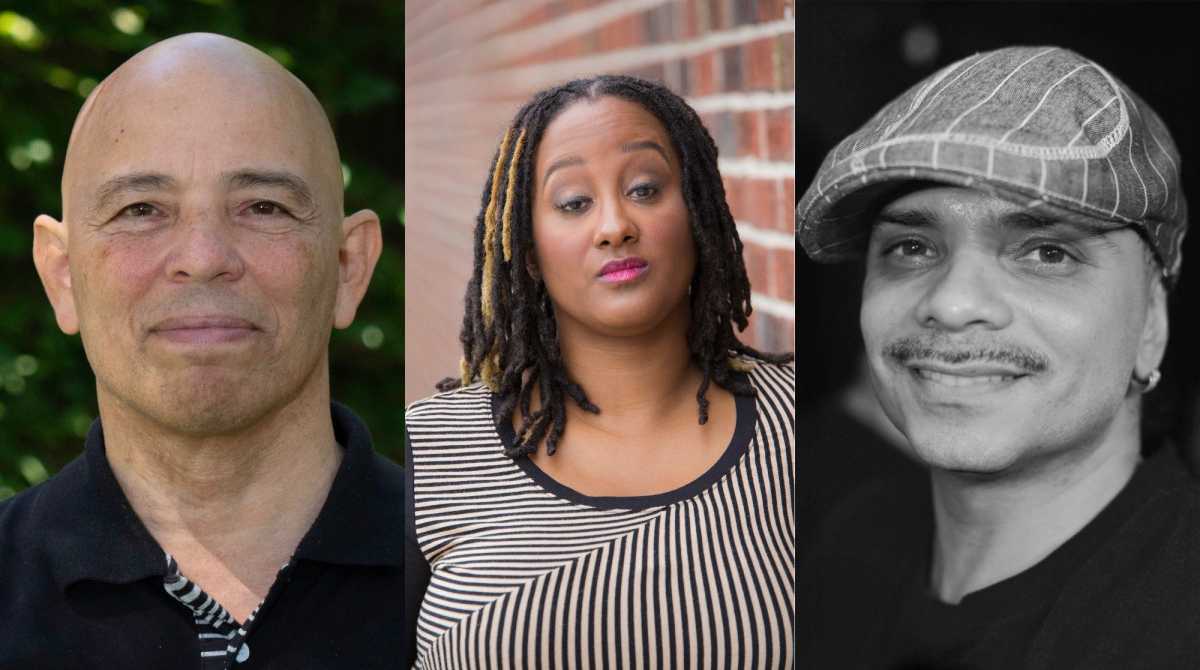
The three Bronx winners were Kayla Hamilton, a Black sight-impaired artist who founded Circle O, featuring performances by Black disabled dancers; Kwikstep (Gabriel Dionisio), a DJ, hip-hop dancer and choreographer who has shared the stage with the New York Philharmonic Orchestra; and Arthur Avilés, a Puerto Rican gay man who co-founded the Bronx Academy of Arts and Dance (BAAD!).
Hamilton, Dionisio and Avilés are among the 25 national fellows who enjoy twice-monthly collaborative sessions, in addition to the rare opportunity for unrestricted funding.
The Bronx Times caught up with each artist to learn about their plans for this year and how their practice extends far beyond the stage and into the communities they call home.
‘Education truly is liberation’
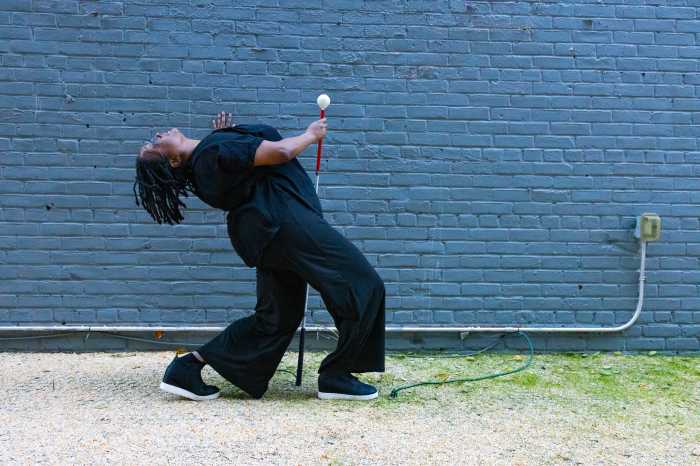
Hamilton’s inclusive dance pedagogy has taken off since she spoke to the Bronx Times in July 2024. As part of the Dance/USA cohort, the opportunity to learn from other longtime Bronx artists has been invaluable, she said.
“To be alongside them in this award does something to my heart and spirit,” she said. “When I’m like, oh, can I keep going? Look at Arthur and Kwikstep. And yeah, you can, girl!”
Like the other awardees, Hamilton’s artistry extends beyond performance. With Circle O, she has developed teachings that reframe the world of dance from the perspective of performers with disabilities or even temporary injuries, promoting greater inclusivity of movement.
Most dance instruction is “do what I do, see it and repeat it,” Hamilton said. Especially in the age of social media dance trends, “No one is explaining why and how they do what they’re doing.”
Circle O looks to flip that framework. For instance, someone in a wheelchair cannot do a traditional plié, so Hamilton teaches a “translation method” in which artists find the essence of each movement’s intended expression. From there, anyone, disabled or not, can “translate” to another movement.
This year, Hamilton is bringing her teachings to universities and performance venues across the country, including the Indianapolis School of the Blind and the University of Maryland, College Park, and is even traveling to Nigeria to work with disabled artists.
As a Black woman originally from Texas whose grandfather was a teacher, “Education truly is liberation, and the more we know, the more knowledge that we gain, that is where the juice lies,” Hamilton said.
She said she was especially honored to receive the Dance/USA grant, which rewards not only performance aesthetics but “people whose artistry extends beyond stages.”
“Being an artist is not about what I make, what I create, it’s about how I live my life,” Hamilton said.
‘By dancers, for dancers’
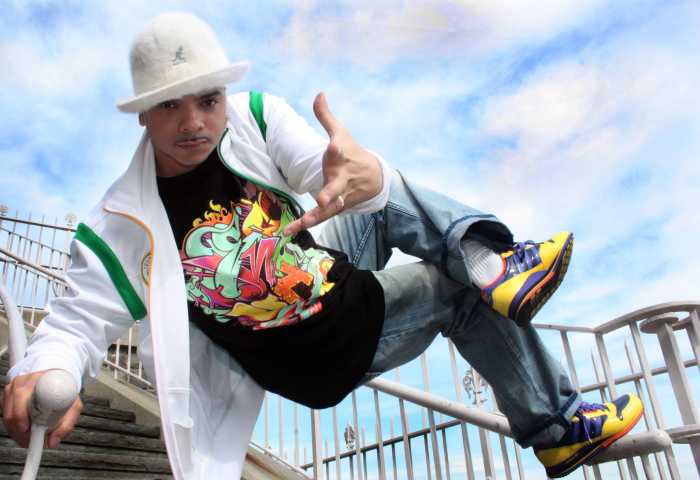
Dionisio, aka Kwikstep, aka DJ KS360, said he was “so grateful” for the Dance/USA grant and that most of the funds will go towards curating events that bring people together around food, music and dance.
“My payoff will come from putting back to this community and seeing it heal souls along the way,” he said.
At age 57, Dionisio said the mentorship he received in the past was lifesaving. “When I was younger, it was the older generation curating me, as a young artist,” he said, adding that the word “curate” was a play on words. Those interactions were key to “curing me of my traumas,” he said.
Dionisio has lived in Manhattan, Brooklyn and Queens but has been in the Bronx for the past 10 years and trained in the borough during the early days of hip-hop. He performs classic hip-hop dance styles such as breaking, house, popping and locking and soul train, but his work largely revolves around creating public events.
He said the Dance/USA grant will support his longstanding “Behind the Groove” series, which brings together top-tier DJs, dancers and club artists.
He described the events as “by dancers, for dancers, to make them understand that the club experience is where this is born and developed, and this is where we will congregate as our home away from home.”
Whether clubs or rooftop parties or in Central Park, the Guggenheim Museum or Lincoln Center — all venues where Dionisio has performed and hosted — “Behind the Groove” can work anywhere, he said.
“A lot of these parties, they would die if the club space died. Our movement doesn’t live in a space, but it lives in hearts, and we can take it anywhere,” said Dionisio.
He still hosts monthly events in Brooklyn that honor “hip-hop in its original state.” There, he serves free, homemade food but no alcohol, “which is a trend that everybody’s on now, but we’ve been on it since the beginning, because some of my best experiences at clubs in New York City have been parties with no alcohol,” he said.
Much has been said about Americans’ social habits in the post-pandemic era; people are going out less and spending more time alone. Dionisio said that makes his mission more important than ever.
After years of being “sequestered by society,” Dionisio said audiences are desperate to get away from screens.
He said he still sometimes prints paper flyers and distributes them by hand. “I think people are trying to get back to analog, and part of analog is word of mouth.”
Then, when people gather around great music, magic can easily happen, said Dionisio.
“Now that people are understanding that we can only move the world in person, people are getting back to having the courage to show up in person,” he said. “Shut your computer down, and come out and celebrate yourself, along with everyone else.”
‘We persevere as artists’
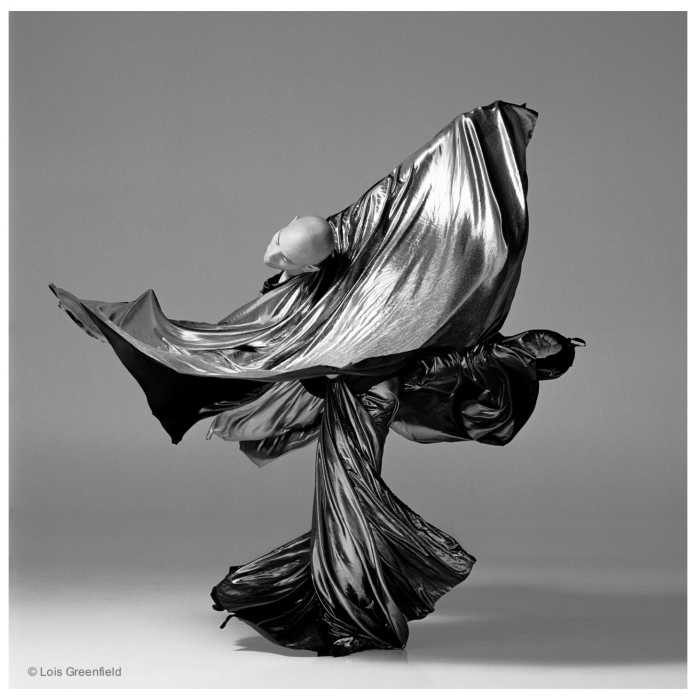
Speaking to the Bronx Times in BAAD!’s office, Avilés said it was “incredible” to receive the funding and the opportunity to collaborate with other creatives.
Amid what Avilés views as outright homophobia from the Trump administration, BAAD! refuses to hide its mission, he said.
“BAAD! is a place that presents works that are empowering to women, people of color and the LGBTQ+ communities. But because we say that, it’s against the ways in which the government is working these days,” said Avilés.
With the organization he co-founded in 1998, he continues to cast a wide net for performers and audiences who may feel marginalized.
For instance, the Out Like That festival, held in June, features people whose identities President Trump has literally erased from government publications. Avilés said the festival welcomes those who are “gay, lesbian, bisexual, transgender, queer, two-spirited, questioning, curious, gender nonconforming, gender conforming, pre-op, post-op, intersex, gender nonbinary, and the list goes on.”
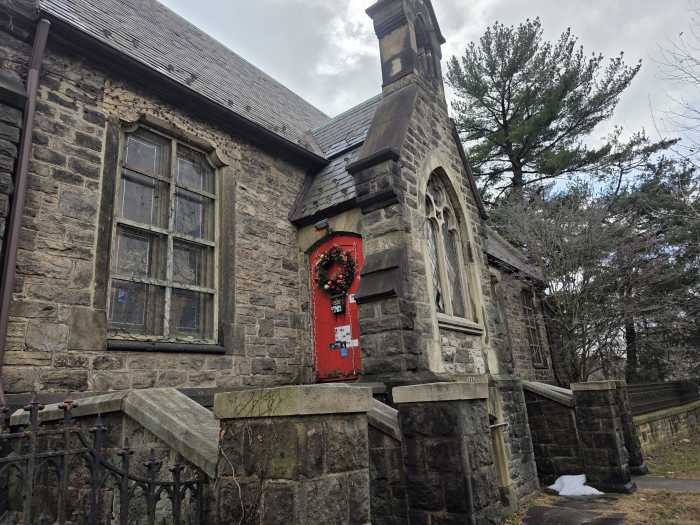
In addition to events and programs with BAAD!, Avilés maintains his own performance work with Arthur Avilés Typical Theatre, which “explores my curiosity and creativity,” he said. “And that just happens to be a queer, Puerto Rican man who lives in the Bronx, and how I navigate that.”
Avilés, who lives in Hunts Point, said the Bronx creative arts scene today is “amazing.” From drag artists to young talent studying at Hostos and Lehman, “It’s rich, what’s going on in the Bronx,” he said.
Avilés said he and BAAD! will remain true to a mission of inclusivity, no matter the political obstacles.
“We persevere as artists,” he said. “We continue to make our work, and make the administration angry.”
This story was updated Jan. 16 at 3:20 p.m. to clarify that the 25 fellows are nationwide, not only the NYC area.
Reach Emily Swanson at eswanson@schnepsmedia.com or (646) 717-0015. For more coverage, subscribe to our newsletter and follow us on Twitter, Facebook and Instagram!