
For many, the experience of getting groceries in the South Bronx is not easy, even for those who can afford to be somewhat choosy.
Deborah Aviles and her son, Jordan Velez, shop at least four stores each week to find the healthy, fresh items they want at good prices, along with foods from their West Indian and Latino cultures.
They shop for themselves and for Aviles’ parents, and their regular rotation includes Aldi, Lidl, some local supermarkets such as Food Bazaar or Western Beef, a West Indian market, and sometimes Trader Joe’s or Amazon.
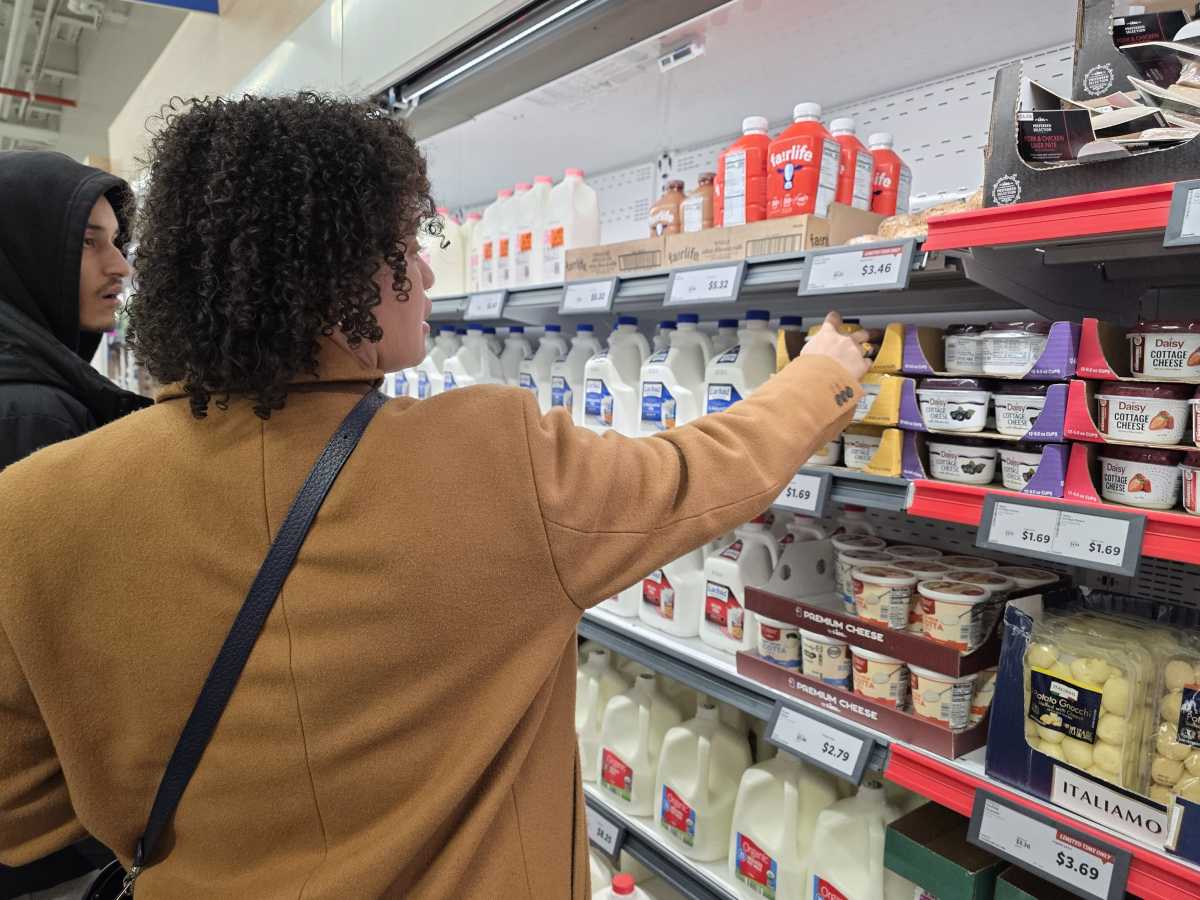
The Bronx Times accompanied Aviles and Velez on a March 20 trip to Lidl at the Bronx Terminal Market on Exterior Street. Since Velez has a car, he regularly drives to make shopping trips easier.
Aviles said Aldi and Lidl have the cheapest produce that lasts the longest. Velez said that while some fresh produce is available at corner delis, he’s generally not impressed with the offerings. “Inside the delis, they have vegetables and fruits, but they’re, like, spoiled.”
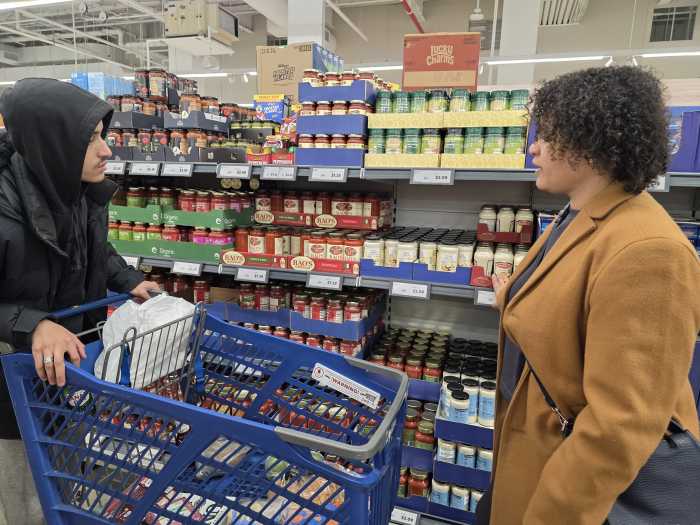
Aviles and her family are health-conscious and try to minimize processed foods, sugary foods and drinks and red meat. She said she only buys olive oil or avocado oil, and uses ground turkey in place of ground beef.
Over time, she’s figured out where to find these healthier items in the Bronx at a good price and believes it’s worth the hassle and effort.
But before Aldi and Lidl came to the Bronx, “I would go to Whole Foods and spend a lot, but I wanted my sons to have quality food,” Aviles said.
Making several trips each week has now become part of her family’s routine. In addition to the regular stores, she also shops at a West Indian market in the Bronx, where she buys “all of the provisions,” such as yuca, plantains, bananas, sweet potato, yams, salt fish and whatever else is a good deal. For instance, she said she just bought a large box of oxtail for $150 to split between the three households.
“This is like, the life every week,” Aviles said. “You take one week to just keep going around shopping, just so we can make more for our money.”
Making SNAP benefits last in the South Bronx
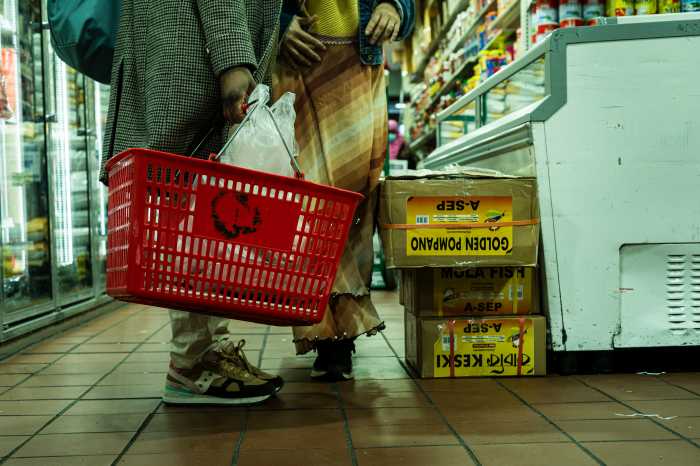
Others who are more restricted in their shopping radius and food budget still travel to multiple stores to find good deals.
Kaylin Rivera, who has two kids, ages 3 and 6, is a third-generation Mott Haven resident who met the Bronx Times on March 31 at the Pioneer on St. Ann’s Avenue and East 138th Street.
She does much of her shopping at Pioneer but also goes to a meat market, Dollar Tree, Pioneer, Fine Fare and sometimes BJs Wholesale Club, depending on prices.
Rivera receives about $530 per month in SNAP benefits and said that amount usually gets her by — but she also occasionally relies on local food pantries when the funds can’t stretch far enough.
Looking around for deals — for instance, buying the three-pack of spaghetti sauce at BJs versus buying one jar at the store — can take a lot of time and effort.
“I just go day by day,” Rivera said. While she said her financial situation could be better, “I kinda struggle, but at the same time I don’t. I’m grateful for what I have.”
Rivera said she has plenty of food stores near home but is deterred by high prices, especially on staples like beef, eggs and cereal. She often buys generic brands and monitors local stores for the best deals.
“That’s the only good thing about living in New York. Everything’s close by,” she said. “What seems expensive here [at Pioneer], I get somewhere else.”
Keeping Bronx shoppers in the Bronx
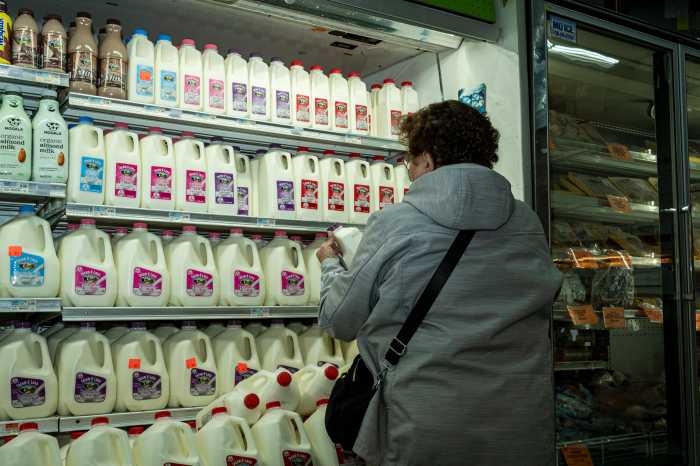
In addition to their local stores, some Bronx shoppers use Amazon and FreshDirect, or delivery services tied to particular stores. But it also seems that many who are able end up driving elsewhere— sometimes to other boroughs or even outside of New York City altogether.
Pedro Suarez, director of the Third Avenue Business Improvement District (BID) in the South Bronx, said residents with cars have more freedom to go in search of deals, and those who must shop near home may get stuck paying more than necessary.
“It’s very expensive to shop locally, period,” Suarez said, leading many Bronxites to spend their money in other neighborhoods — what’s known in the retail world as “leakage.”
Leakage is not just a South Bronx issue. Gene DeFrancis with the Allerton Merchants Association said that many of his residents in the central Bronx have cars and feel they can get better deals outside of New York City.
“[Customers] are talking about how high the prices are, so they have to go to Walmart, or they have to go other areas,” mainly in Westchester and Long Island, DeFrancis told the Bronx Times.
Within New York City, the high cost of goods and regulations on small businesses are often passed on to customers, DeFrancis said.
Street vendors can sometimes offer a good alternative, and though DeFrancis represents the brick-and-mortar sector, he has also defended some of the longtime Allerton street vendors who offer cheap, fresh produce.
For working-class people in Allerton, supermarket prices in the city are generally “not equitable,” DeFrancis said. “They can’t just literally go down to the [local] grocery store because they end up paying two to three times more than they should.”
Today, the grocery business is struggling at the same time as customers are struggling to afford what they’re selling.
Residents within the BID are spending far more on groceries than anything else, according to the BID’s recent Commercial District Needs Assessment.
In 2025, residents spent $368 million on groceries — far more than at restaurants ($175 million) and other spending categories such as gasoline ($126 million) and home renovation services ($109 million).
Today, between SNAP cuts, tariffs and high costs of operation, many business owners of all kinds feel an “overall sense of unease,” Suarez said. This leads them to make conservative decisions, resulting in fewer options for customers.
“We’re in a time right now where local grocers, and small businesses in general, feel like they’re being squeezed on all sides, and they don’t know what to do,” Suarez said.