
The Bronx is dying for better medical care. Few people know this better than Erika Perrotta.
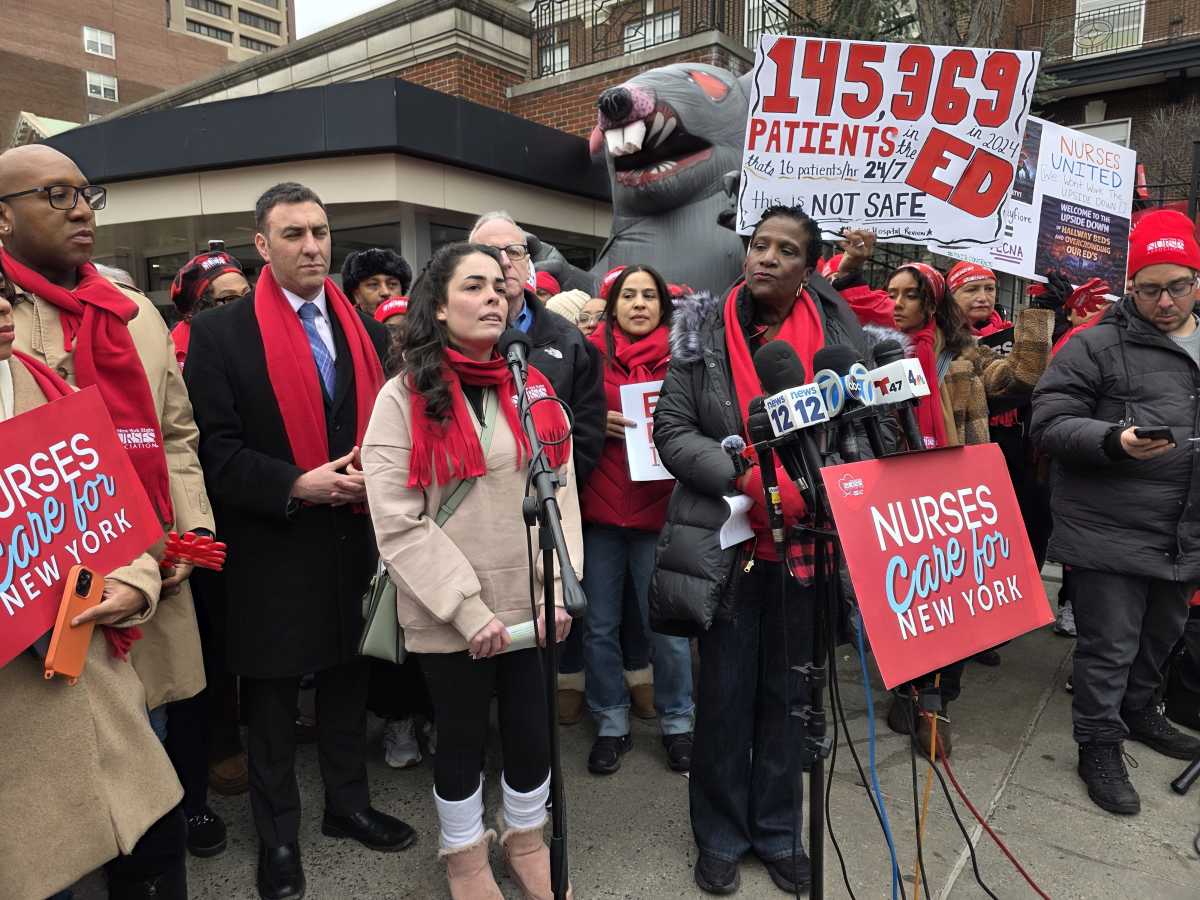
Perotta, 30, is a Montefiore emergency department nurse who grew up three blocks from the Moses Campus, located at 111 East 210th St. — and is one of the 15,000 New York State Nurses Association members currently on strike from Montefiore, Mount Sinai and NewYork-Presbyterian.
A Montefiore nurse for almost two years, Perrotta told the Bronx Times that when she graduated from nursing school in 2024, she immediately applied to work at Montefiore, where many of her family members seek care and live nearby. “This is my neighborhood. I wanna be in this area.”
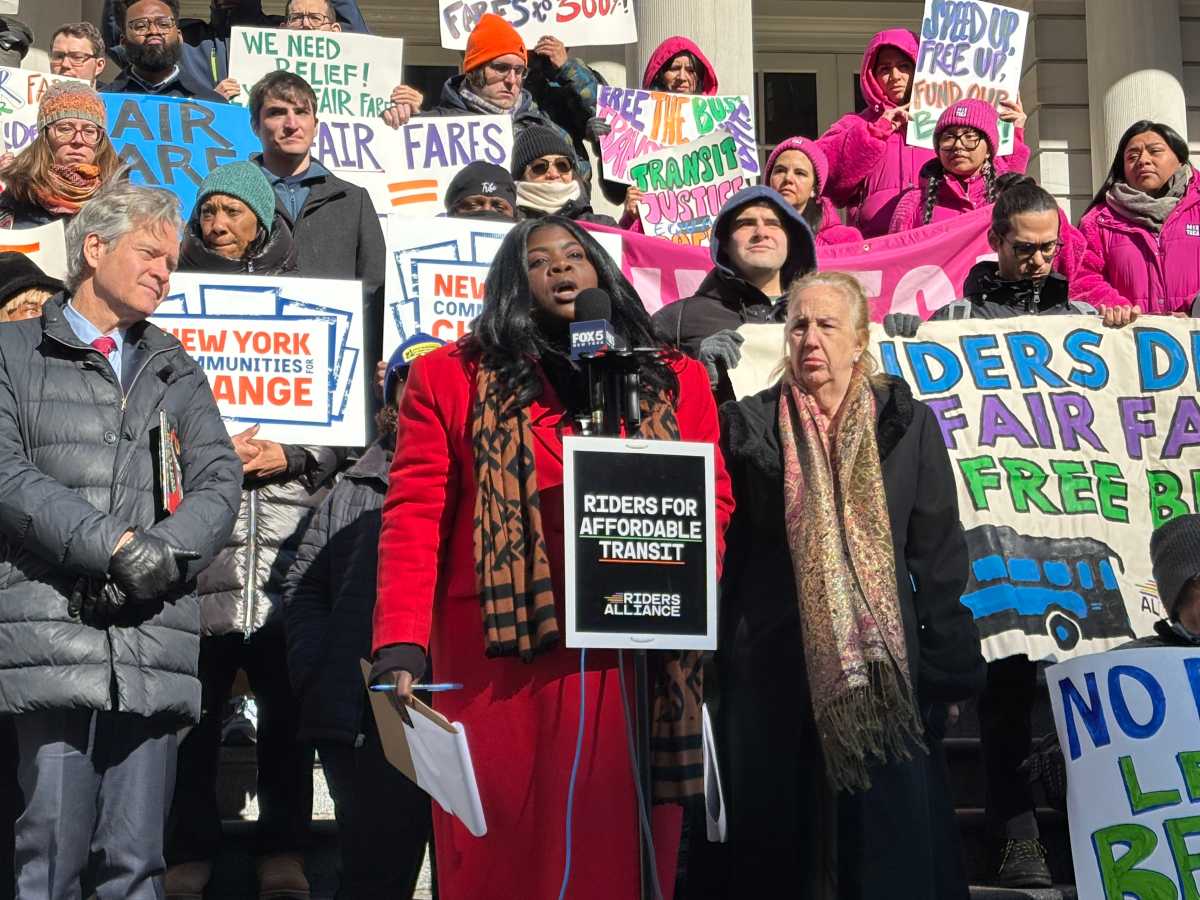
In daily rallies as the strike enters week four, Perrotta and others have called attention to chronic overcrowding in the Montefiore emergency room, which is among the top five busiest in the country, with approximately 275,000 visits annually across its adult facilities.
The lack of space in one of the borough’s most prominent hospitals is but one symptom of the health crisis facing the 1.4 million residents who call the Bronx home.
An analysis by amNewYork and the Bronx Times found that on multiple ranking systems, the quality and safety of most Bronx hospitals rate low-to-middling, at best.
Hospitals in the Bronx saw that emergency medical services (EMS) response times are the slowest of the five boroughs. The Bronx is also ranked as the unhealthiest of the state’s 62 counties.
The problem of care in the Bronx is complex, but not due to a lack of hospital facilities. The borough is served by 10 distinct emergency departments, compared to 14 in Brooklyn, 13 in Manhattan and nine in Queens. Still, over the last quarter-century, the Bronx lost 12% of staffed hospital beds, according to a February 2025 report by the nonprofit Community Service Society.
Getting to a hospital via ambulance is also a major problem. The city’s EMS workforce is in full-blown crisis, according to its union, Local 2507, which says EMS is responding to more emergencies with fewer staffed ambulances, leading to longer wait times that can — and have — cost patients their lives.
For this story, amNewYork and the Bronx Times spoke with a range of people involved in health policy, systems, care and transportation.
A spokesperson for the public hospital system provided a statement saying that NYC Health +Hospitals (H+H) “is committed to providing the highest quality care to New Yorkers without exception, including all members of the Bronx’s diverse communities. Our Bronx patients receive excellent, compassionate care driven by our dedication to equity, accountability, and innovation. We will continue to learn from and build upon measurable improvements at our hospitals that prioritize our patients’ safety, satisfaction, and successful outcomes.”
A City Hall spokesperson outlined several initiatives in progress aimed at reducing Bronx hospital wait times, treating people outside of emergency rooms when possible, sending more response units to high call volume parts of the borough and more.
“Mayor Mamdani is committed to building a city where every New Yorker can live with dignity, health, and security. From ensuring hospitals and clinics are fully staffed to strengthening emergency medical services, the administration is working alongside communities in all five boroughs to meet the real needs people face every day. By listening to healthcare workers, patients, and neighbors on the front lines, the Mayor is focused on rebuilding trust in our public healthcare system and delivering care that is equitable, accessible, and worthy of the people of New York City,” spokesperson Joe Calvello said in a statement.
The Bronx Times left messages at BronxCare and SBS Health but did not receive a response prior to publication.
A grim day in a Bronx ER
Perrotta recalled one of her worst days at Montefiore, when the emergency room was so busy it was placed “on diversion,” meaning people could walk in but paramedics were not supposed to deliver more patients in ambulances.
Nonetheless, EMS had no choice but to bring in a patient in cardiac arrest, as Montefiore was the nearest facility. With the patient’s life immediately at risk, and their family coming in behind him, Perrotta said she and the EMS worker stared at each other in disbelief.
She recalled thinking, “Oh my God. Where am I gonna put this actively coding patient?”
As staff scrambled to make room — which required relocating a patient who was on a ventilator — EMS continued to give CPR, but the man passed away before his family even arrived, Perrotta said. He was only in his early 30s.
Perrotta and others say that overcrowding is all too common in their emergency department, where patients are often left on stretchers in hallways due to a lack of space.
They blame corporate greed and disinvestment for creating subpar conditions for Bronx patients. For instance, they have called out Montefiore CEO Dr. Philip Ozuah’s $16.5 million pay in 2024, which they say is at odds with the conditions they confront daily.
They also want more physical space to put patients, and even a small size increase in the department would help, said Perrotta. She said there are offices, staff rooms and even a rarely-used ballroom that could likely be repurposed as a holding area.
“Even if they gave us 200 square feet more. We’re not asking for a whole new building,” said Perrotta. “Even that, they won’t give to us.”
Meanwhile, about 14 miles away in Westchester County, Montefiore broke ground last year on a $750 million expansion of its White Plains Hospital. The project will nearly double the current emergency department capacity and provide single-bed private rooms for up to 244 patients.
Within New York City, that kind of facility would be impossible, a Montefiore spokesperson told the Bronx Times. Montefiore would build more private rooms in the Bronx “if we could, but it’s just the land,” he said. He also cited several examples of management’s investment in the Bronx, including a new 21-bed pediatric psychiatric facility designed to alleviate crowding in the emergency rooms.
Executive compensation in the millions
Amid mostly unimpressive findings, Bronx private hospital CEOs are making millions, even multimillions.
Tax documents from 2024 show that David Perlstein at SBS Health System made $1.04 million, Miguel A. Fuentes, Jr. at BronxCare made $2.32 million, and Philip Ozuah at Montefiore made $16.6 million (this amount is called “related” compensation, not salary, which is listed at $0).
Salaries at the public hospitals are much lower — yet still significantly above those of New York City’s police and fire commissioners ($286,627) and even the mayor ($258,750). Lincoln CEO Cristina Contreras earns $375,000 per year, and the CEO of Jacobi and North Central Bronx, Christopher Mastrmano, earns $405,000.
Where do Bronx residents go to get care?
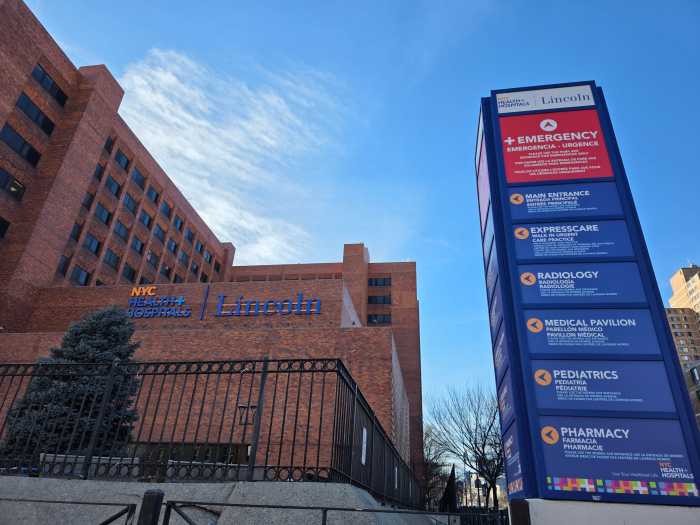
Three Bronx hospitals — Lincoln, Jacobi and North Central Bronx — are run by NYC Health + Hospitals (H+H), the nation’s largest municipal hospital system. These facilities are dedicated to serving all, regardless of ability to pay, and 65% of patients rely on Medicaid or are uninsured.
BronxCare (formerly called Bronx Lebanon), SBS Health System (St. Barnabas) and Montefiore are private, not-for-profit systems that are tax-exempt.
Montefiore itself operates three adult emergency departments in the Bronx and is also home to the renowned medical school, the Albert Einstein College of Medicine.
The Bronx also has a VA hospital, which only serves veterans, and Calvary, which provides hospice care with no emergency room. Both were excluded for consideration from this story because of their very specific level of care and clientele.
Lingering perceptions
Bronx’s hospitals are caught up in the ongoing crisis of quality health care in New York. Hospitals across the Empire State have rated consistently low when compared with the rest of the United States over the past decade, said Bill Hammond, senior health policy fellow at Empire Center, a nonpartisan think tank based in Albany.
New York’s 132 rated hospitals have an average federal score of 2.5 out of 5 stars, ranking the state 48th out of 50, according to a 2025 Empire Center analysis.
At the same time, 22% of New York hospitals rated 1 star — an “unusually high” figure, said Hammond.
Data also showed that the state’s private hospitals rated only somewhat better than public — averaging 2.6 stars over 1.7. For the city’s 10 H+H facilities, the average rating is just 1.5.
Spokespersons for Montefiore and H+H said that while they take ratings seriously, the data used in ratings lags years behind the present day and does not account for the complexity of conditions treated at their facilities.
Given the history of disinvestment in the borough, there seems to be a lingering notion that hospital care in the Bronx is worse than elsewhere in the city — along with education, employment, infrastructure or other aspects of daily life.
In particular, the history of Lincoln Hospital in the South Bronx and its impact today cannot be ignored. On July 14, 1970, Puerto Rican and Black activists, called the Young Lords, took over the hospital for 12 hours, demanding better care at the facility that was so outdated and unsafe that locals commonly called it “The Butcher Shop.”
Even over decades, negative perceptions can be hard to change, according to Dr. Frances Quee, who has 30 years in pediatric practice.
Quee primarily works in the Gotham Health, Belvis clinic in the South Bronx but also takes shifts in the pediatric emergency department at Lincoln. She is also president of the Doctors Council, the union representing physicians across multiple states.
Quee said it’s not uncommon for her patients to question whether they should have gone to a private facility.
“I think we have qualified doctors who work across the system, but people just assume that because it’s a public system, it should not be good,” said Quee.
The H+H spokesperson pointed to recent improvements in patient satisfaction. Between 2022 and 2025, H+H Bronx hospitals’ adult inpatient services have seen a greater than 7% increase in overall rating of care, and their outpatient services have seen over 4% improvement in patients recommending their provider offices to others.
Still, experts say there is reason for patients to be concerned about low ratings — especially because poor-to-average scores are not limited to the Bronx or even New York City, our research found.
Lifesaving work at dogwalking wages
In life-threatening medical emergencies, the Bronx has the slowest ambulance and FDNY response times among the five boroughs.
City data shows that between January 2021 and December 2025, the average EMS response time in the Bronx increased by more than three minutes.
Based on 2025 averages, if you suffered a medical emergency in the Bronx right now, an ambulance would take 13 minutes and 35 seconds to reach you. FDNY may arrive faster, averaging 11:41, but that still puts you at least one full minute behind any other borough.
EMS and FDNY are fielding an increasing number of medical calls. Ambulances responded to more than 1.6 million medical emergency calls in fiscal year 2025 — a number that has increased each year since 2021, according to the Mayor’s Management Report. About 70% of calls to FDNY are actually for medical emergencies, not fires, according to the department.
For the life-or-death problem of slow response times, serious workforce issues are to blame, according to Oren Barzilay, president of Local 2507, the union representing 4,000 emergency medical technicians (EMTs), paramedics and fire inspectors in NYC.
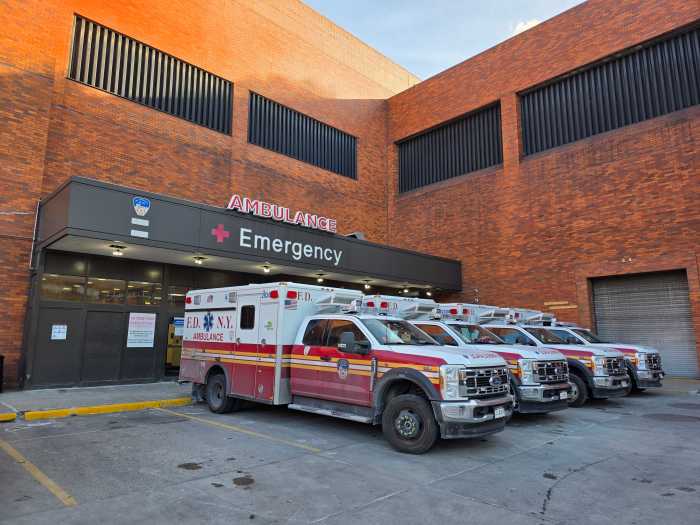
Last fall, the union launched a campaign, Stand with EMS, calling attention to the fact that 70% of employees resign within the first five years and earn $18.94 per hour before taxes — putting their wages behind those of most dog walkers, babysitters and department store gift wrappers.
These wages are unworkable to any NYC resident but especially grievous to EMS workers who perform difficult, dangerous work where every second counts.
For instance, if a person suffers a severed major artery, they can bleed to death in as little as two minutes. In sudden cardiac arrest, irreversible brain damage begins in as little as four minutes, and survival is unlikely if effective CPR is not started within 10 minutes, according to the union.
Past 11 minutes without EMS help, ”You might as well take them to the morgue or funeral home,” said Barzilay.
So why is the Bronx so slow? The problem isn’t traffic, distance or a lack of ambulances and hospital facilities — it still comes back to the workforce problem and the lack of a proper wage for EMTs, according to Barzilay.
“It doesn’t take much time to realize they could be making more money working at McDonald’s, Uber or dogwalking,” he said.
‘They didn’t give him a chance’
For those who have lost loved ones due to slow response times, the EMS crisis is crying out for attention.
Tyler Weaver realized this after the death of his son, Nicholas Costello, who died in December 2023 of cardiac arrest at age 24 while waiting more than 19 minutes for an ambulance in Kingsbridge.
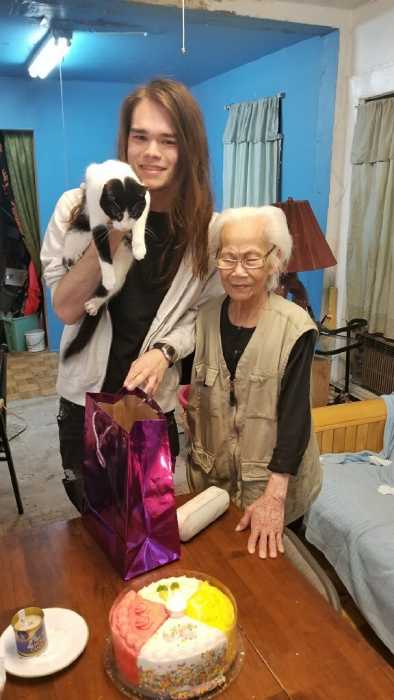
Costello lived in Washington Heights but was out late one night with friends in the Bronx, Weaver told the Bronx Times. When they returned to a friend’s Kingsbridge apartment, a building fire had broken out on the other side of the block, and the smoke triggered Costello into an asthma attack.
As his friends scrambled to call 911, no fewer than ten ambulances were on standby at the scene of the fire, Weaver said. But none were dispatched to help Costello. Instead, he later learned that his son’s ambulances arrived from St. Barnabas and the South Bronx.
After his son died, Weaver filed a complaint with the city, which required him to file a Freedom of Information Act request. Many months later, he received a response stating that all dispatch procedures had been properly followed.
Weaver, who lived in Riverdale for 20 years before moving to Westchester County during the COVID pandemic, said that among many inequities in the borough, the discrepancy in EMS response times “sticks out like a sore thumb.”
As a result, a young man’s life was cut short.
“I never thought that EMS killed my son or anything,” he said. “I just think they didn’t give him a chance.”