
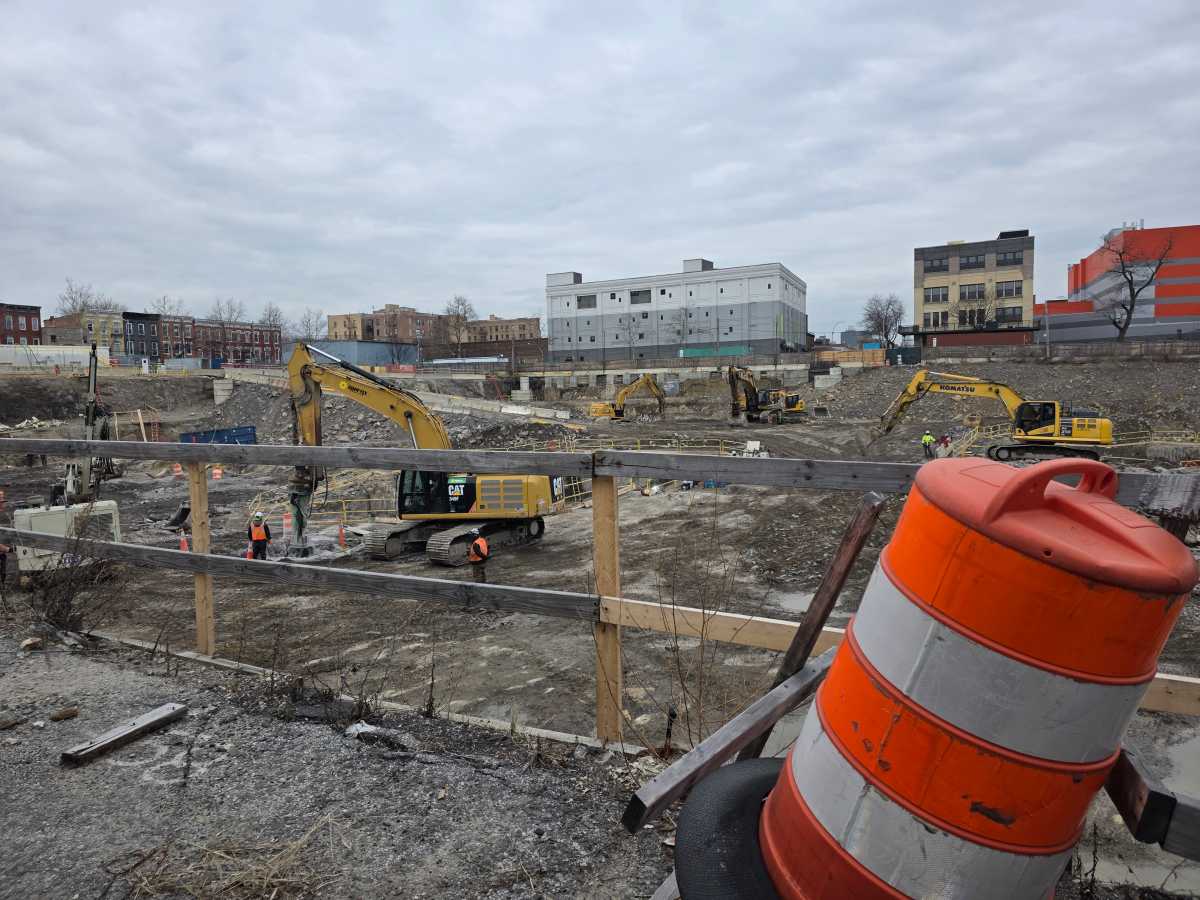
Discussion around the 1,040-capacity Bronx jail is heating up as design plans for the forthcoming South Bronx facility at are close to finalized.
The four borough-based jails replacing Rikers Island remains years from completion, but in the meantime, representatives for the Bronx project from the NYC Department of Design and Construction, Mayor’s Office of Criminal Justice, Department of Correction, Transformative Reform Group and Urbahn Architects have held several public sessions, most recently on March 10 at SoBro Social and an online comment period.
Community input has already shaped several factors in the exterior and interior of the new jail, according to the public presentation. For instance, in response to feedback, the team included a breastfeeding room for visiting families, a children’s play area, natural light within cells and calming colors and materials, as well as public seating and landscaping outside.
But when representatives met with Community Board 1 on March 17, District Manager Anthony Jordan pressed for specifics that were not yet available regarding staffing ratios, workforce programming for those in custody and other topics.
Given high rates of incarceration among Black and brown New Yorkers — and the notorious corrections facility, Horizon Juvenile Center, also located in the South Bronx — Jordan said details about the new jail should be questioned early on. But the facility is at least five years away from opening and representatives said they’d have to respond later to several of his inquiries.
“This is a multibillion, multimillion dollar project,” Jordan said. “Where’s the beef?”
‘A small city’
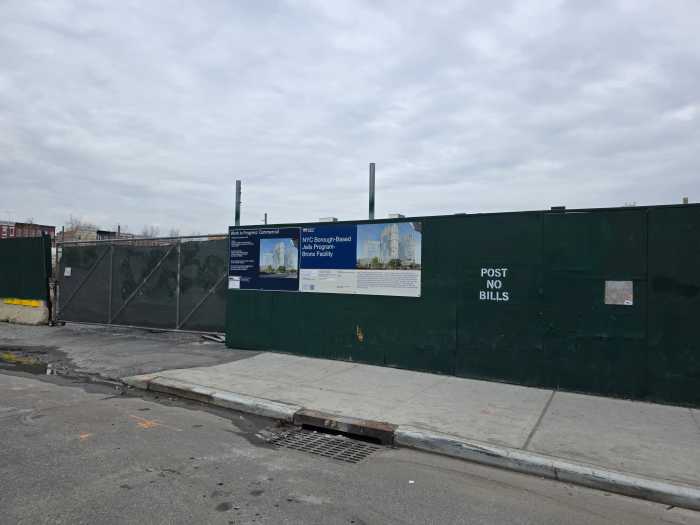
The new facility at East 141st Street and Bruckner Blvd., will indeed cost $2.9 billion — equal to the Brooklyn jail budget but less than that of Manhattan Chinatown, $3.7 billion; and Queens, $3.9 billion; according to a Jan. 2026 Department of Corrections report.
But the borough-based jails — intended to bring people in custody closer to their neighborhoods, family, friends, attorneys and courthouses — stand no chance of being completed by 2027, the legally mandated deadline to close the Rikers Island jail complex, which has been plagued by suicides and deaths in custody, understaffing, violence and lawsuits.
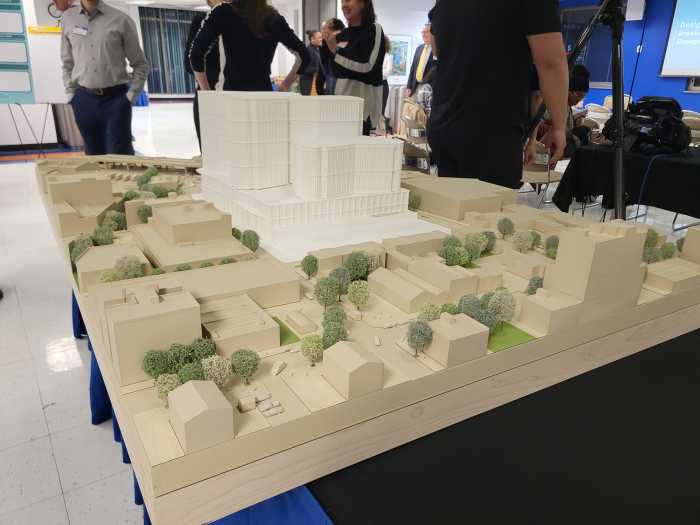
Though the Bronx jail is not expected to open until 2031, early construction work has now begun and renderings have been released showing the look and feel of the interior cells, common areas, public areas and streetscape.
In public presentations, the design team has said it aims for the jail to complement its surroundings and be a community asset, not a detriment.
At the March 10 public session, lead architect Larry Gutterman said the new jail is set to become “a great example of public architecture in the city of New York.”
Plans for the facility include educational and vocational programs, therapeutic services, 120 below-ground parking spaces for employees and 40,000 square feet of community and retail space, mainly on Southern Blvd., and East 141st Street.
The resulting project will be like “a small city,” Gutterman said in the session. “We believe that we’ve designed a building that relates well to the surrounding neighborhood.”
He and other project representatives presented the same information to Community Board 1’s committee on Economic Development, Land Use, Housing and Zoning, chaired by Freddy Perez.
One board member said he was previously opposed to any new jail in the Bronx, but this concept “convinced me — it looks good,” he said.
But other board members were not yet ready to agree. District Manager Anthony Jordan said the borough jail concept has been in the works for years, and he was unpleasantly surprised to find that some of the details he pressed for, such as staffing ratios, were not yet available.
You have to understand that we want to know what we’ll be inheriting,” Jordan said.
Knowing that most of the jail population will be Black and brown, he said he wanted more specifics on how the city plans to “build it, manage it and hopefully never have [incarcerated people] return back to that facility again.”
‘Let’s get it right’
Allerton native James Inniss, director of public safety and interim political director for the nonprofit New York Communities for Change (NYCC), said in a Bronx Times interview that he communicates with jail abolitionists, those planning the new facilities, and everyone in between.
Innis grew up in the Bronx during the 1990s stop-and-frisk era and worked for years at FedEx before falling into community organizing during the pandemic. Now in his 40s, he still lives in the same community that raised him and understands the overlapping spectrum of resources necessary to create stable adults who have good jobs and housing and stay out of jail.
Inniss said he believes the borough-based jail design workshops are missing the point about the antipoverty work at the core of public safety. “Figure out what went wrong to get them there. That’s the first step.”
He said he saw a rendering of the new facility, which “looks nice,” and he especially appreciated that everyone in custody will have a single room.
However, “It’s not helping people stay out of the cycle of poverty and injustice that they’re in, the lack of education or underemployment and things like that. Those are things that we’re not gonna need a jail if we address those.”
Though the four planned facilities are long delayed and double the originally planned budget, there’s no question that they’re happening. Therefore, Innis said residents, organizations and city leaders should pragmatically prepare for the Bronx facility while also investing in housing, education, food and other resources to prevent people from entering incareration.
Most people in custody are not psychopaths or serial killers, and the jails can provide an opportunity to help those accused of “crimes of poverty,” Innis said.
“If the new borough-based jails can be the first step in breaking the cycle of those crimes of poverty, that’s a win.”
Inniss also added that delayed project timeline may actually have an upside.
“It gives more time for more conversations,” Innis said. “It looks like we’ll have a little bit of time to get it right, so let’s get it right.”
Reach Emily Swanson at eswanson@schnepsmedia.com or (646) 717-0015. For more coverage, subscribe to our newsletter and follow us on Twitter, Facebook and Instagram!