

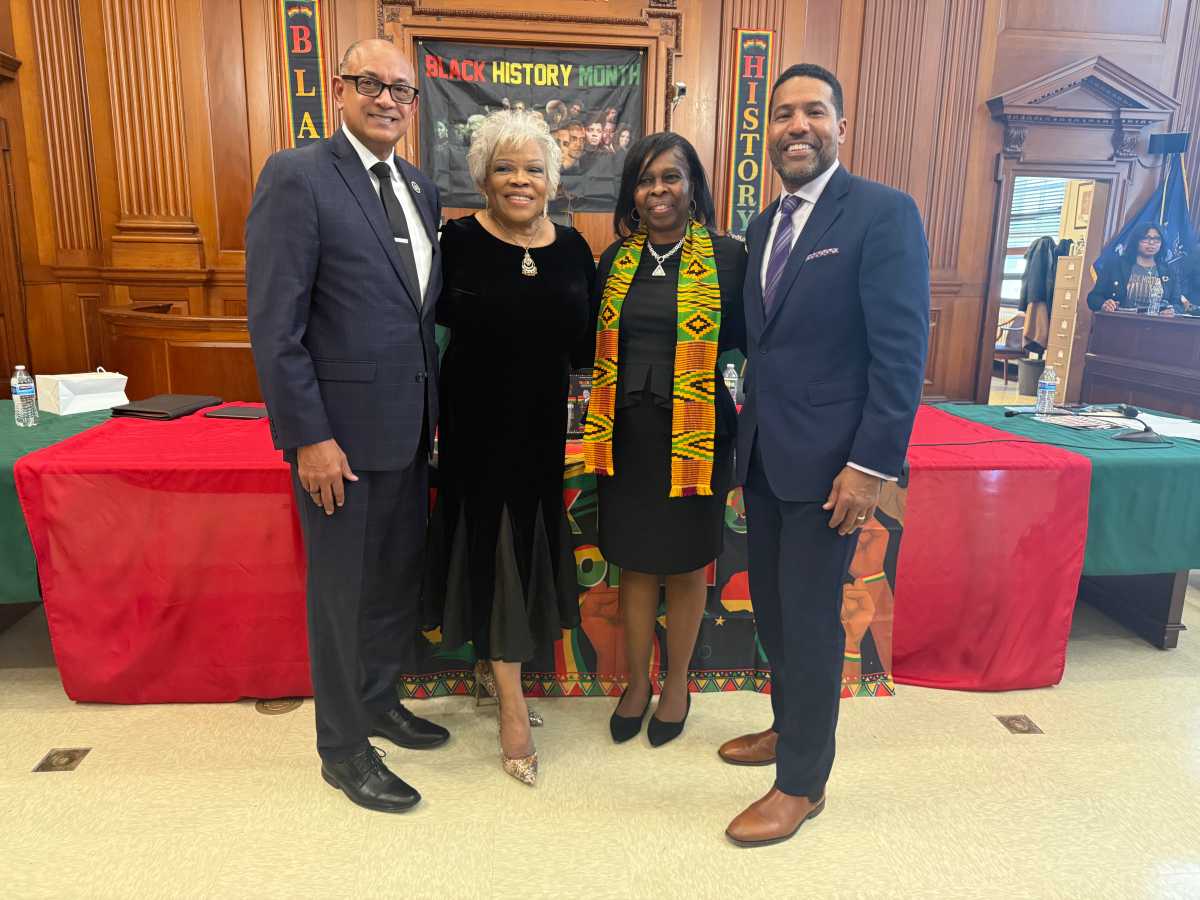
The Bronx Supreme Court and the Bronx Bar Association held a lively conversation on Friday to a full house in celebration of Black History month, honoring the contributions of Black leaders over the past century.
The event, sponsored by the Gender Fairness Committee and the Equal Justice Initiative Committee of the 12th Judicial District, featured a discussion between Hon. Norman St. George, first deputy chief administrative judge, and Joey Jackson, a criminal defense attorney and legal for CNN. The conversation was moderated by Justice Kim Adair Wilson.
“Just look at the room and the number of African-American judges and attorneys in this very room,” said Joseph Zayas, chief administrative judge of the New York State Judiciary, gesturing to a courtroom filled wall to wall with attendees. He noted that he rarely ever saw, or appeared before, an African American or Latino judge in the 1980s and 1990s.
“This historic moment, I believe, is the direct product of the African-American struggle for equality, your fight to eradicate racism, and your relentless promotion of judicial diversity and diversity in our great profession,” Zayas said, addressing St. George.
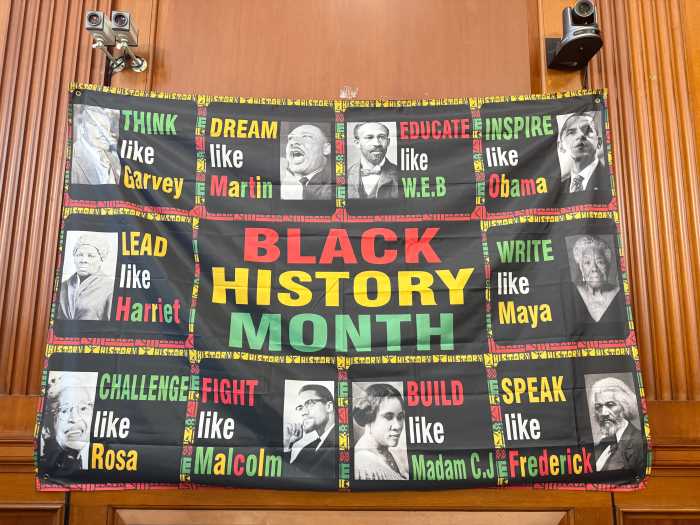
When asked about the migration of Black people throughout history, St. George reflected on his father’s journey emigrating from Jamaica and earning his doctorate in psychology at Columbia University.
Jackson, who was born and raised near the Edenwald Houses, also reflected on his own path, stating that he would not “have a seat at the table” if it wasn’t for the people in the profession that came before him.
When Justice Kim Adair Wilson asked where the nation currently stands in Black history, Jackson responded, “Beyond Jim Crow, but a long way to go,” drawing agreement from the audience.
Jackson outlined trouble patterns in the nation such as unlawful arrests by ICE agents, attacks on critical race theory and book banning.
“We are in a place where the clock is being set back,” Jackson said. “We have more of an obligation to stand up and make our voices heard. This too shall pass, but it’s only going to pass because we, the people, make it pass.”