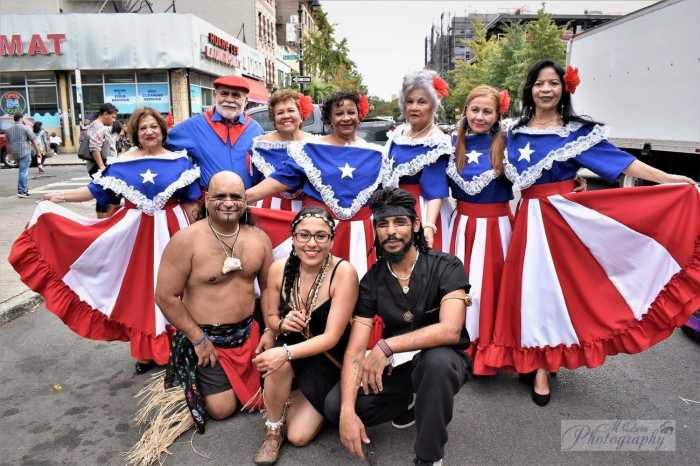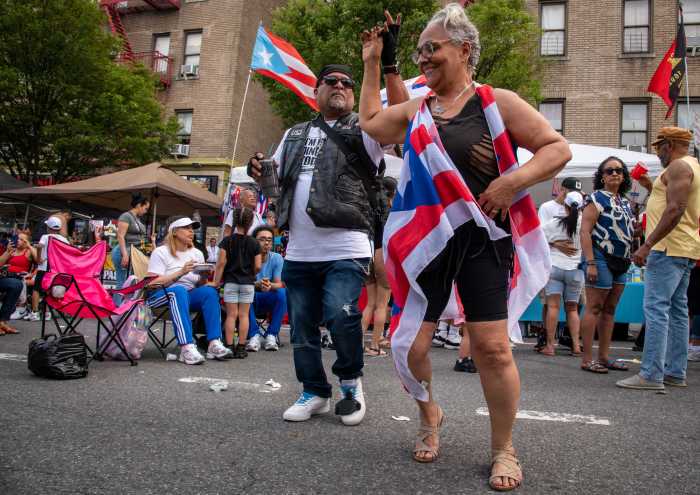

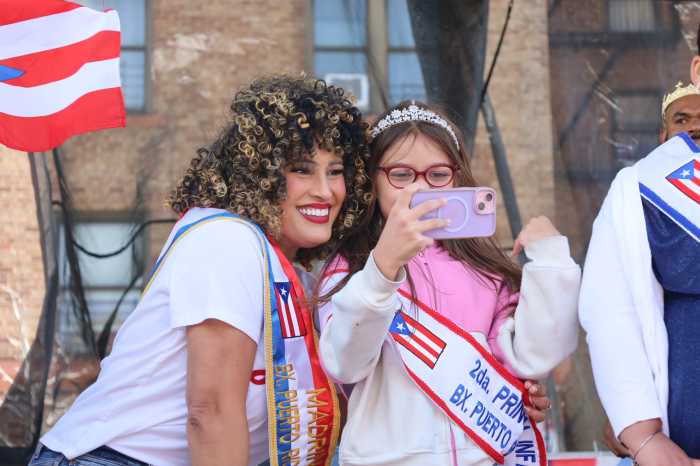
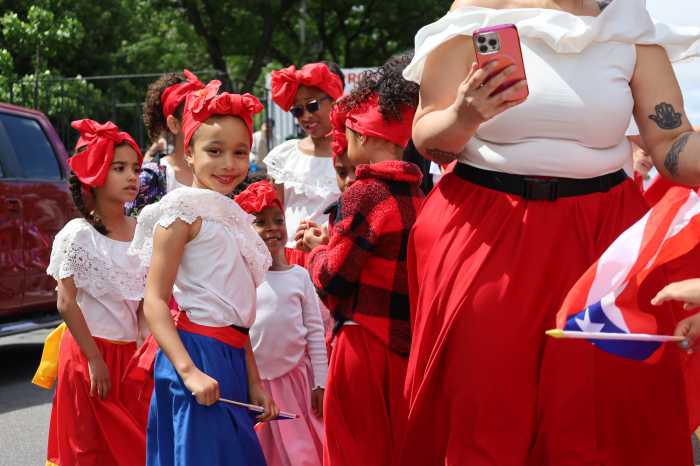
“Wepa” was the word of the day as floats, dancers and motorcades made their way up the Grand Concourse in a sea of red, white and blue on Saturday, proudly celebrating The Bronx Puerto Rican Day Parade.
While honoring the contributions of modern-day Puerto Ricans, from food to politics, many also reflected on the legacy of Puerto Ricans throughout history.
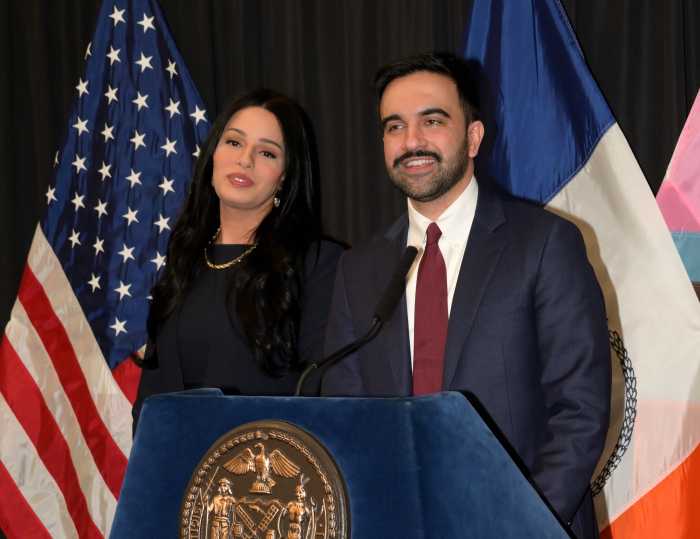
“ From the Young Lords to the work to create Hostos Community College, to so many of the Boricua community that said, ‘We’re going to stand up for justice, for fairness,’ that’s the story of the Puerto Rican community in the Bronx,” Borough President Vanessa Gibson told the Bronx Times.
“Because we are all about Puerto Rican culture, the heritage, the diversity – que viva Puerto Rico!”
The NYPD police band kicked off the festivities at 166th Street, culminating at Mount Eden Avenue with a stage of notable honorees.
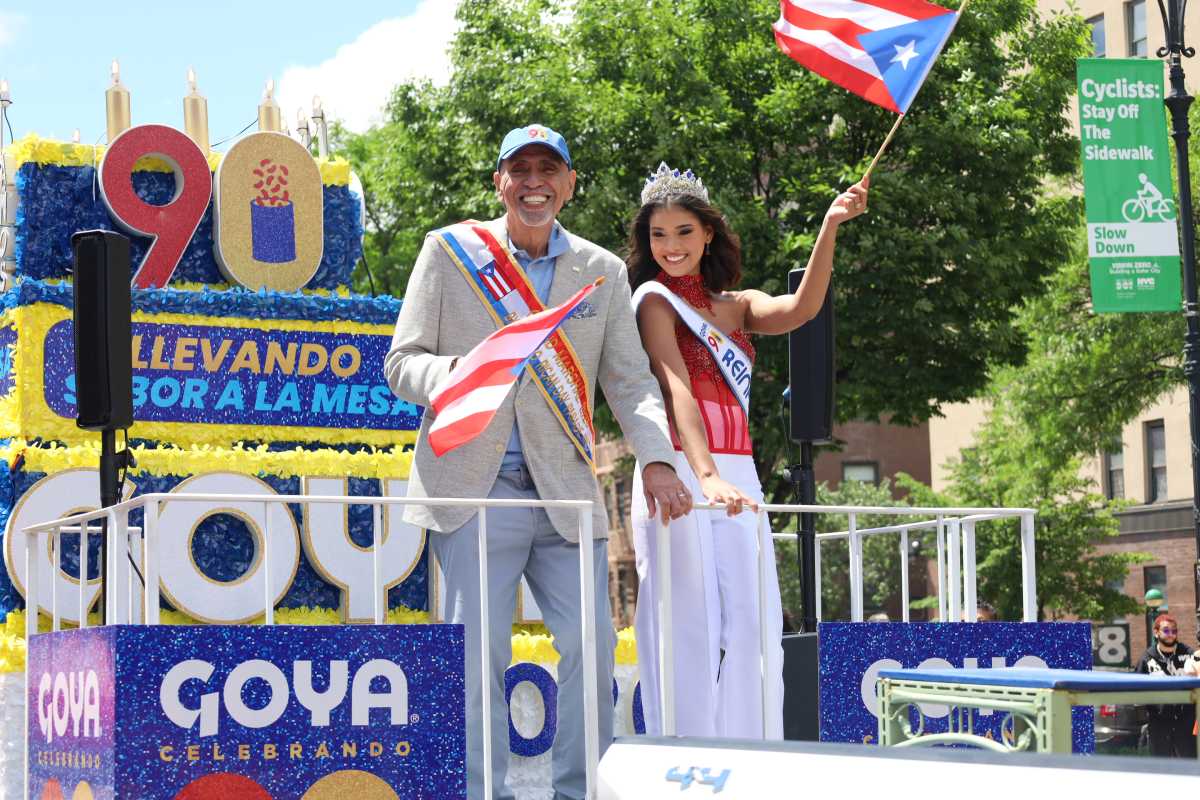
Rafael Toro, national director of public relations for Goya Foods, served as the grand marshal, flashing his signature pearly whites and as he waved to the crowd. Founded in NYC, the Latin foods company turned 90 this year.
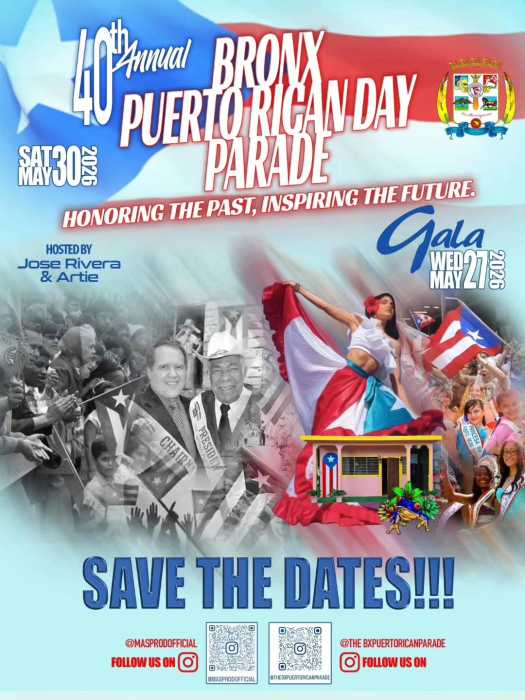
In recognition of another milestone, the parade adopted a new name for their 40th anniversary; The Bronx Puerto Rican Cultural Parade.
“ We say cultural because our parade’s all about the traditions and the culture of Puerto Rico,” said the parade’s president, Maribel Mercado. “The Bronx Puerto Rican Day Parade, it sounds more like a day, and we’re more than just a day.”
Established by the late Luis Angel Rosario Martinez, the first Bronx Puerto Rican Day parade graced the streets of the Boogie Down in 1987. The community leader died in 2000 and in 2003, the corner of Fordham Road and Walton Avenue was co-named after him.
Over the years, Boricuas and the Bronx have become synonymous. Documentation of Puerto Ricans migrating to NYC can be seen as early as 1900 when the U.S. Census reported 300 living in the Big Apple. The 1917 Jones-Shafroth Act granted Puerto Ricans U.S. citizenship, prompting a mass migration for decades to follow.
By 1940, nearly 88% of the Puerto Ricans in the U.S. resided in NYC with an estimated total of 61,500. That number peaked in 1990 at nearly 900,000. Then, either due to a more widespread diaspora or reverse migration, the number began to decline.
As of October 2025, the number of Puerto Ricans in NYC sits at just above 600,000, with nearly 240,000 residing in the Bronx, a borough where Spanish is heard on every street corner and Salsa music plays at the local bodegas.
From Supreme court judge Sonia Sotomayor to pop sensation Jennifer Lopez, many prominent Puerto Ricans in today’s cultural landscape call the Bronx their home, including the Salsa legend Willie Colon, who died in February and was posthumously honored at the parade’s gala on May 27.
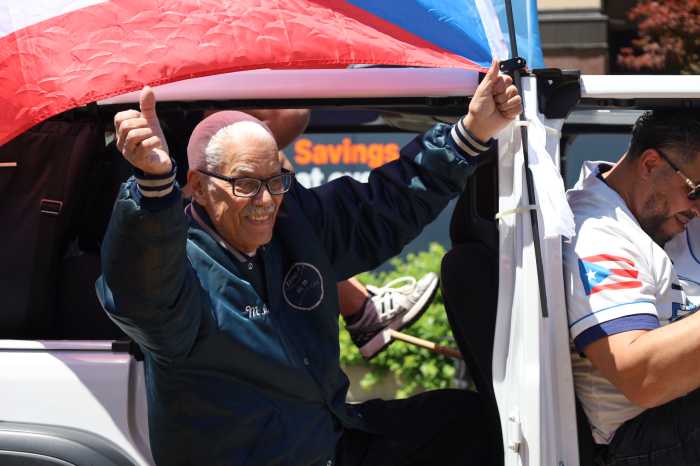
Miguel Angel “Mike” Amadeo was also one of the parade’s honorees, a man who champions the music of Colon, as well as many other legendary Spanish music artists. In 1969, Amadeo bought the music store Casa Hernandez at 786 Prospect Ave. and renamed it to Casa Amadeo. More than half-a-century later, those from near and far travel to – not only find songs of a bygone era sold on outdated mediums like cassette tapes and CDs – but to visit the 92-year-old who can still be found working behind the counter.
“Si me lo van a dar . . .” Amadeo said into the microphone, to which the crowd retorted, “Me lo dan en pila.” (“If you’re going to give it to me, give it to me in abundance.”)
And give it to him in abundance they did. Not only was Amadeo recognized for his preservation of one of the oldest Spanish music stores in the country, but he also made it onto the Bronx Hall of Fame and had the corner of Prospect and Longwood avenues co-named after him in 2014.
Omallys “Omi” Hopper, from Rhode Island, served as the madrina of the parade. She received recognition for bringing Puerto Rican dishes to the world stage when she became a finalist on Gordon Ramsay’s Next Level Chef in 2023, proving the contributions of Puerto Ricans are far and wide, some more severe than others.
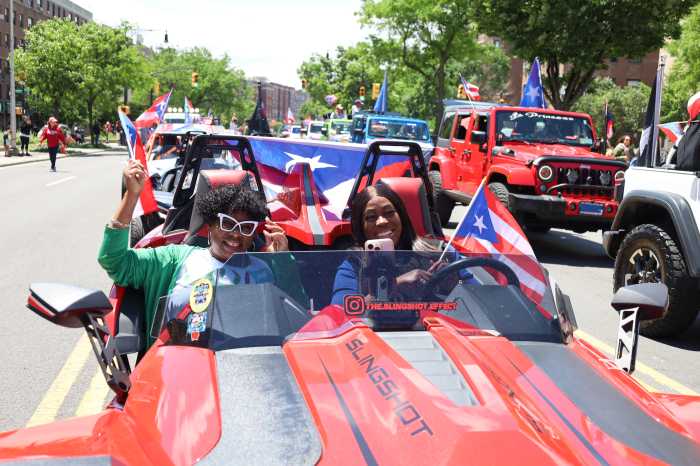
“Everything my f—— people been through. Everything they’ve done. World War I, World War II. Everything that they’ve done to help other countries. What they’ve done here in New York, like the Young Lords,” said Amado Negron who was part of the Jeep Club that drove in the parade on Saturday. “Look at what they was doing to the females in Puerto Rico.”
The Puerto Rican Regiment of Infantry, founded in the late 19th century, was made up of volunteer soldiers from the Caribbean island who fought and died on the front lines of WWI and WWII, according to the Museum of the United States Army.
The U.S. exploitation of Puerto Ricans continued with a human trial of birth control pills in the 1950s, spearheaded by John Rock and Gregory Pincus. Due to legal and religious opposition in America, Rock and Pincus conducted their trials in Puerto Rico where there were no laws against birth control. Many women suffered from severe side effects, including three that died, yet no investigation was conducted.
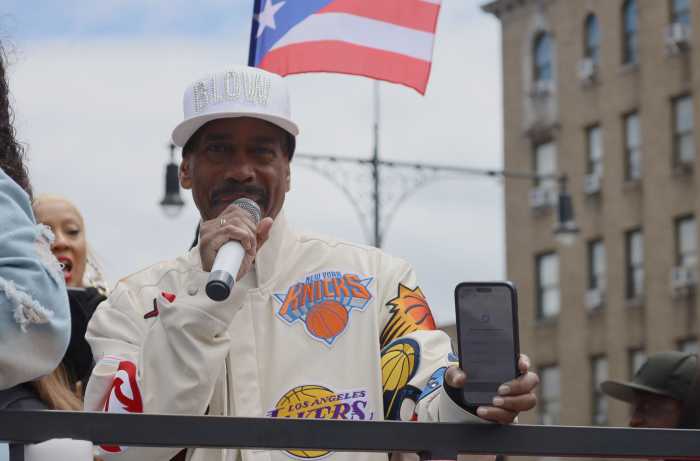
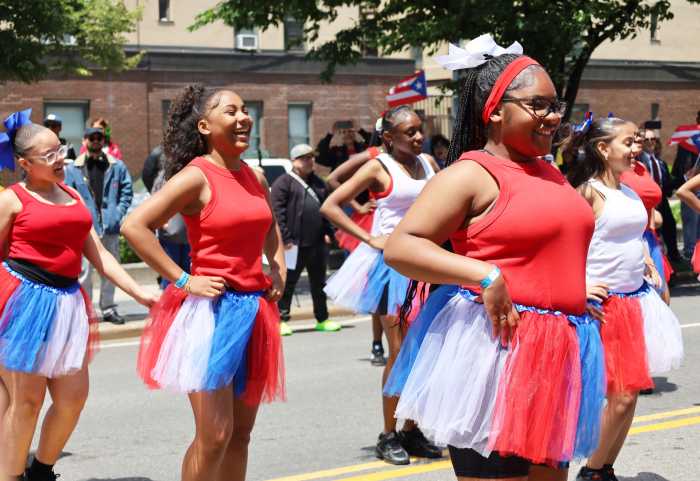
Known for proudly brandishing their flag, whether it be from a fire escape or a car’s rear view mirror, Puerto Ricans are resilient, perhaps due to a 1948 gag law, also known as La Ley de la Mordaza. Signed by a U.S.-appointed Puerto Rican governor, the law prohibited Puerto Ricans from displaying or even owning the flag, thwarting their independence movement. In 1957, the law was repealed and the island adopted their own constitution, although remaining a commonwealth of America.
A history of oppression often inspires tenacity, and a motivation towards social justice.
“ I don’t forget the Puerto Rican people because they were the only ones who supported [the Guardian Angels] in the beginning,” said Curtis Sliwa, local politician who founded the NYC-based vigilante group in 1979. “So my life, everything I’ve done, really came about from the support of the Puerto Rican community in the Bronx.”
Reach ET Rodriguez at etrodriguez317@gmail.com. For more coverage, subscribe to our newsletter and follow us on Twitter, Facebook and Instagram!