
The New York State Weatherization Assistance Program (WAP), which helps low and moderate-income property owners pay for energy-efficient home improvements, is facing a major cut in the state budget, which advocates say puts homes and jobs at risk.
Currently, the program, which is federally funded and administered by NYS Homes and Community Renewal (HCR), covers costs for income-qualified property owners who want to make their building more environmentally friendly, safer, and, in many cases, cheaper to operate.
The program covers projects such as energy audits, refrigerator replacement, wall insulation, air sealing, insulation of hot water tanks and pipes, energy-efficient lighting, door and window replacement and more.
These types of improvements create local jobs and save households an average of at least 20%, according to the Office of Temporary and Disability Assistance, which oversees WAP.

But the federal program from which it pulls its funding, the Low Income Home Energy Assistance Program (LIHEAP), is facing a potential 10% cut —which would amount to a 60% cut for WAP, according to advocates such as the nonprofit Our Bronx, formerly the Northwest Bronx Community and Clergy Coalition.
“The loss of HEAP funding to WAP will make our local operations unsustainable at our current level of operation,” said Frances M. Fuselli, program director with Our Bronx, in a recent letter to state lawmakers.
“Cuts would not be temporary — they would dismantle an infrastructure that has taken decades to create.”
The proposed cuts could affect approximately 800 statewide workers, plus thousands more in training, and approximately 1,000 Bronx households, according to the Association for Energy Affordability (AEA) in the South Bronx, a state-designated provider for WAP projects.
In response to these concerns, Hochul’s spokesperson told the Bronx Times that federal funding for the Low Income Home Energy Assistance Program (LIHEAP), in the same funding pool as WAP, has lagged behind increasing energy costs.
Unless another solution is reached, the state must choose between paying for WAP and covering heating and cooling bills for low-income residents — which it considers a more immediate safety priority, she said.
“Republicans in Washington failed to increase funding for LIHEAP to keep pace with rising energy costs, pushing federal responsibilities onto states,” said Nicolette Simmonds, spokesperson for the governor, in a statement sent to the Bronx Times.
“Governor Hochul has prioritized HEAP funds for those program components that serve households most in need, helping low and moderate-income households across the state pay their energy bills and stay safe in their homes during the summer and winter seasons. The Governor will continue to fight against these cuts from Washington to protect the programs that New Yorkers depend on.”
But Joseph Maggiore, executive director of the New York State Weatherization Directors Association, said in a statement to the Bronx Times that LIHEAP has bipartisan support and that its funding increased this year by $20 million. New York State is expected to receive about $400 million of the $4.045 billion program total, Maggiore said.
“The facts are clear: LIHEAP has support on both the federal and state levels. Yet despite that support, the Governor is still proposing cuts that would eliminate critical, lifesaving services for New York’s most vulnerable residents,” he said.
Beyond the weatherization program itself, Hochul is speaking out against the Trump administration’s effort to entirely eliminate federal LIHEAP funding in the 2027 budget — affecting more than 1.4 New York households who rely on the program annually.
“The Governor will continue to fight against these cuts from Washington to protect the programs that New Yorkers depend on,” Simmonds said.
‘Neglected’ old homes
In the Bronx, residents and green workforce leaders are pressuring Hochul to fully protect the weatherization program, with equity concerns at the forefront.
Since WAP was founded in 1977, it has helped weatherize more than 744,000 housing units throughout the state, providing funds to property owners at up to 60% AMI, as well as those receiving public assistance such as SNAP.
Supporters argue that funding for HEAP and WAP is essential for keeping residents in their homes and dismanteling injustices that have disproportionately impacted people of color.
Sheila Edwards, who has lived in the South Bronx for 70 years, owns a four-family property with rental tenants. Last year, she used funds from WAP and other sources to pay for major roof repairs, she said during an April 28 roundtable at the Association for Energy Affordability.

Edwards’ family story reveals the history of redlining in the South Bronx: her parents owned the house, but, as a Black family, originally had to put the property in the name of her father’s white employer. Only decades later was she able to register the home in her own name, she said.
Today, Edwards said she struggles with the expense of maintaining the property — especially because tenants didn’t pay rent “for years” around the pandemic, she said.
“Without these programs [like WAP], we have nothing,” Edwards said. “This program literally saves buildings.”
In the South Bronx today, Edwards she said she worries about a “destructive cycle” of new high rises being built alongside dilapidated homes that owners cannot afford to keep.
Amid all the change she has witnessed over years, “That which exists is being neglected.”
New tech for old homes
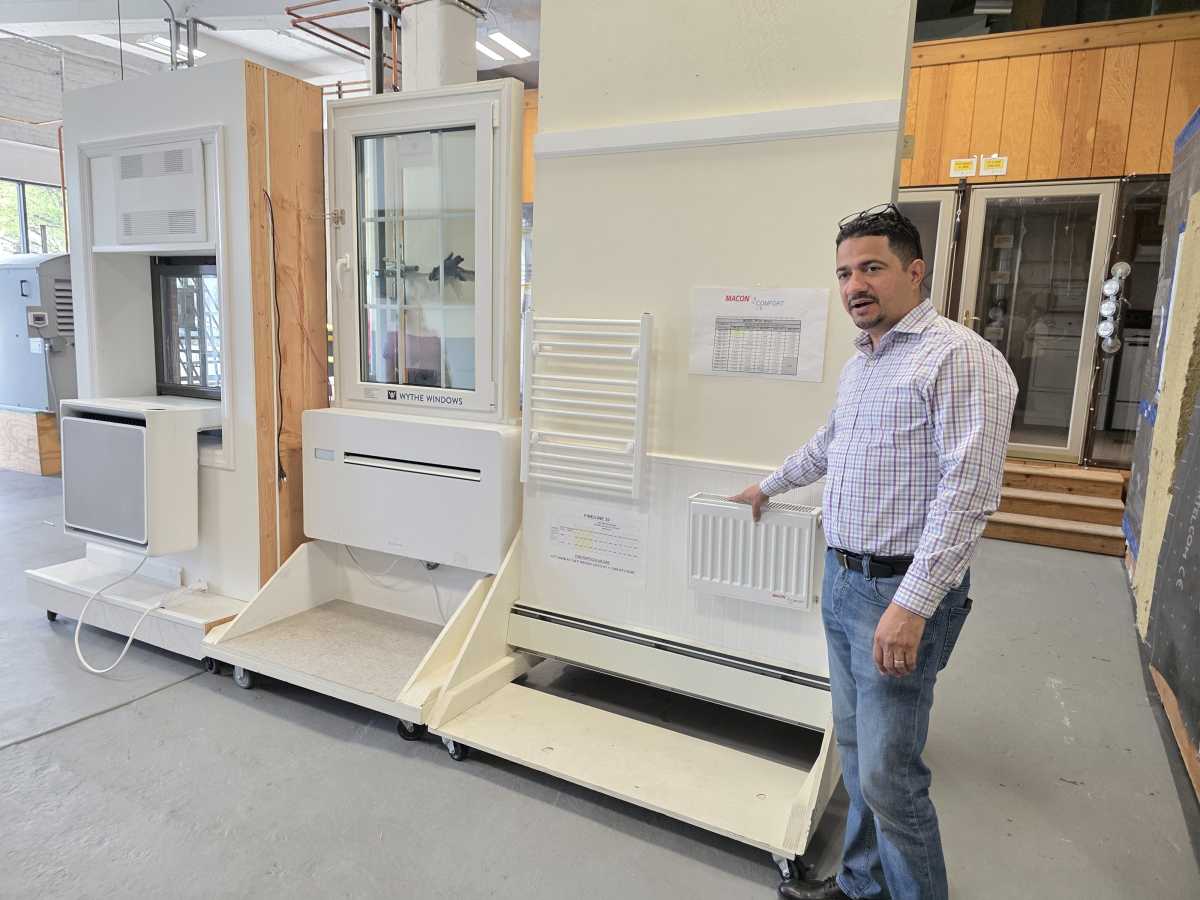
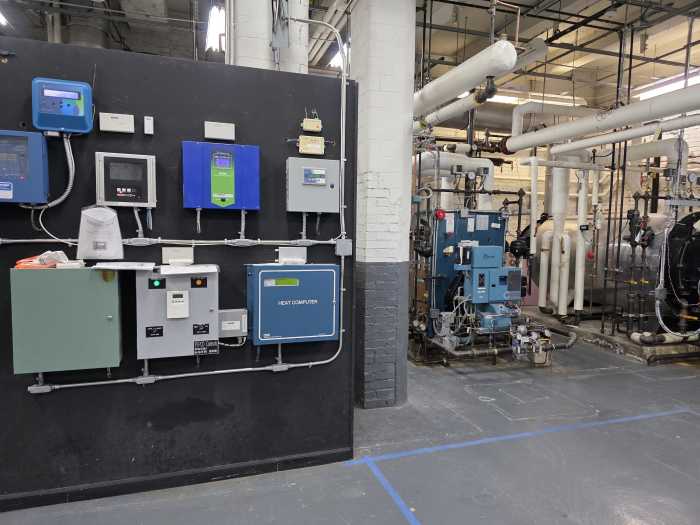
Francis Rodriguez, director of weatherization for the Association for Energy Affordability, led the Bronx Times on a tour of the training center with classrooms, equipment and control panels to practice on.
Rodriguez said he’s a perfect example of the career advancement possible in the industry, having worked his way up from a warehouse job into his current role, he said. “If we lose staff, we’re losing years of experience that won’t be easily replaced.”
The ever changing green jobs industry gives any Bronxite the opportunity to advance if they choose, he said.
“If all you want to do is blow insulation, then fine. But we’re going to teach you how to do it properly too,” Rodriguez said.
Throughout the center, he showcased some of the new technology being added to homes under the WAP program — the type of upgrades more associated with luxury high rises than old affordable buildings.
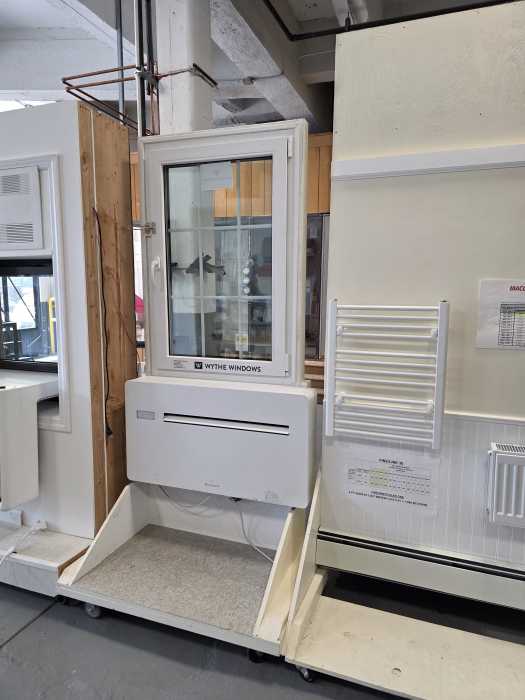
Rodriguez demonstrated flat-top induction stoves that heat quickly; European-style windows that open easily and offer strong protection against sound and wind; and small radiators with adjustable controls to prevent overheating and that use less energy in the heating element than traditional ones.
In addition to cost savings, these kinds of improvements bring major quality of life benefits to families, Rodriguez said.
But he fears cuts could leave the WAP program and community partners like him who train the workforce “completely handicapped.”
Not going back

During the roundtable, several longtime Bronxites expressed concern over the potential loss of workers and the lifechanging home upgrades they provide.
Alexis Garcia, who said he grew up poor in NYCHA housing with “overheating, broken windows and broken boilers,” worked his way through various trainings to become the energy auditor for AEA.
“It’s definitely somewhere where you can have a career and also give back to your community, he said. “With the money that WAP is providing, it helps a lot of people in this industry to move up and ahead.”
Angela Davis-Farrish, executive director of the nonprofit SEBCO, said she was born into a cramped apartment with inconsistent heat and hot water during the “Bronx is burning” era, when many landlords set fire to their buildings rather than to pay to repair them.
“I remember those days vividly, and we don’t want to repeat that history,” she said.
Davis-Farrish said her organization has partnered with the AEA center to work on more than 2,500 housing units in 15 years, with projects ranging from heat pump replacements to full-building electric conversions in Hunts Point.
She said residents and the governor must push back against the proposed funding cut in order to protect jobs and give owners the capital they need to keep their homes.
Having lived through the era of large scale property abandonment in the Bronx, “We cannot go back,” Davis-Farrish said.
Reach Emily Swanson at eswanson@schnepsmedia.com or (646) 717-0015. For more coverage, subscribe to our newsletter and follow us on Twitter, Facebook and Instagram!