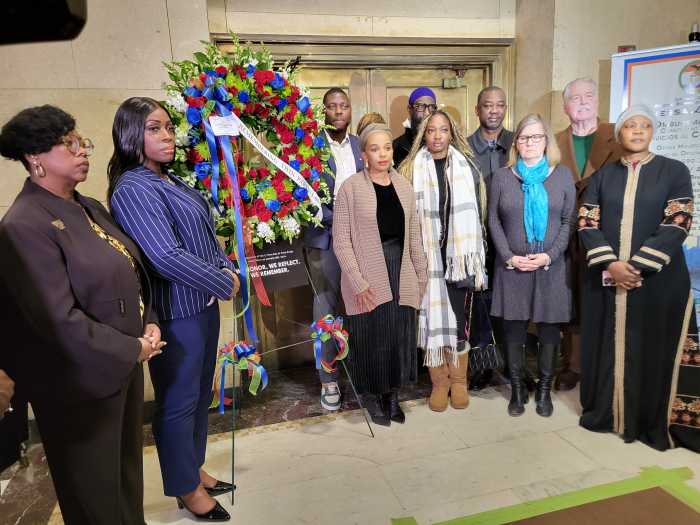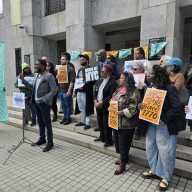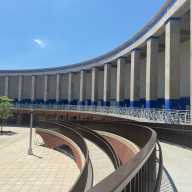

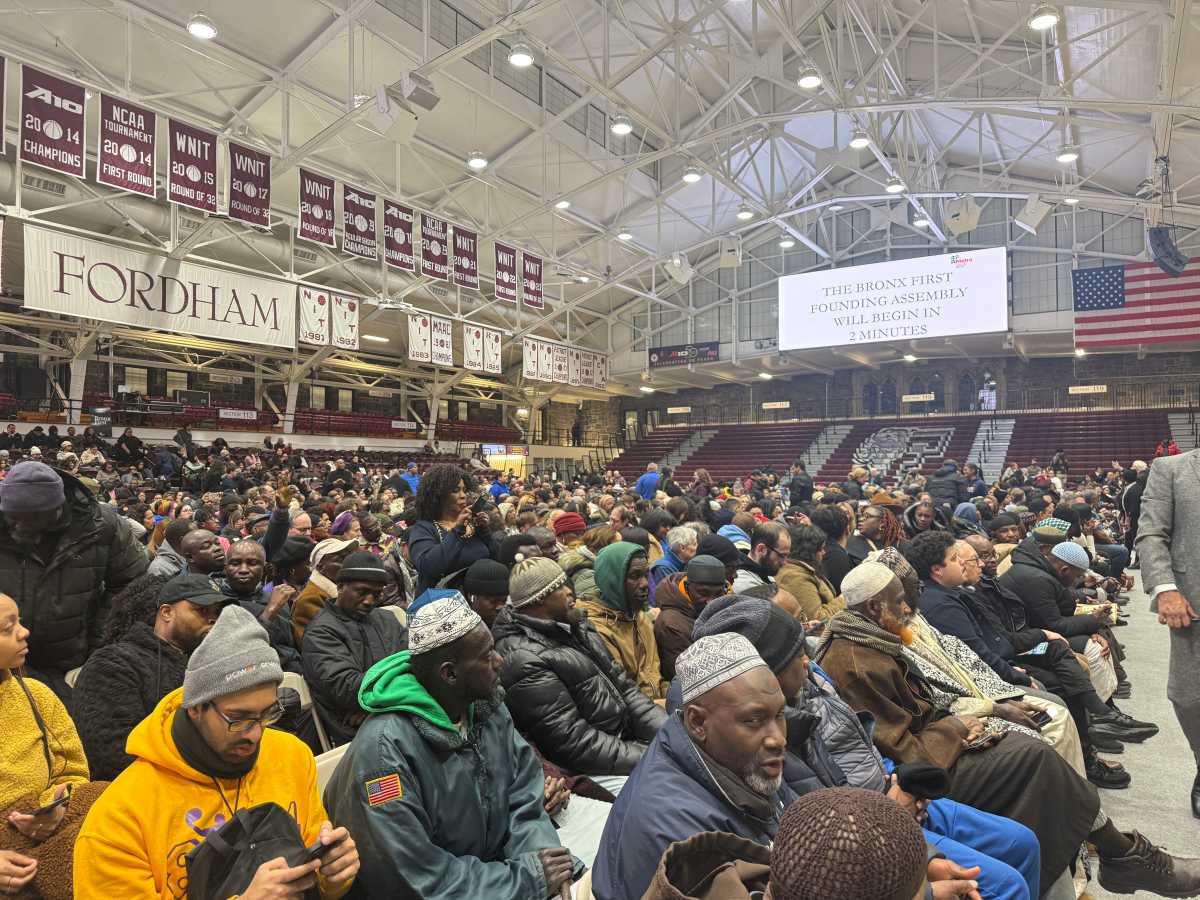
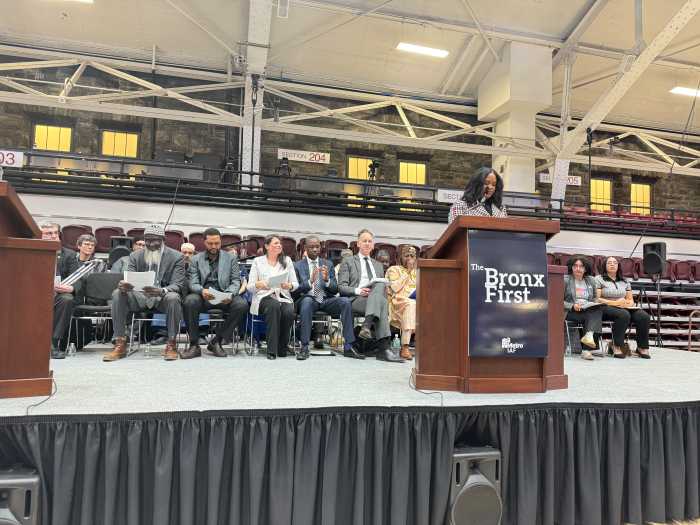
More than 1,800 Bronx residents, faith leaders and nonprofit organizers packed the Rose Hill Gymnasium at Fordham University on Feb. 5 to launch a new borough wide coalition aimed at building political power and tackling long-standing inequities.
The coalition, Bronx First, is the newest affiliate of the Industrial Areas Foundation (IAF), one of the nation’s oldest networks of interfaith and community-based organizations. It joins the Metro Industrial Areas Foundation — the group’s regional arm — which includes coalitions in Manhattan, Brooklyn, Queens and the South Bronx.
The launch of Bronx First expands that footprint, building on previous organizing efforts and extending them borough wide.
“The Bronx has been last for too long. Last in everything good,” said Eileen Torres, CEO of BronxWorks, in her opening statement. “Tonight, the Bronx will be first because you are here.”
BronxWorks is one of dozens of member institutions in Bronx First, alongside mosques, churches and community-based organizations serving Bronx residents. Organizers said the coalition’s priorities stem from persistent concerns raised by those communities, including the affordable housing, stronger public safety measures, expanded access to mental health services and improved education and employment opportunities.
While the coalition is still in its early stages, Metro IAF, in tandem with Alexander Gorlin Architects, identified 22 city and state-owned sites that could provide 25,000 units of affordable housing.
Metro IAF’s housing campaigns have historically reshaped neighborhoods. In the early 1980s, East Brooklyn Congregations, working with the IAF, launched the Nehemiah housing plan, ultimately building more than 4,500 affordable homes in East New York and expanding homeownership in communities once defined by disinvestment and urban decay. East Brooklyn Congregations later partnered with South Bronx Congregations to construct an additional 1,000 Nehemiah homes in the South Bronx.
The launch of the coalition has reinvigorated community leaders across the borough.
Rita Santelia, CEO of the Mosholu Montefiore Community Center, which serves roughly 50,000 residents, said she was first approached by Metro IAF about joining the effort nearly two years ago. While initially skeptical, she was drawn to the collective power that boroughwide organizing could create.
“What it allows you to do is really talk to every power base in this borough,” Santelia told the Bronx Times.
“It’s amazing that no matter who you are, what walk of life, what religion, we all have the same common issues,” she added. “That’s pretty powerful when you realize you’re not alone.”
Haji Dukaray, a board member of the Islamic Cultural Center of the Bronx, said he shared similar doubts at first. But the idea of uniting institutions across the borough ultimately felt like a “dream come true.”
“We all live in the Bronx and we all have the same problems,” Dukaray told the Bronx Times. “If we can just come together, this will give us the power. This will give us the voice. This will put us at the table where we can start having discussions and hopefully get some of these issues addressed.”
“These are issues that could be solved,” he added. “We live in the most powerful country in the world. So why do they keep happening in the Bronx? Coming together gives us the power to do the work and help our community.”
For Dukuray, the issues are deeply personal. In 2022, a fire at the Twins Parks North West apartment complex killed 17 congregants of his mosque, many of whom were of Gambian descent, including five members of his immediate family.
Bronx First has already set plans in motion to build momentum. On the night of the founding assembly alone, the coalition raised $158,000 in membership dues to fund events and hire staff. Leaders said they will continue holding meetings, strategizing and bringing community concerns directly to those in power.
Several speakers at the assembly noted that Mayor Zohran Mamdani had been invited but did not attend. The following day, he hosted his first annual interfaith breakfast at the New York Public Library.
Dukaray said he was surprised by the mayor’s absence, particularly given the strong support Mamdani received from Muslim and West African communities in the Bronx — groups that made up a significant portion of the crowd at the gymnasium. Despite his absence, the organizers hope he will meet with them and work together on key issues.
Reach Marina Samuel at msamuel@schnepsmedia.com. For more coverage, subscribe to our newsletter and follow us on Twitter, Facebook and Instagram!