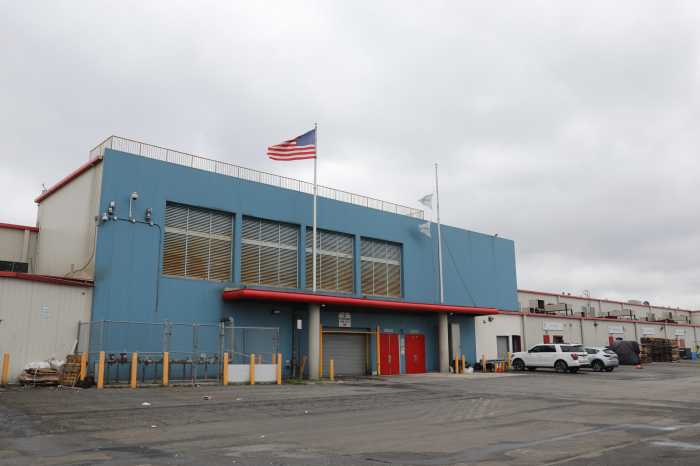
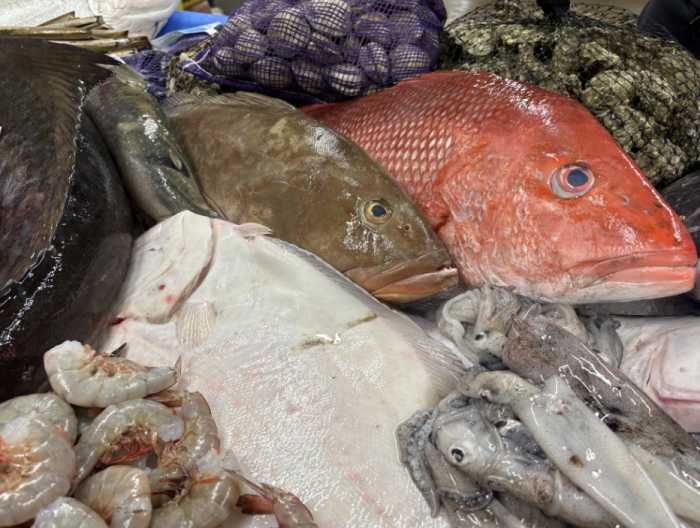
Tucked away behind the beltway highways and surrounded by a steady stream of large delivery trucks, the Fulton Fish Market Cooperative, operating within the Hunts Point Food Distribution Center supplies fresh and frozen seafood to restaurants, grocery stores, businesses and dining tables across the five boroughs. It is the largest supplier and distributor of fresh seafood in the United States.
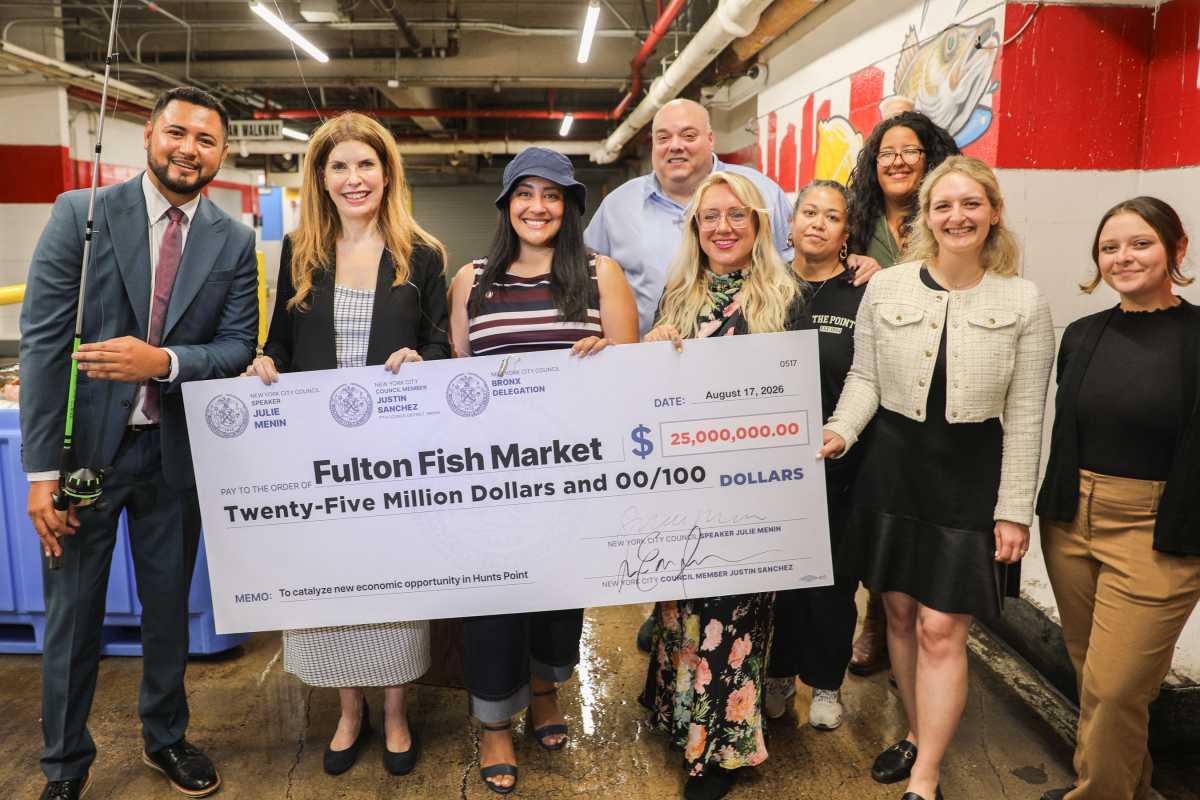
Speaker Julie Menin and Bronx Delegation Co-Chairs Justin Sanchez and Amanda Farias presented a $25 million check on Aug. 17 to fund new infrastructure projects aimed at reducing carbon emissions, attracting visitors to the waterfront, improving pedestrian access and creating new homegrown economic opportunities for local residents.
The investment aims to transform the Fulton Fish Market Co-op into a global industry hub. Half of the fish consumed in New York City is supplied through the Fulton fish market. And nearly half of the fish served in restaurants, sold at neighborhood markets, or prepared in home kitchens can be traced back to the Hunts Point food distribution center.
According to Speaker Julie Menin, $22 million will be allocated to upgrade the refrigeration system alone.
“We’re replacing an aging refrigeration system with modern infrastructure that will dramatically reduce emissions and help deliver cleaner air around the surrounding community. The new system will break within a breath of fresh air — literally,” said Council Member Justin Sanchez.
Hunts Point is considered to have some of the worst air quality in the South Bronx. The area has notoriously been coined “Asthma Alley” because of the poor air quality that residents and workers alike experience, in part due to the heavy presence of trucks traveling through the neighborhood to transport seafood across the five boroughs.
“The infrastructure will reduce CO2, detect leaks, better use of access heat and reduce losses of product, which in return, will keep the cost of business down and lead to a reduction in the cost of our groceries,” Sanchez said.
The Fulton Market is continuing the effort to reduce carbon emissions goals through creating sustainability initiatives. Yet those changes will take time to have a long-term effect on air quality, as they are still being implemented.
Sanchez added that the investment will create economic opportunities right in Bronx residents’ backyards.
“Funding will also go towards creating infrastructure, to open these doors to tours so residents can finally see inside this incredible facility,” he said. “And we’re investing in a kitchen that can become a place for classes, workforce development, culinary education, and entrepreneurship right here in the heart of Hunts Point.”
The new demo kitchen will introduce young people to careers they may have never considered, help workers build new skills and give students a place to learn and create stronger connections between the market and the surrounding community, said the Vice President of the New York City Economic Development Corporation, Lisa Weingarten.
Council members announced that they are also planning to build a pedestrian walkway bridge for residents to have accessibility to their own waterfront. The installation of the gangway bridge will take two to five years, depending on the timing of the allocation of the funding.
“That is an incredible contribution for one Bronx community to make in the daily lives of an entire city,” said Bronx Delegation Co-Chair Amanda Farías, who highlighted the contributions of the market’s workers.
Farías says this investment is a renewed commitment to years of neglect for the Hunts Point community.
“We’re confronting decades of neglect and disinvestment in the South Bronx, while beginning a work of imagining something different through Hunts Point forward,” Farías said. “We are fighting for better investments that recognize the people of Hunts Point as a central part to the future that’s being built here.”
Dariella Rodriguez, the Director of Community Development at The Point CDC, is a key advocate in the community who helped push for the Hunts Point Market to meet their environmental justice goals.
“To be able to align investment with our environmental justice goals and with economic goals of our community and our neighbors, it’s gonna be really important,” Rodriguez said. “Hopefully it’s an example and a model that you can replicate and follow in other markets and in other industries where we have problems that seem really big to solve.”
Rodriguez is also working to raise awareness of these initiatives by organizing community concerts, connecting local youth with workforce opportunities at The Point and participating in tours at the Fulton Fish Market.
“We’re really excited. People have been TikToking and going on social media and asking, how do I get in there? When do I see it inside? What’s going on? Can people just buy stuff there?”
The funding for the Fulton Market aims to usher Bronx residents into a new era of economic development.
“The Fulton fish market has served our city for centuries, but now, it will also serve its point if all the residents can call it home,” Speaker Menin said.