Bronx residents are more likely to experience systemic challenges that impact pregnancy, from living below the poverty line to limited access to healthy food and prenatal education. Yet the most preventable cause of maternal deaths is discrimination during hospital care.
An expectant mother is more likely to die giving birth in the Bronx than in any other borough in New York City, according to the Department of Health and Mental Hygiene.
The maternal mortality rate is twice as high if the mother is Black, when compared to white moms.
Over 71% of mothers who died during childbirth in the Bronx, were Black and Hispanic, according to the 2021 Health Department report.
Many medical professionals who study the Black experience in healthcare systems have written about how discrimination against Black women and other women of color is still affecting the way they’re being treated by doctors in the United States.
Expectant Black and Hispanic mothers have reported not being listened to, or taken seriously by, their doctors during hospital visits.
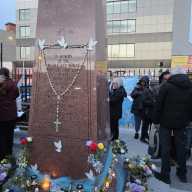
That includes mothers like Amber Rose Isaac, who repeatedly told her gynecologist that she was having trouble breathing and other symptoms, making her pregnancy difficult. When bloodwork was finally conducted, she died a day later during an emergency C-section at Montefiore Einstein.
Montefiore declined to comment on Amber’s case in an email to the Bronx Times, citing pending litigation, HIPAA regulations and patient privacy rules.
“There’s a bias against people because they’re a certain color, because they don’t have any money. There’s an infantilization that happens during labor where people feel like they aren’t heard,” said Evelyn Alvarez, one of the founders of BX Rebirth, a coalition of experienced doulas and lactation counselors in the Bronx.
Regarding the quality of pre-natal care for women in the Bronx, Alvarez said, “If it rains on other people, it snows on us.”
Expectant mothers in the Bronx are exceedingly concerned about whether they’ll live to see their child be born, Alvarez said. And if their doctors will follow their birthing plan. More often than not, women of color are forced into situations where they have to deliver their babies via c-section, going against their initial wishes.
“The possibility of you having a c-section is based on who’s on shift, or the day of the week,” Alvarez said, it’s inconsistent. “It often happens that once you go into the hospital a lot of what you have prepared for, is not going to be accessible to you.”
In all of NYC, the Bronx has the highest number of low-risk pregnant mothers who, at first, did not need surgery, yet still ended up getting a cesarean section – over 30%.
“We’re not being properly treated,” said Brittney Russell, a Wakefield native who made the film “You Are Not Alone,” documenting Black maternal health disparities in the Bronx. “A lot of women in the Bronx are in survival mode.”
Things that come easily to other expectant mothers are much more difficult for women in the Bronx, she said — from difficulty getting to and from their gynecologist appointments to not having access to affordable, healthy foods.
Women are afraid to give birth in the Bronx, but it doesn’t have to be that way, Russell said.
Doulas and Midwives fill those gaps for expecting mothers who feel like they aren’t being listened to or their needs are being ignored. They ensure that a person with medical knowledge is standing up for the mother and that she’s not alone.
It was Amber Isaac’s midwife who alerted doctors to her low platelet count, which revealed her rare condition, HELLP Syndrome, which led to her death. Had doctors conducted bloodwork earlier, like when Amber was complaining of pain, her death could’ve been avoided.
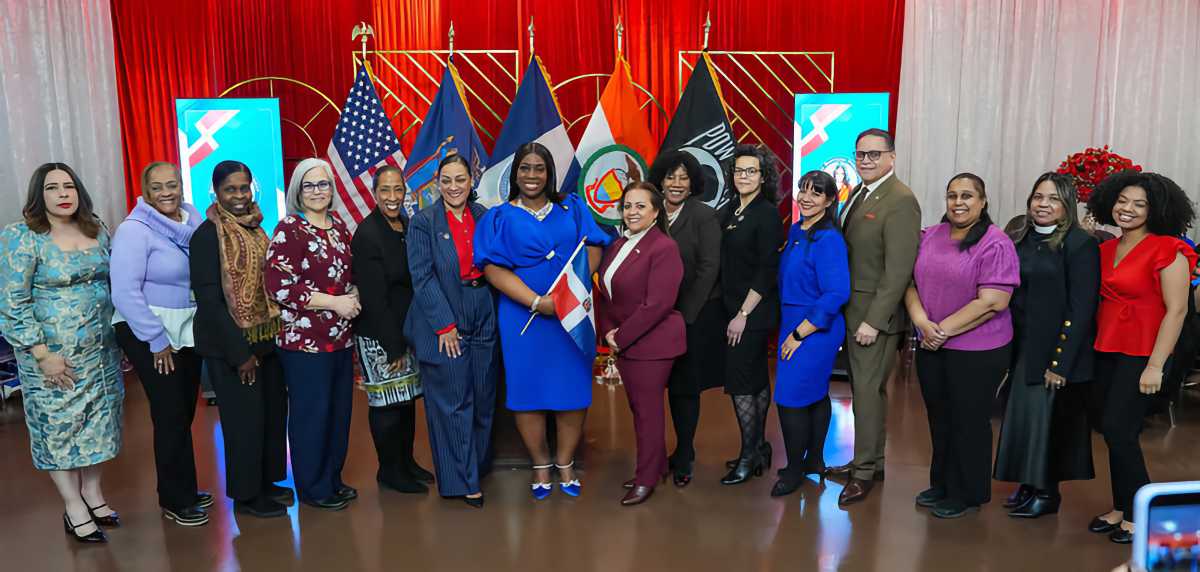
Bronx Borough President Vanessa Gibson said in an exclusive interview with the Bronx Times that Gov. Kathy Hochul has announced a $5 million commitment in November 2025 to open a birthing center in the Bronx.
In a city of 8.4 million people, there’s only one other birthing center for expectant mothers.
The center would be a non-surgical healthcare facility for women with low-risk pregnancies who seek a natural, unmedicated birthing experience. It would be primarily staffed with midwives and nurses, focus on wellness, and offer personalized care.
“We have a maternal health care consortium of doulas and midwives and birth workers, and we’ve been talking very intentionally about how we can transform the healthcare system when it comes to maternal health and giving women of color a real voice,” Gibson said.
She added that it’s important, “listening to women when they say that they have certain conditions and things that they would like to see from their doctors and their medical professionals that they were not getting before.”
The desire for a birthing center came from advocates and organizations like the Birthing Place, who emphasize that improving maternal health education is the most important factor in ensuring positive outcomes for expecting mothers in the borough.
“We’re all figuring out how to solve for all the symptoms rather than getting to the core of how we can help solve the problem, or even be preventative. This requires reimagining, restructuring and creating opportunities for out-of-hospital birth access which includes birth centers,” said Myla Flores, founder of the Birthing Place.
Flores said that she hopes one day there can be birthing options that don’t just involve hospitals and are affordable to expecting mothers.
“Now, if people want a home birth, there are so many people who can’t fully entertain that because of the related, out-of-pocket costs they would have to come up with and then hope to be reimbursed.”
The way Russell sees it, it’s not that women don’t want to give birth in the Bronx; it’s that they’re unsure what kind of treatment they’re going to be given by the doctors in their community.
“The Bronx is not a testing site to see if you can become a good doctor. You should already be a good doctor when you get here,” she added, noting that doctors often come to the borough for a rotation, wanting to work in an “underserved” community.
There needs to be racial bias training in medical schools, Russell said. While it’s important to open birthing centers and fund birthing programs, the change needs to start in medical education.
“It’s a systemic issue,” she said, adding that there needs to be medical professionals that expectant mothers can rely on in their most vulnerable state. “There needs to be a gutting, a reimagining of what it means to be a doctor handling women of color.”
After Amber died, Bruce decided he had to do whatever he could to stand up for Black mothers who aren’t listened to by hospital systems like Montefiore. This could not keep happening to mothers who are just trying to bring life into the world.
Bruce created saveArose Foundation in honor of his Amber in an effort to eliminate the systemic flaws within maternal health care. He works with community organizations and politicians to “put pressure on healthcare providers to do something about the high incidence of maternal mortality.”
He emphasized the importance of having Black midwives, doulas, lactation consultants, and therapists. It might not fully resolve the issue, but it would give women of color a better chance of being empathized with.
“It’s time for us as Black people to start learning about these things so we can advocate for each other and get a second, third, fourth opinion. We were educated and taught that the doctor’s word is law. And that’s not true, there’s other options out there,” Bruce said.