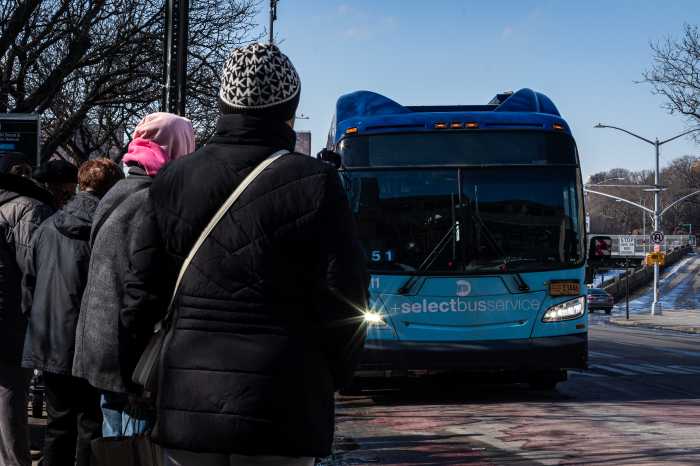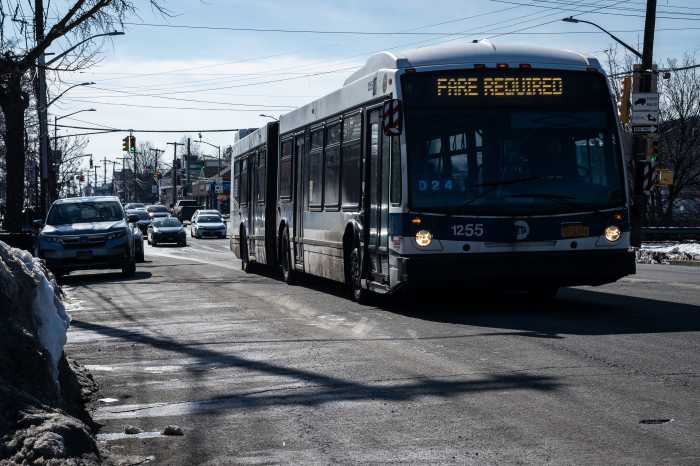

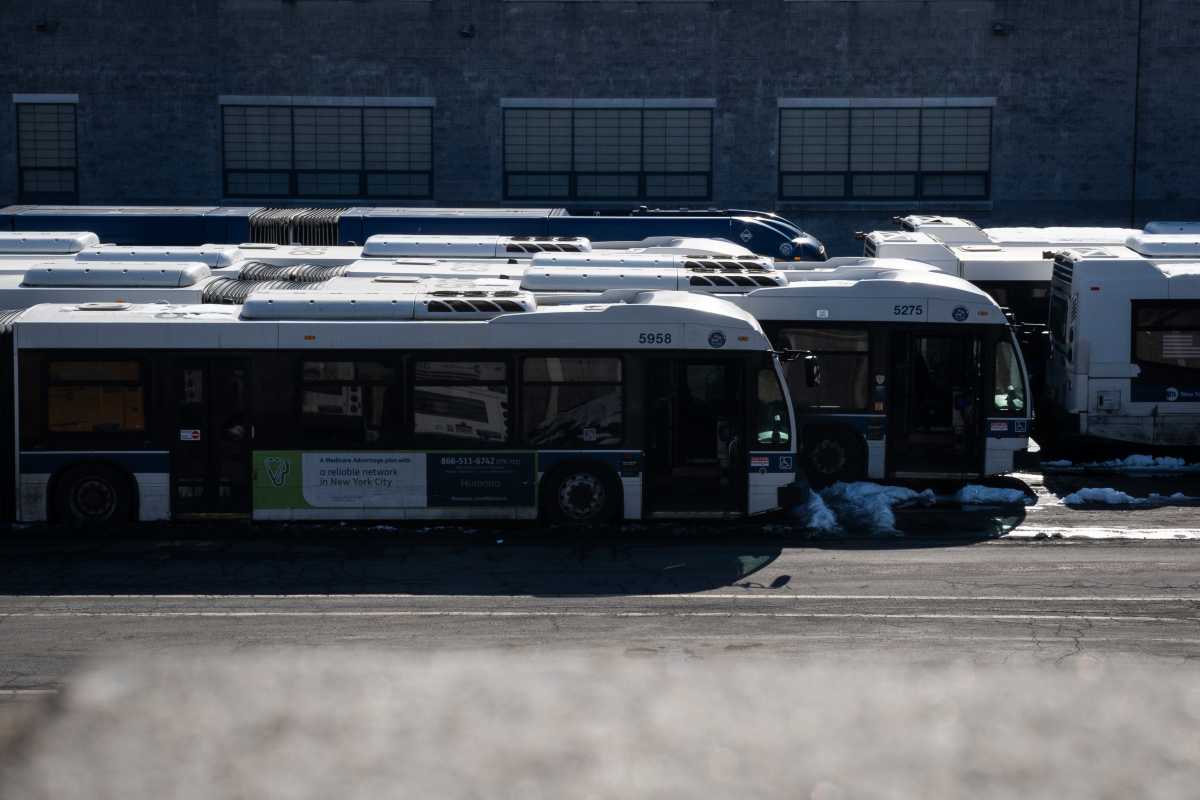
Top MTA officials defended the safety of New York City buses after Transport Workers Union Local 100 found that several buses with histories of brake problems and other mechanical issues were cleared for service at the Gun Hill Bus Depot despite documented safety concerns.
MTA New York City Transit president Demetrius Crichlow disputed the union’s audit results at an MTA Board Buses committee meeting on Monday, responding to mounting concerns from union leaders about maintenance issues.
“Buses with known safety defects are not allowed to enter service. Period,” Crichlow said.
The agency’s response comes weeks after the Bronx Times reported on the union’s audit, which found that 23 buses with low brake lining readings were physically inspected and confirmed to have multiple brake-related defects, including issues with linings, calipers, wire harnesses, pigtails and sensors.
According to the union, none of the 23 buses initially had work orders created to track or ensure repairs. Only after three buses were placed on lifts, inspected and confirmed to have defects were the majority of vehicles flagged for inspection and repair, with work orders created.
“We have a maintenance policy and procedure that complies with industry-wide safety standards,” Crichlow said.
“Operating depots are required to follow established processes and procedures, mandating that all of their work orders, their tasks, captured and associated labor costs, they all have to be maintained.”
Crichlow added that there are several reasons a work order may be closed without labor costs recorded, such as when a bus is sent to an external vendor for warranty repairs.
Scott Steinberg, division chairman of the Manhattan and Bronx Surface Transit Operating Authority (MaBSTOA) maintenance unit, pushed back on that explanation.
“That very more likely means that the superintendent or the general superintendent closed [the work order] out to get it out the door to make service,” Steinberg said.
Union officials say staffing shortages among bus mechanics since the pandemic have led to consistent overtime and contributed to repair backlogs. They also allege that management has given direct verbal orders to line supervisors to send out buses with known defects or face disciplinary action.
Since the union presented its audit findings to the MTA, procedures for brake inspections have changed multiple times, according to Steinberg. While he said flagged buses are now being physically inspected, the union is aware of at least one recent case in which an unsafe bus was dispatched from the Michael J. Quill Depot in Manhattan.
“They’re being a lot more cautious because they know what’s going on and they know that we have our eyes on them,” Steinberg said.
Steinberg also said line supervisors and union officials now have reduced computer access and can no longer view fleet records across depots.
At the same meeting, Crichlow said the agency would invest in improving conditions at six depots, the Zerega Bus Maintenance and Training Facility and the Bathgate shop.
MTA spokesperson Michael Cortez clarified that the investments are state-of-good repair upgrades a part of the 2025-2029 Capital Plan, which includes general upgrades specific to each depot.
Frank Farrell, executive vice president of the New York City Transit Department of Buses and MTA Bus Company, said the agency will scale up depot quality control policies.
“Every depot must operate under the same high standards, a consistent system-wide expectation for quality,” said Farrell at the MTA Board meeting.
“We will also strengthen maintenance by reinforcing quality assurance audits with clear documented corrective action plans. This is about accountability.”
Reach Marina Samuel at msamuel@schnepsmedia.com. For more coverage, subscribe to our newsletter and follow us on Twitter, Facebook and Instagram!