
On Saturday night in the Bronx, Eddie Montalvo will return to a stage not far from where his career began—this time as a veteran of salsa’s golden era.
Born and raised just off Jackson Avenue, Montalvo got his start playing percussion in the neighborhood before building a career that took him from local gigs to international stages. He performed with Héctor Lavoe, joined the Fania All-Stars under Johnny Pacheco, and played on more than 200 recordings alongside artists like Rubén Blades, Willie Colón, Celia Cruz, and more.
His accolades include contributing to landmark albums like Siembra, one of the best-selling salsa records of all time, as well as earning Grammy nominations for his solo and collaborative work.
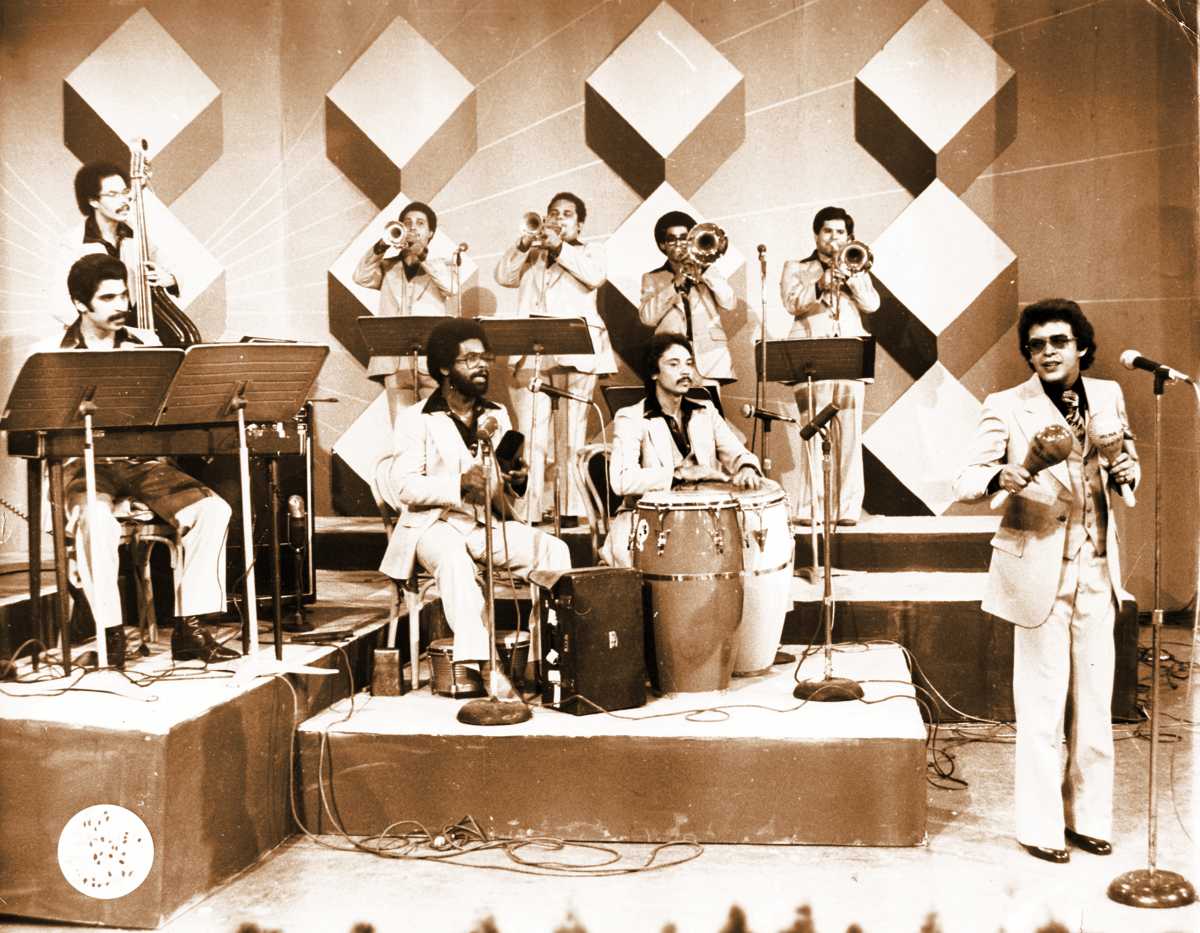
Now, at Lehman Center for the Performing Arts, Montalvo will reunite with members of Lavoe’s original orchestra for Lavoe en Sinfónica—a performance that revisits a formative chapter of his career and a relationship that extended far beyond the stage.
As he prepares for this reunion, Montalvo spoke to the Bronx Times for a Q&A on the music, the bonds he formed, and the life he built both on and off the stage. This interview was edited for length and clarity.
How did you get into music?
Eddie Montalvo: I was like five years old and I was just like banging on the table. I asked my parents if it was possible that Santa Claus could bring me a little bongo.
My parents were poor and they came from Puerto Rico to work in New York to help out their parents, but Santa Claus came through with a bongo for Christmas. I would see these guys across the street from where I lived in the South Bronx.
They would be jamming with conga drums and bongos on the playground. At 10 years old, I asked my parents if it was possible that they could buy me a conga drum. And they said “We’ll try, can’t guarantee you.” And sure enough, by the grace of God, they got me a conga drum for Christmas.
And I will go down to the park to try to sit in with the guys that were doing the jam sessions. But I didn’t really know how to play. But there was a guy and he took a liking to me and he said to me, “Eddie, I’m gonna teach you a certain pattern on the conga drum and I want you to go upstairs every day and practice.”
When you’re young, your whole heart is in that. So I would come to my room and I would be banging and trying to get the beat that he taught me.
And finally I got it. I never thought that I would ever play professionally.
How did you meet Héctor?
Eddie Montalvo: Héctor sent a bongo player named Jose Mangual to a club I was playing at—Barney Googles on 86th Street. He said, “I want that kid Eddie. So I want you to go in there and speak to Eddie and tell him I want my band.”
At the time, I was playing with Pete Conde Rodriguez, and I was comfortable.
When I finished my first set, Mangual said, “Hey, Héctor Lavoe is outside. He wants you to join the band.”
I told Mangual, “I’m okay here.” He said, “Just do me a favor—go talk to him. He sent me in here and I don’t think he wants no for an answer.” So I went outside. Héctor said, “Hey Eddie, how you doing?” I said everything was good. He asked if Mangual had spoken to me. I said, “Thank you, but I’m okay where I’m at.”
I told him, “Héctor, to play in your band, I’ve got to play conga and do chorus—and I’ve never done that kind of work.”
He said, “Don’t worry, I’ll train you.”
I said, “Alright, but what if I don’t make the grade? I’ll lose my spot here, and they’ll already have another conga player.” He said, “Have faith in me. I won’t let you down. I’ll train you until you’re ready.”
I rehearsed with him for about a month. I kept it underneath the tables, I didn’t say nothing to nobody, because I didn’t know if I was going to make it or not. So after a month, Héctor said, “Hey Eddie, you’re ready.”
How did you balance a day job with your music career?
Eddie Montalvo: In 1973, I joined Con Edison, and I stayed there 34 years. I was even a first responder on 9/11. It was rough.
People always ask me, “Eddie, how did you make all those trips if you had a day job?” I’ll tell you straight up—I was a good worker, but I went the extra mile. Sometimes I’d write a letter saying I had a sick family member to take care of. Human resources would approve time off—no pay, no medical—but I was young, you don’t think about getting sick. That’s how I made my trips.
I feel bad because my wife really raised my kids because I was always on the road or and I would finish gigs at four, seven in the morning.
It’s a blessing I’m still alive. I don’t even know how—I got lung damage from 9/11. But I put in 34 years, so I have a pension, I have Social Security, and I thank God I had that day job. Because, forgive me—I’ll say it straight—musicians are starving musicians. If you think you’re gonna live off that, I’m sorry, it’s tough.
I just thank the Lord that he opened up a whole lot of doors for me.
How was your personal and professional relationship with Héctor Lavoe?
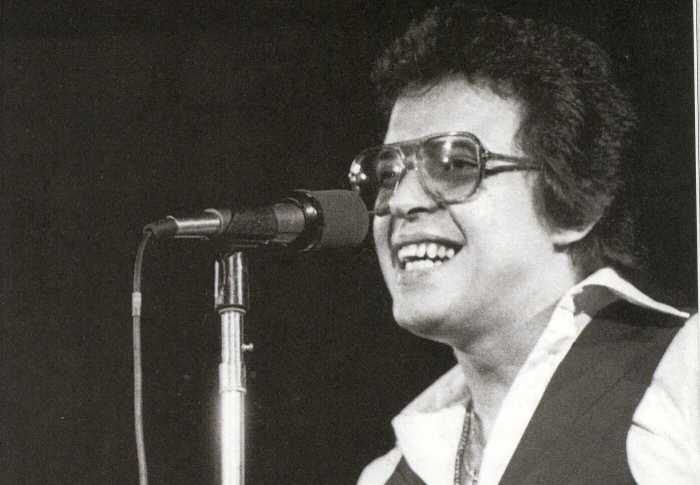
Eddie Montalvo: I knew Héctor for over 30 years. I joined the band in 1977—that’s when everything really started for me with him.
I met Héctor in good times and bad times. Good times because he had an amazing orchestra. But at that time, there were a lot of bad elements around him—people using drugs—and they were always coming toward him.
But he was close with me. He’d call me “Montalvo,” sometimes “Montalvine.” And I think he trusted me. He’d tell me, “Yo Eddie, we got a trip,” and sometimes he’d say, “You’re coming with me,” not even the whole band. I’d say, “Take the musical director,” and he’d say, “No—you’re going with me.”
I think he felt secure with me because I wasn’t into drugs. I would look out for him. Not like a bodyguard, but if I saw something off, I’d tell him, “Héctor, we gotta get out of here.” And he’d listen. So yeah, I think I was like a security blanket for him.
I was a clean, clean cat. And anytime I found myself in the wrong place—playing spots where it was nothing but drug lords and people with guns—I’d say, “Lord, please let me get out of here safe.”
I was always thinking about my parents. I’d picture it in my head—what if I got busted, handcuffed, and they had to see me in a courtroom? I didn’t even want to think about that. That’s what kept me safe.
First of all, I wasn’t gonna be a heroin addict. I didn’t like any of that. But more than anything, I kept thinking, if I get caught in the wrong place, it’s gonna be a hard life for my mother and my father.
Can you tell me about when you and Héctor Lavoe played for Pablo Escobar?
Eddie Montalvo: We got hired by a drug lord to go to Colombia to play a private party. I didn’t know it was Pablo Escobar. When we arrived in Colombia they picked us, they transported us to the hotel and they said “Tomorrow’s the party, it’s a private party.”
So Pablo turns around and tells Héctor, “You know that you gotta play till six in the morning?” Héctor, not knowing that it’s Pablo, said “Your mother’s gonna play till six in the morning because they told me I’m only supposed to play till two in the morning.”
Pablo said “What did you say?” He said “I’ll tell you again. Your mother will play till six in the morning because they told me till two.” Pablo had these two guys with machine guns next to him and I’m gonna be honest with you. We all shiver. So we started playing and at two o’clock in the morning, Héctor stopped. They put us in a room and I’m not gonna lie to you. I said my life is over
But there was a guy, Eddie Torres who lived in Spanish Harlem and who knew all the tricks and he said “Does anybody have a key?”
One of the trumpet players said “Yeah I got the hotel key.”
He started to loosen all the bolts from the frame of the window and took all the screws off.
That’s how we escaped. We had to run down this hill, we left the instruments. We were all holding hands running down and when we finally got to the street marina Oh, there was a car that was passing by and had to stop the guy and Héctor said “Sir, where can we grab some cabs?”
The guy says to him, “Hey, man, you’re a stranger here.” Héctor says “Yeah, I’m Héctor Lavoe.” The driver says “No you ain’t!” Héctor started singing and the man looked at him and said “Oh wow, this really is Héctor Lavoe!”
He put him in the car and we kept running. Héctor said the man was gonna take them to a hotel to get cabs. But we were scared. We thought these guys were gonna come down and blow us apart. We ran for four blocks and we were hiding.
The man went back to that spot until they found us but man we were scared. That’s embedded in my heart. When I die, that’s going with me.
Reach Marina Samuel at msamuel@schnepsmedia.com. For more coverage, subscribe to our newsletter and follow us on Twitter, Facebook and Instagram!