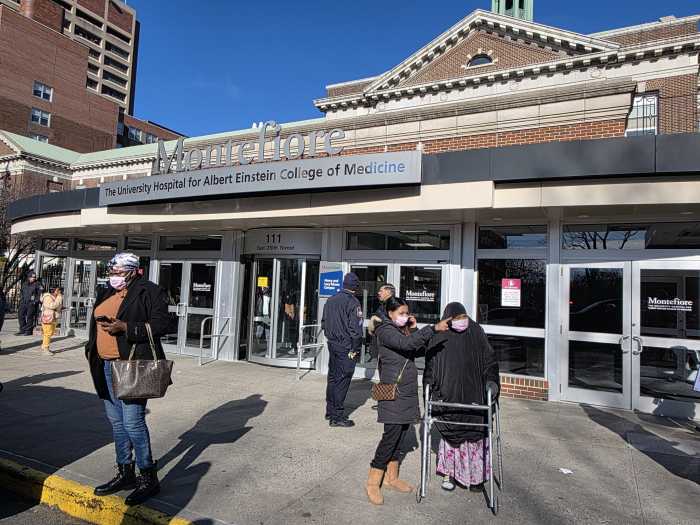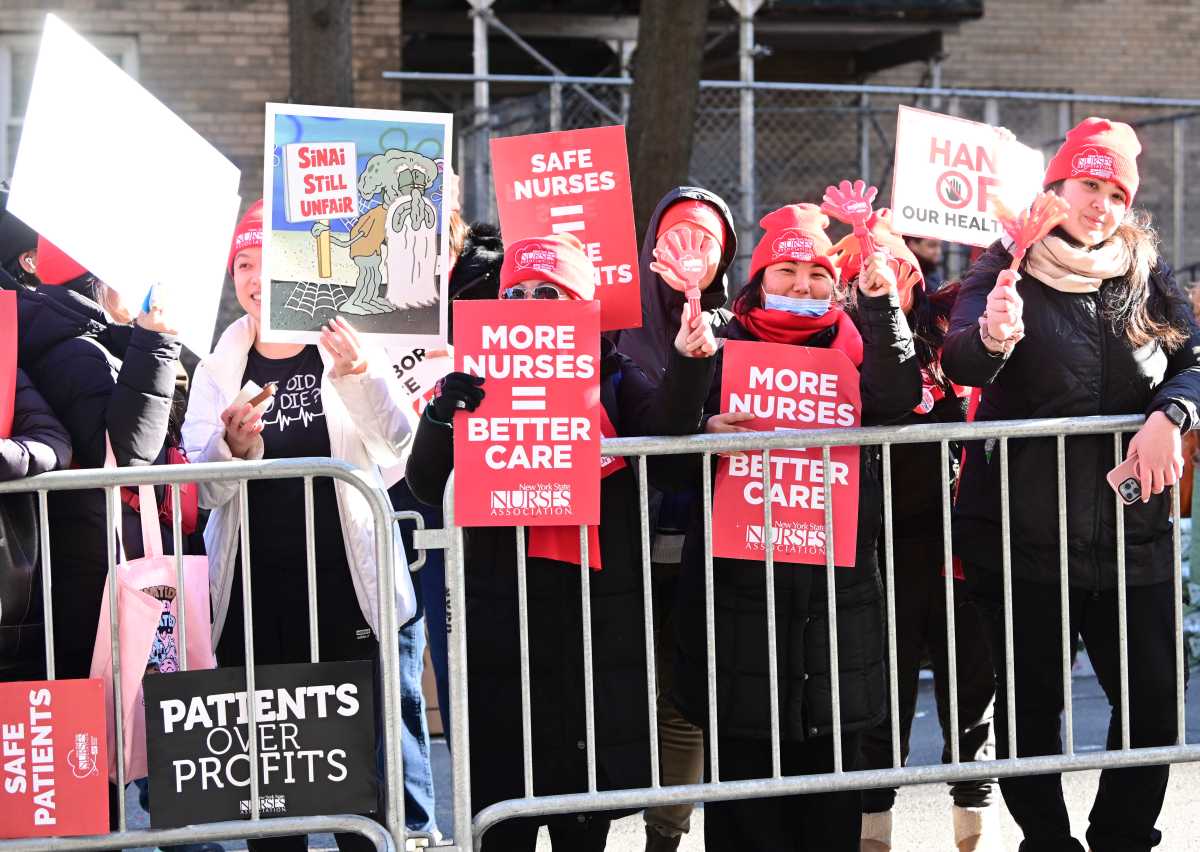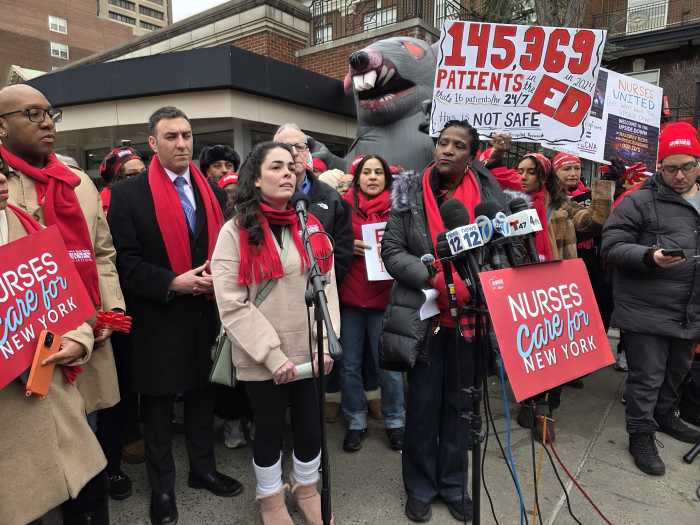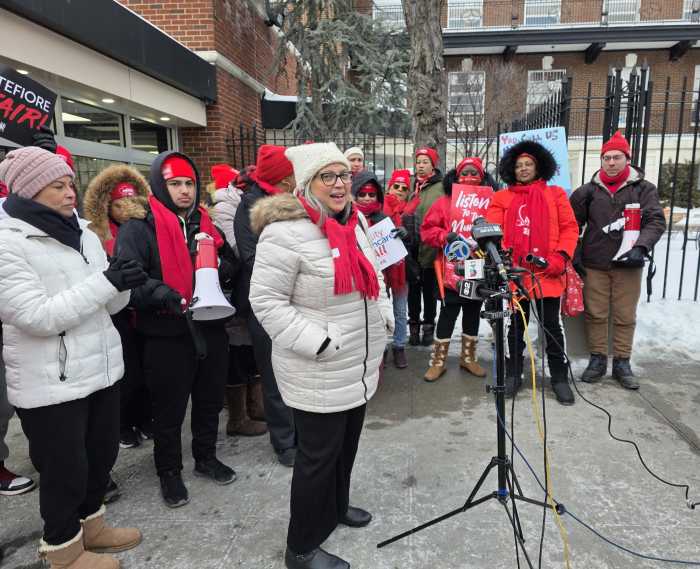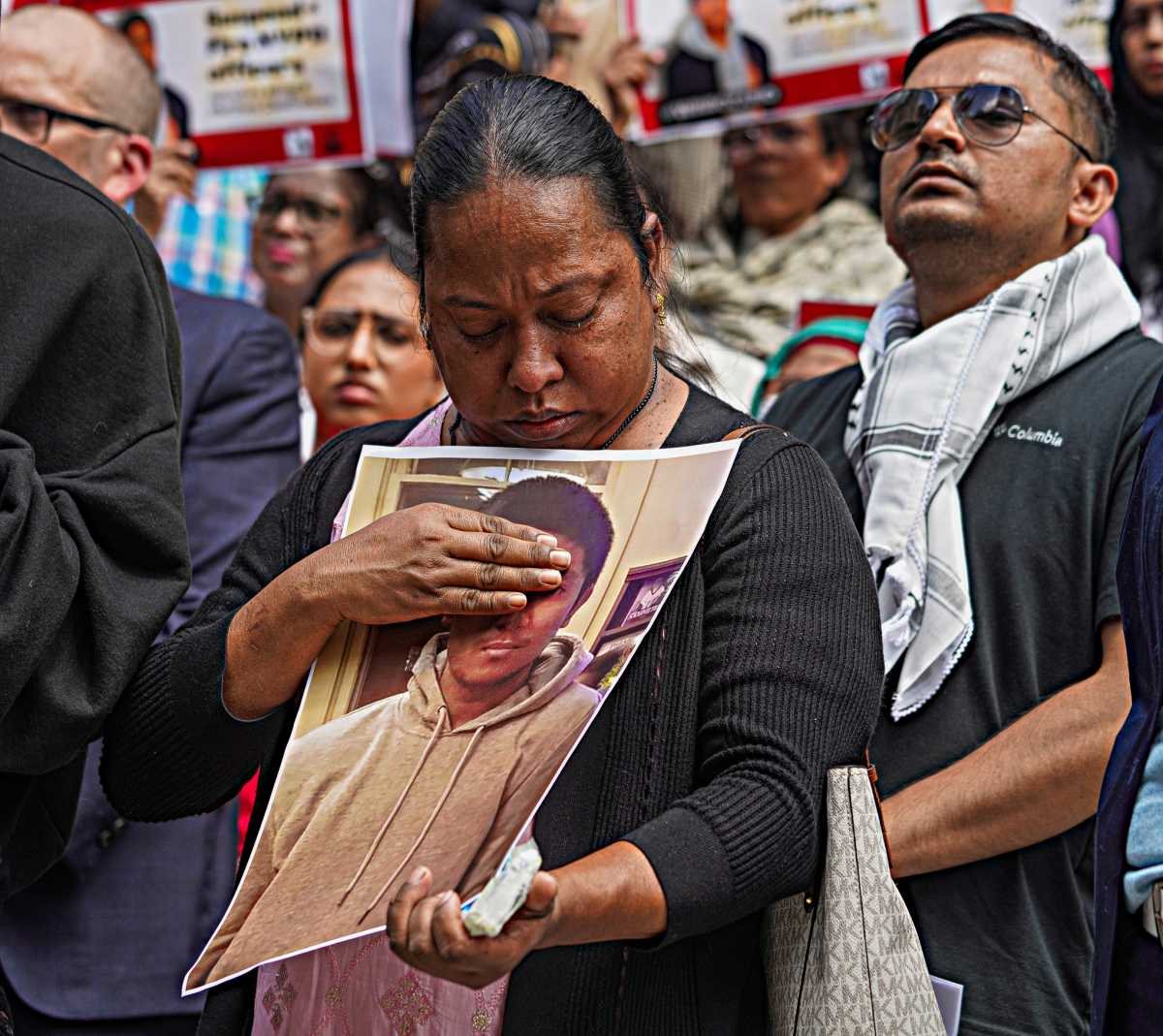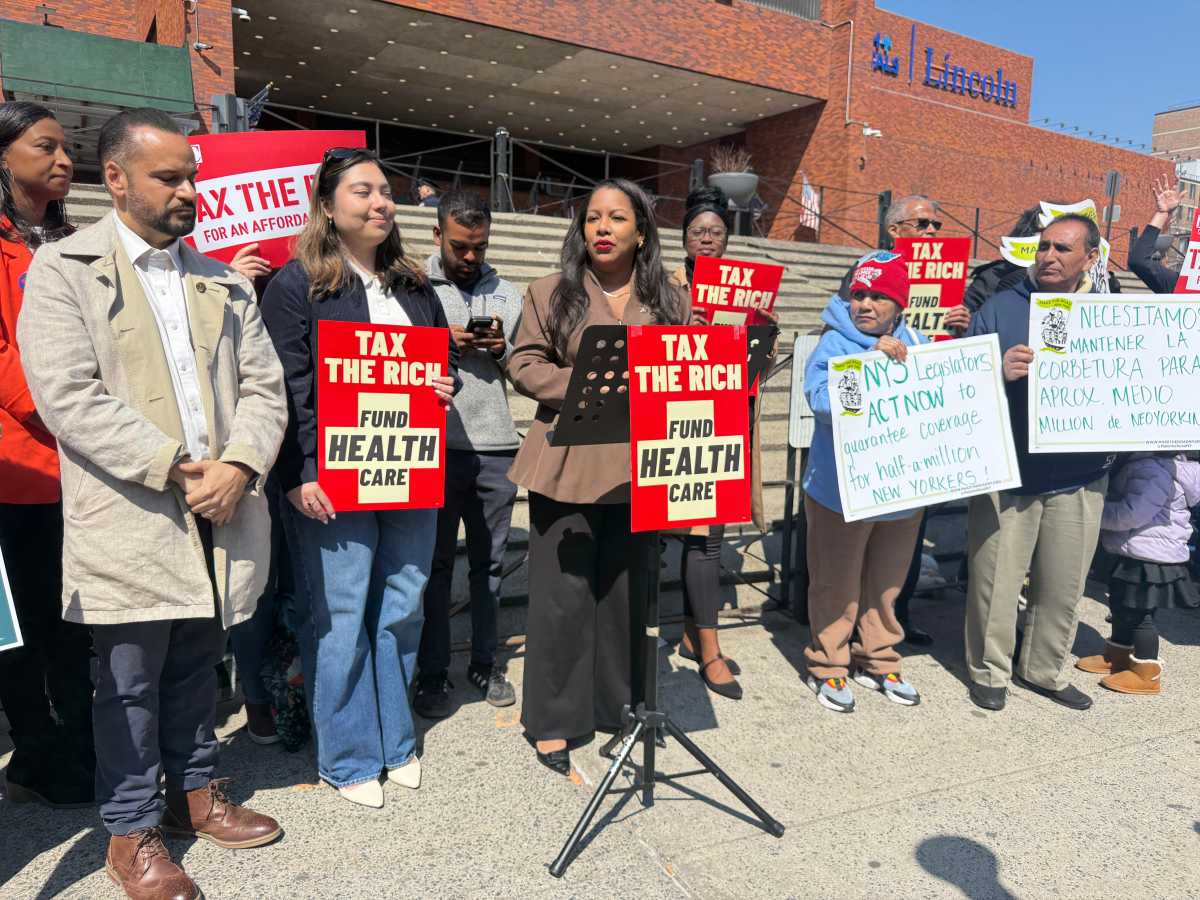
Healthcare workers, elected officials and community advocates gathered Friday outside Lincoln Hospital, warning that looming federal cuts could strip health coverage from hundreds of thousands of New Yorkers and calling on Governor Kathy Hochul to raise taxes on the wealthy to fill the gap.
At the beginning of April, roughly 450,000 New Yorkers received notices that their Essential Plan coverage — the state’s low-cost insurance program for residents who do not qualify for Medicaid but cannot afford marketplace insurance — will end by July 1.
While about 1.3 million New Yorkers with incomes below 200% of the federal poverty level are expected to remain eligible, advocates say the loss of coverage for hundreds of thousands will have sweeping consequences, particularly in low-income communities.
The rally, organized by the New York City chapter of the Democratic Socialists of America and the Invest in Our New York coalition, drew members of the Doctors Council, the New York State Nurses Association and SEIU’s Committee of Interns and Residents.
It also brought out participants from Make the Road New York, the New York Working Families Party, PSC-CUNY and the CUNY Rising Alliance, alongside several other groups and elected officials, all warning of the potential fallout.
“When patients lack the coverage they need, they often delay essential treatment or forego care entirely, only seeking help when they no longer can wait, or when it may already be too late,” said Sonia Lawrence, a registered nurse at Lincoln Hospital and director-at-large with the New York State Nurses Association.
“I see this fear every day,” Lawrence added. “Patients coming to the hospital, not just worried about their health, but anxious about the cost.”
The cuts to the Essential Plan were the result of the passing of the “One Big Beautiful Bill,” former President Donald Trump’s sweeping federal spending package, which includes a $1 trillion cut to Medicaid funding over the next decade and a $7.5 billion reduction in funding for New York state’s Essential Plan. The Fiscal Policy Institute estimates that more than 43,000 Bronx residents enrolled in the program are set to lose their coverage. Two-thirds of Bronx residents insured through Medicaid are also at risk.
Assemblymember Amanda Septimo, who represents the South Bronx, said the State Senate and Assembly are prepared to raise taxes on the ultra-wealthy to offset the losses, but face opposition from Hochul, whose hesitation stems from concerns that higher taxes could drive wealthy residents out of the state.
“The governor has to choose whether she will use her power to finally stand up for communities like ours,” said Septimo. “Or whether she will use her power to continue to support the interests that have built this New York for themselves. The interests of rich donors.”
Olivia Gonzalez Killingsworth is among those who received a termination notice. As an actress and freelance bookkeeper, she does not qualify for employer-sponsored insurance and relies on the Essential Plan to manage serious health conditions.
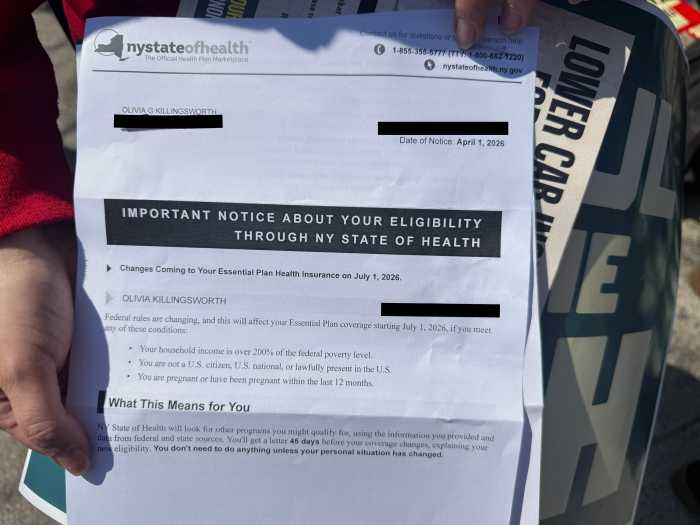
Because of a connective tissue disorder and a cerebral artery dissection, Killingsworth requires regular, costly imaging to monitor her health, and the uncertainty of her coverage is causing significant stress.
“Right now, most of that is covered. I still have to pay out-of-pocket for additional care, like specialized physical therapy and things like that but the plan that I’m on makes paying for that possible,” Killingsworth said.
“If that goes away, then my costs are set to double, at least, just to make sure that I don’t die of an aneurysm,” she added.
State Sen. Gustavo Rivera, who represents neighborhoods in the Bronx and chairs the Senate Health Committee, and Brooklyn Assemblymember Amy Paul introduced legislation that would have the state fund coverage for those set to lose it in July.
Advocates are hoping that the $2 billion set aside in Hochul’s budget proposal for enrollees the state is legally required to cover can be reworked to fund the Essential Plan for those losing coverage, after the federal government gave the state approval to restructure the program.
Reach Marina Samuel at msamuel@schnepsmedia.com. For more coverage, subscribe to our newsletter and follow us on Twitter, Facebook and Instagram!