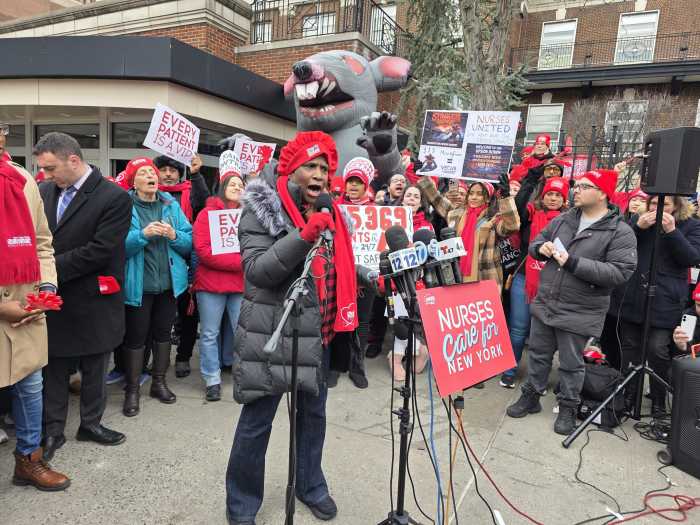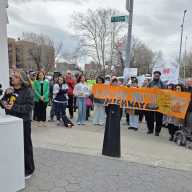

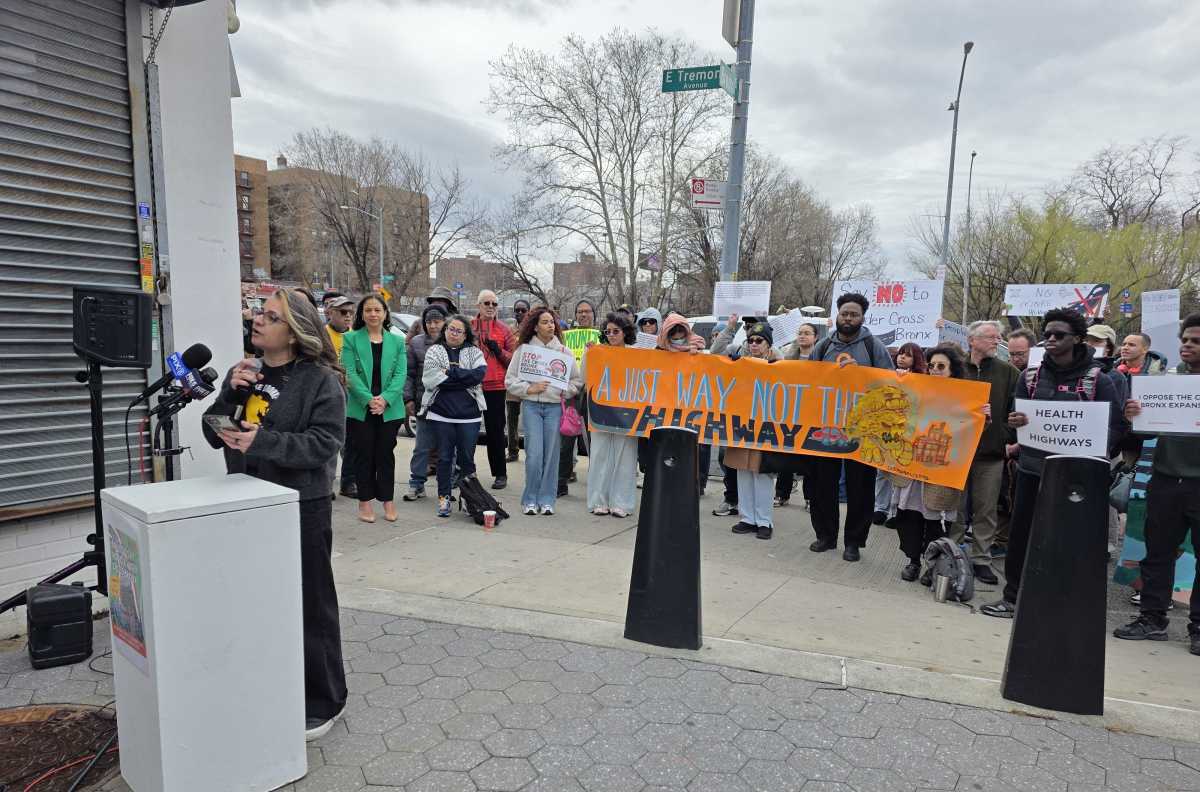
Dozens of advocates and elected officials joined a March 27 rally to say no to any plan that widens the Cross Bronx Expressway, continuing their long fight for equitable repairs to the highway and its surrounding infrastructure
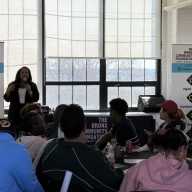
Ahead of an April 7 state deadline to select a construction proposal, protestors met at the Bronx River Arts Center in West Farms, overlooking the notorious Cross Bronx. Attendees held signs saying, “more lanes = more pain” and “communities over concrete.”
The group included Assembly Members Amanda Septimo and Emerita Torres, State Senators Nathalia Fernandez and Jose M. Serrano and Council Member Justin Sanchez, plus representatives from a slew of advocacy groups, including Bronx River Alliance, Our Bronx, Transportation Alternatives, The Point CDC, Bronx Council for Environmental Equity, the Jewish Climate Action Network, Youth Ministries for Peace and Justice and more.
The rally also featured several students from Fannie Lou Hamer Freedom High School, who have grown up near heavy traffic and pollution from the Cross Bronx.
The Cross Bronx Expressway has for decades symbolized harmful urban planning and brought disproportionate pollution and traffic to the Bronx, all while slicing through neighborhoods and displacing thousands of residents for its construction.
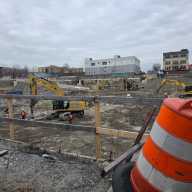
Today, the highway’s bridges require significant repair, and advocates have long been opposed to the state’s $900 million plan to widen the expressway shoulders by 25 feet on each side to facilitate repairs on five bridges between Boston Road and Rosedale Ave. The construction project is expected to last six years, starting this year.
Though DOT maintains the project would not bring a disproportionate pollution burden, advocates have expressed frustration about what they called a rushed public engagement process and a lack of options that don’t involve widening the roadway.
In a statement sent to the Bronx Times, a DOT spokesperson said, “This is not an expansion project of the expressway, rather a project that will enhance safety and ensure that the infrastructure of the Bronx is resilient for generations to come.”
“The New York State Department of Transportation is fully committed to making historic investments in the Bronx and to right the wrongs of past generations. As we advance a project to provide urgently needed rehabilitation of five aging bridges on the Cross Bronx Expressway, we have engaged with the community at every step of the way, making significant changes to the proposed alternatives in direct response to public feedback.”
In response to prior community pushback, DOT previously took what advocates viewed as the worst proposal off the table. But advocates said each of the remaining proposals somehow involves widening the notorious highway — to which they said they won’t give an inch.
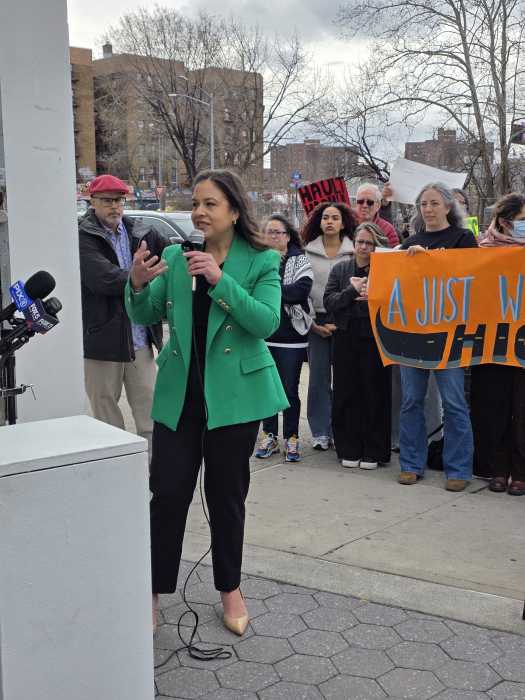
At the rally, Assembly Member Torres announced a new bill, the “Stop Highway Community Harm Act,” which blocks the state from adding highway lanes within 200 feet of NYCHA developments and in high-asthma zip codes. The bill has support from multiple other elected officials and groups present at the rally.
Torres said the concept of expanding the roadway stands in “stark contradiction” to the community’s efforts to clean up the Bronx River and beautify the neighborhood with Starlight Park and Concrete Plant Park.
“Any expansion is too much. It is unacceptable for our community,” Torres said. “We cannot move backwards.”
Siddhartha Sanchez with Bronx River Alliance said the construction project will impact 3,000 NYCHA residents at Bronx River Houses, along with 64,000 other nearby residents, for decades to come.
Sanchez said the Bronx has too long been an epicenter of destructive urban planning and called on Hochul and the DOT to “halt the expansion and prioritize our community’s vision before it’s too late.”
Assembly Member Septimo praised the community’s ongoing resistance effort, which she said will continue “until the state understands that the days of dumping on the Bronx are over.”
The state must come up with another plan that does not involve widening the highway, she said.
“Who cares if it’s more expensive? Bronx lives are worth the money. Who cares if it takes more time? Bronx lives are worth the time,” Septimo said.
Laura Waxman from the Tri-State Transportation Campaign said Hochul and the state have “the golden opportunity to course-correct, to turn the page on decades of destructive, disruptive and dangerous harm caused by this highway.”
The state’s current plans would result in increased truck traffic and a loss of valuable trees, Waxman said.
“Bronx communities have carried these burdens for generations, and they can’t take another hit,” she said, adding that the borough is “done paying the price for a broken model.”
To close out the rally, Dariella Rodriguez with The Point CDC pledged the community’s partnership and presence not only for protests but to help the state find a Cross Bronx solution acceptable to those who will be most affected.
“We are offering to help figure this out and do it right. We’ve been offering that since the beginning of this proposal.”
Reach Emily Swanson at eswanson@schnepsmedia.com or (646) 717-0015. For more coverage, subscribe to our newsletter and follow us on Twitter, Facebook and Instagram!