Hundreds of New Yorkers gathered in the Bronx to deal with a threat that they said could wreak havoc for New Yorkers at risk of losing Medicaid due to new regulations.
After the federal government last July approved Medicaid cuts, healthcare providers, legislators and Bronx residents gathered to discuss ways to fix a decision they say could cost lives, leave hundreds of thousands uninsured and lead to healthcare worker layoffs.
Organizers met at Bronx Bethany Church, hosted by healthcare worker union 1199SEIU, Our Bronx and Physicians for a National Health Program.
The federal government in the “One Big Beautiful Bill Act” plans to cut $8.4 billion in New York State Medicaid funds annually, according to the Fiscal Policy Institute.
“People will die from not getting the care they need,” said Winsome Black Batten, an organizer for 1199SEIU. “Medicaid should never be cut. Healthcare should be a right.”
Nearly 7 million New Yorkers rely on Medicaid, according to Medicaid Matters New York, which said hundreds of thousands of New Yorkers are at risk of losing coverage.
About two thirds of Bronx residents are insured through Medicaid.
Jackie Claros Benitez, of the NY Legal Assistance Group, said 39% of children nationally are covered by Medicaid, including 41% of U.S. births.
Nearly 1 million, or 890,003, people in the Bronx are on Medicaid, Benitez added
“It’s the primary payer of long-term care for older adults and people with disabilities,” she said.
“Reductions to the Medicaid program would restrict access to vulnerable populations, pregnant women, people with disabilities, older adults, children.”
The federal government would cut $1 trillion from Medicaid over ten years, putting 1.5 million New Yorkers at risk of losing access to healthcare, according to organizers.
Bronx Congressional District 15, served by Rep. Ritchie Torres, who had a representative at the event, could see $746 million in cuts with over 120,000 at risk of losing insurance, organizers said.
“This will destabilize hospitals and health systems, leading to a loss of services that will impact patients and communities,” Benitez said. “Everything that follows is a domino effect.”
Loss of insurance will lead more people to seek care in emergency rooms, creating even more delays.
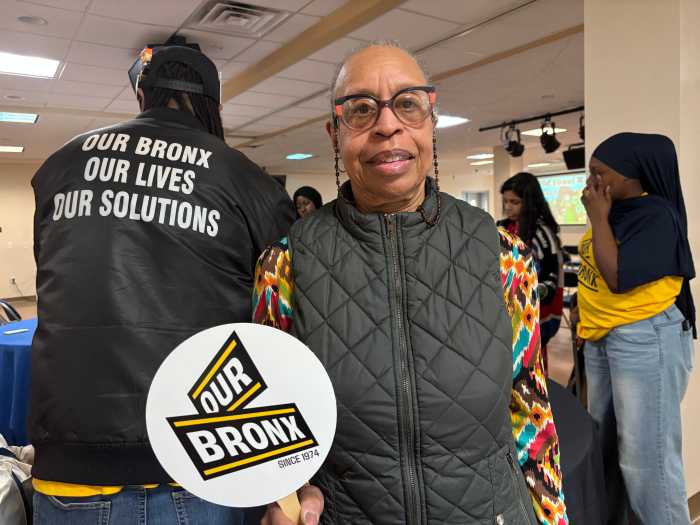
“When I go for a real emergency, there won’t be enough people to cover,” said Roberta Todd, board vice president of Our Bronx.
More uncompensated care could lead to higher charges by hospitals to insured patients to recover from losses.
The most vulnerable
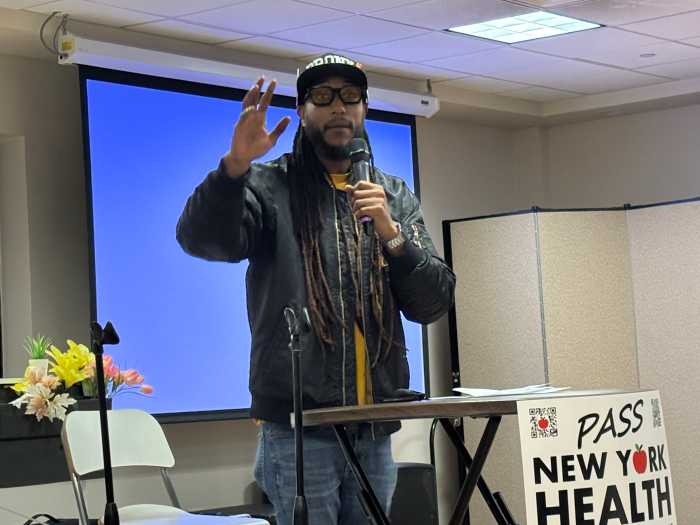
Ronald Harrison, lead health organizer for Our Bronx, said the Bronx already is 62 out of 62 counties for asthma, diabetes and cancer outcomes.
“Patients come to us to seek help with drug addiction. Most of these patients depend on Medicaid,” said Elva King, a certified nursing attendant and patient care technician at St. Barnabas.
“When you put a psych patient back on the street, lives are endangered. If they don’t have Medicaid, they don’t have access to medication.”
Others saw taking healthcare away from children as particularly cruel, including newborns who might have to seek uncompensated care.
“You’d be cutting off babies before they even have a chance,” said Sophia McLeod, who works at Kings Harbor Nursing Home. “It’s something to look at, that you’re already telling a child that they’re not worthy.”
According to King, providers as well as patients, would be hurt by Medicaid cuts, impacting care and careers.
“When they come for Medicaid, they come for us. Any cuts to Medicaid will not only hurt patients. They will deeply hurt staff,” King said.
“We have to make sure we stand up not just for the rights of the patient, but our rights.”
Congressman George Latimer, who represents Westchester County and a portion of the Bronx, said he attended to hear voices of residents and healthcare workers.
“I’m here to listen to the frustrations these people have,” Latimer told the Bronx Times. “I voted ‘No’ against the big, beautiful, ugly bill that cuts Medicaid. I knew how essential Medicaid was.”
Funding health insurance for all
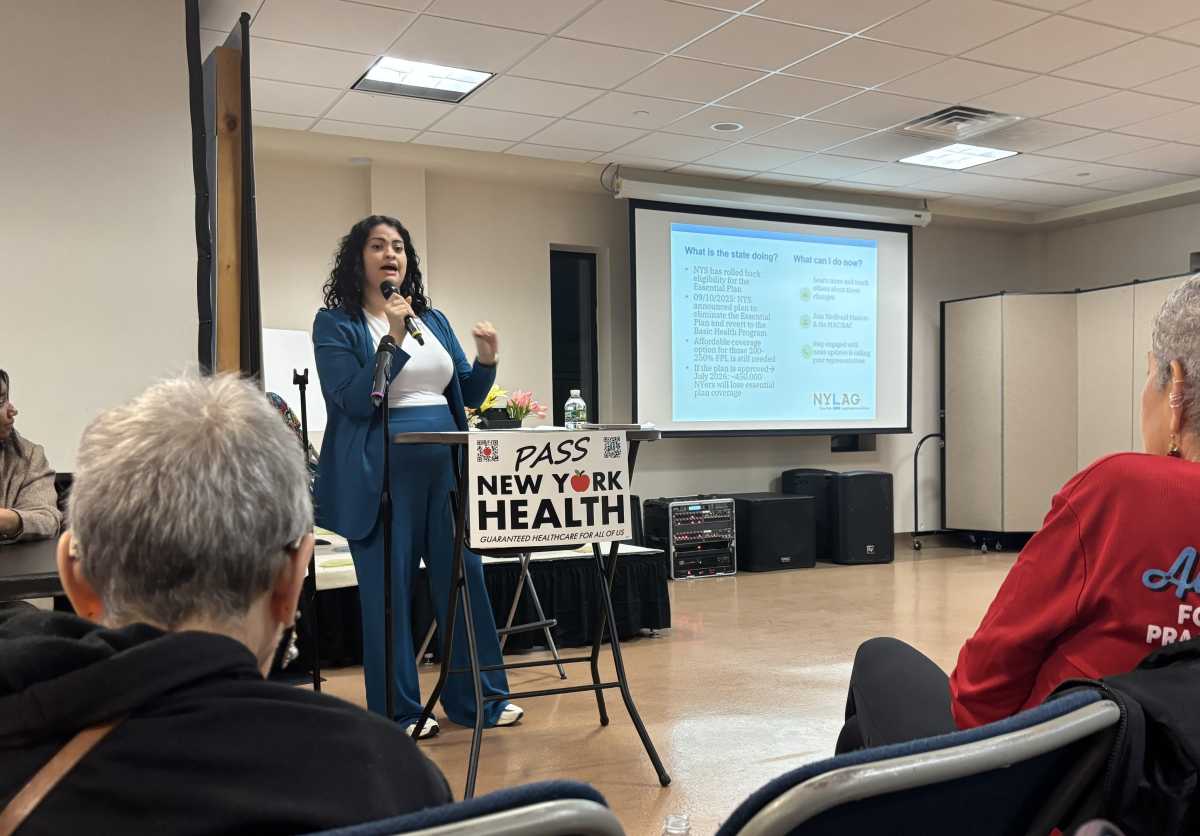
Many at the meeting support the New York Health Act which through new taxes would fund universal healthcare for New Yorkers.
“The New York Health Act would basically guarantee single payer healthcare in the state of New York for every New York State resident,” said Anuva Goel Anuva, a fourth-year medical student at the Albert Einstein College of Medicine.
“Currently, over 1 million New Yorkers are uninsured. Imagine getting all of those New Yorkers access to healthcare.”
Others supported a single payer plan, which they said had been introduced for decades, although it has never passed both state houses.
“Our government is cutting Medicaid, causing a lot of people to not have insurance,” Todd said. “I believe New York State should be bold and pass the New York Health Act.”
Over 90% of New Yorkers would pay less for healthcare than current out of pocket costs, Anuva said.
“We’ve got to reverse the cuts,” Latimer said, suggesting Democratic control of both houses could do that. “New York can do certain things. But it can’t backfill if the government reduces Medicaid dramatically.”
Judy Sheridan-Gonzalez, an emergency room nurse and former president of the New York State Nurses Association, said something in the system needs to change.
“Changing the system will benefit everybody.”
Others said universal coverage could cost most individuals less than they currently pay in insurance.
“This is putting money in our pocket that you can use for food rent, spend on your family, rather than worrying about allocating,” Anuva added, urging residents to call legislators to support the New York Health Act.
“We’re not going to let that happen,” said 199SEIU member Rosetta Kirkland. “We will fight until we have no more fight in us.”