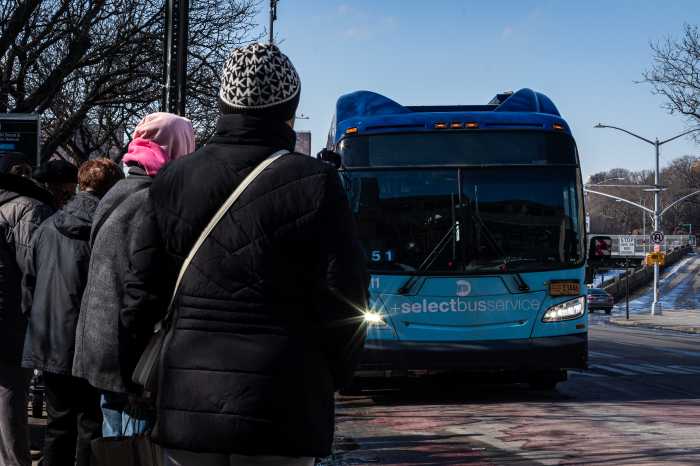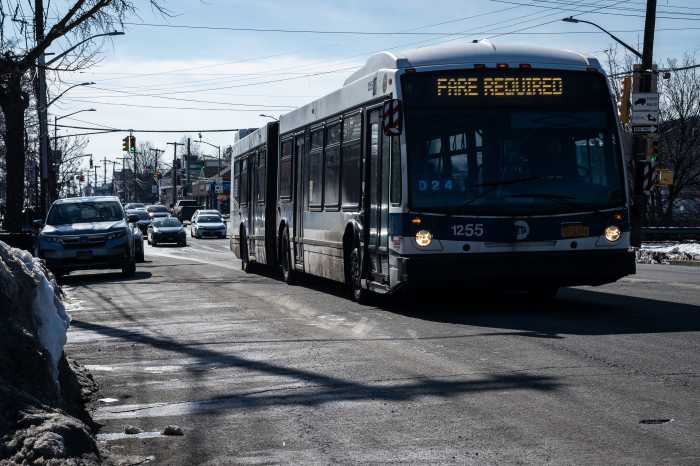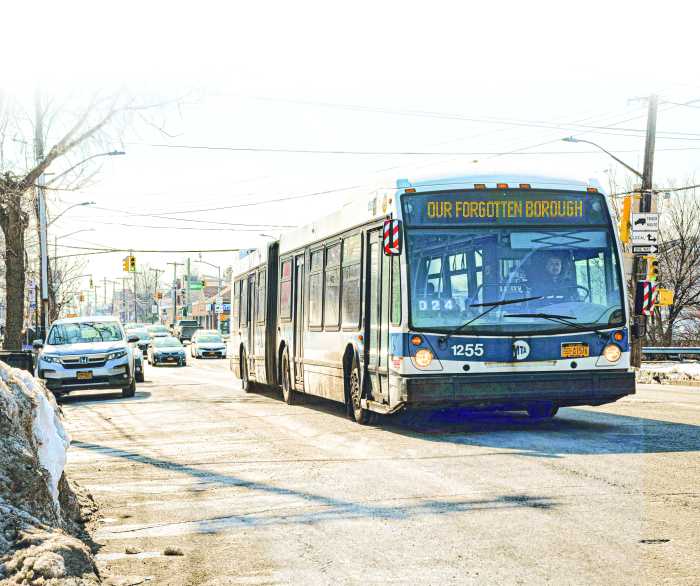

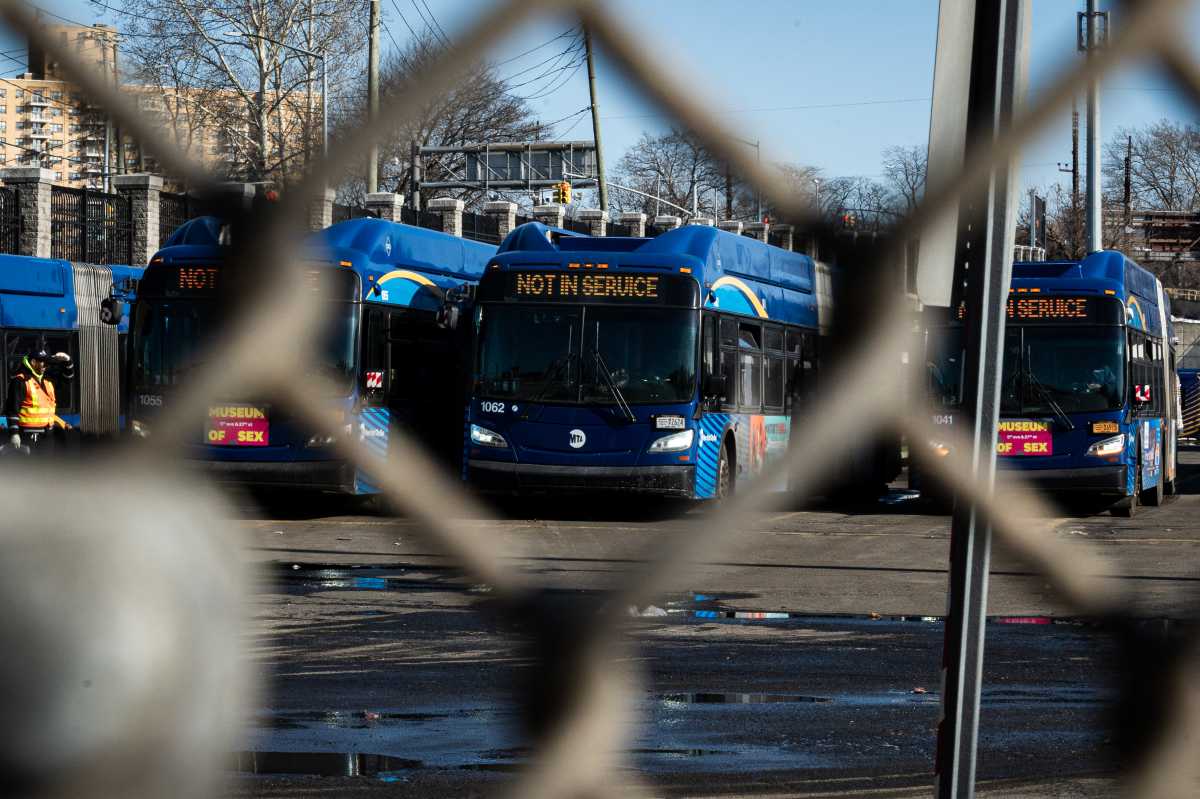
Juan Quinones said he only started taking the bus in the last six months, after enrolling at Bronx Community College, where he studies history. He began riding the Bx40 and Bx42— two lines that link Throggs Neck to West Fordham and serve as critical routes for commuters.
He described bus reliability as “hit or miss” and said he often chooses to walk 40 minutes from his home in Belmont to University Heights rather than wait.
“I would skip school because my class lasts for an hour and the bus will sometimes take an hour to show up,” Quinones said. “I just give up. I’m not that patient, so I just walk home.”
As he spoke with the Bronx Times, a Bx42 bus skipped the stop at University Avenue and Burnside Avenue, where he and several other riders had been waiting for 20 minutes.
On the live bus tracking website, there is not always an explanation for delays or skipped stops. On the day Quinones waited, a service alert read: “You may wait longer for these buses,” listing 19 Bronx routes.
“We’re running as much service as we can with the buses and bus operators we have available,” the alert continued — a common notice posted during delays.
According to union officials and workers, that explanation tells only part of the story.
Union officials and workers who spoke with the Bronx Times, the service disruptions that riders experience daily are rooted in deeper maintenance and staffing problems inside bus depots across the city.
A recent audit of maintenance records conducted by the Transit Workers Union Local 100 found that several buses at the Gun Hill Depot with histories of brake problems and other mechanical issues were cleared for service despite documented safety concerns.
The union reviewed brake lining reports for the entire fleet and uncovered that 23 buses at the Gun Hill bus depot had been operating with dangerously thin brake pad readings without being repaired in order to meet schedule for the twenty bus routes it operates.
Scott Steinberg, division chairman of the Manhattan and Bronx Surface Transit Operating Authority (MaBSTOA) maintenance for TWU Local 100, working in collaboration with Local 106, the bus supervisors union, said he pulled a report from the AVM system — a computer-based program that measures brake lining levels — and brought it to local management.
Management then pulled three random buses of the 23 to verify the AVM data. When those buses were lifted and inspected, mechanics found multiple brake defects relating to linings, calipers, wire harnesses, pigtails and sensors.
According to the union, none of the 23 buses initially had work orders created to track or ensure repairs. Only after the three buses were physically inspected and defects confirmed were the majority of vehicles flagged for inspection and repair with work orders created.
While three buses of the 23 had been fixed, the majority of buses are still in service due to what the union described as “lack of parts.”
But union officials say the issue is not isolated to Gun Hill, but a citywide issue.
A recent fleet status log from the West Farms Depot shows that of the 256 buses needed to meet morning service goals, 74 were down for varying reasons, ranging from scheduled maintenance, defects, to active repairs. Yet a summary report from the same day lists 246 buses as having left the depot — meaning some buses flagged for repairs were still put into service.
The MTA did not respond to specific questions from the Bronx Times regarding the union’s audit findings, including how the agency diagnoses brake wear and determines whether a bus is safe to remain in service. The agency insists, however, that it does not send out unsafe buses.
“No bus enters service with a known safety issue. Fleet maintenance follows established policies and oversight, and any buses that do not meet those standards are kept off the road,” said MTA spokesperson Michael Cortez.
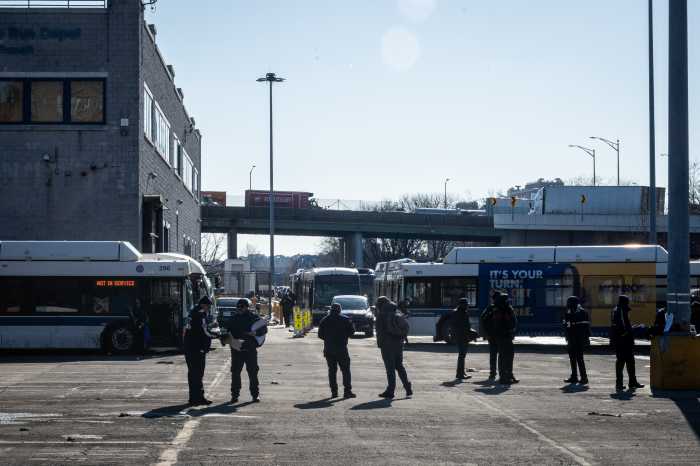
The union president John Chiarello testified to the MTA Board on Feb. 25 with the audit findings, stating that the union would be going to every depot to review the bus reports and ensure that there are work orders created to repair the issue.
“We do everything under the guidelines of safety, not just for our members but for the safety of the riding and walking public,” Steinberg said.
Short staff and extended overtime
According to the union, this pattern has persisted for years for one critical reason: Staffing, or lack thereof.
Since 2019, many mechanics have retired or been fired. When COVID-19 hit, the MTA issued a hiring freeze, and vacancies grew. Union officials say many of those positions have still not been filled to meet the demand for repairs.
“They’re not hiring the staffing levels that’s needed to deal and work on these buses to keep them safe for the public,” said Donald Yates, vice president of MaBSTOA at Transit Workers Union Local 100, who represents bus operators, maintainers, cleaners, clerical workers, protection agents and traffic checkers on Manhattan and Bronx routes.
“They’ll borrow buses from other locations. They’ll set it up, set the bus operators down in the swing room, send out half the service, fudge numbers, and say that the service went out 90% or so,” Yates added.
In the same West Farms log showing 246 buses leaving the depot, ten operators were listed as call-outs. According to the union, those operators were available — but the buses were not.
To meet repair demands, mechanics are often required to work double shifts, meaning they can work up to 16 hours in a day, with only an eight-hour break in between. Steinberg recounted two instances in February in which mechanics and line supervisors were disciplined after falling asleep on the clock following consecutive double shifts.
The MTA did not respond to questions from the Bronx Times about whether current staffing levels are sufficient to meet maintenance demands.
“They’re working so much overtime, in order to try to keep up with it, that it’s gotten to the point that it’s just not safe anymore,” said Tom Lenane, director of maintenance at the union.
‘Fear and intimidation’
The push to deliver buses on schedule has intensified over the last year, according to the union. They allege that management has given direct verbal orders to line supervisors to send out buses with known defects.
“They like to rule with fear and intimidation, and they weaponize the disciplinary system towards us,” Steinberg said.
Following the union’s audit, an emergency meeting was held on Feb. 27 at the Zerega Bus Maintenance and Training Facility with superintendents from depots across the city — a managerial level above line supervisors.
The meeting was led by Chief Maintenance Officer Daniel Cardoza, who said the Department of Buses would draft new policies outlining how brake wear should be read and when a bus must be removed from service.
Steinberg described the meeting as highly irregular and likened it to “damage control.”
Service affected
The consequences of the gap between required service, available buses and available operators are felt daily at bus stops across the Bronx.
As the most bus-dependent borough in New York City, disruptions ripple quickly through neighborhoods where many residents lack reliable subway alternatives. For many Bronx residents, buses are the only option to travel through the borough.
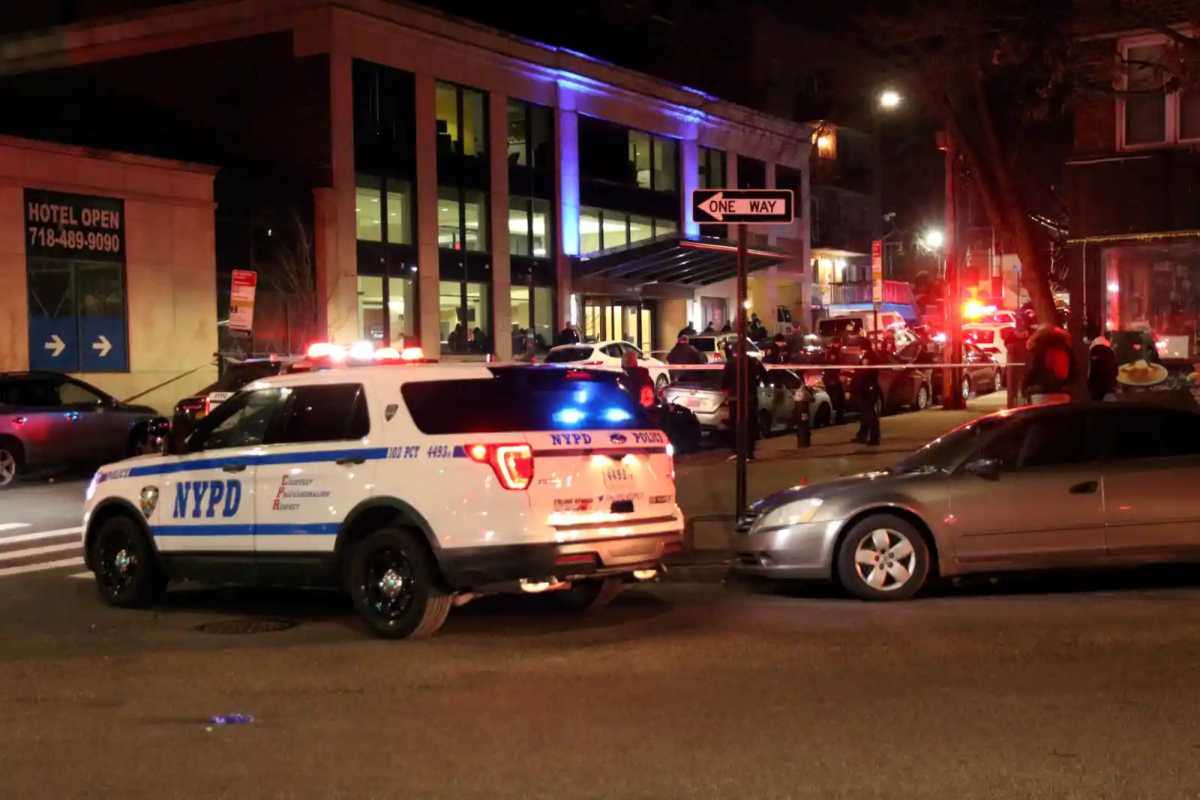
In December, a Bx6 bus with a history of brake issues crashed into several vehicles in Longwood after being cleared for service, according to the Daily News.