New York State recently adopted a major new education initiative called Portrait of a Graduate, requiring schools in the coming years to define what students should know and be able to do beyond what standardized tests measure—things like critical thinking, communication and civic readiness. The goal is to make a high school diploma mean something more than seat time and test scores.
In the Bronx, we’ve been working toward that same goal for six years.
At United Charter High Schools, we operate four high schools across the Bronx and three more throughout New York City. One of those Bronx schools, Advanced Math and Science (AMS), began building a “Portrait of a Graduate” framework long before it became state policy.
That experience taught us how many ways this work can go wrong, and what it takes to go right.
Early adopters have learned a painful lesson: creating the vision is the easy part. Most systems never make it real. A California analysis of more than 100 districts that had created Portraits of a Graduate found that too many completed their framework, “hung a poster on the wall, felt good about their effort, and promptly moved on to other initiatives.”
As Laurie Gagnon of the Aurora Institute told Education Week, “it can be easy to say students should think critically, but measuring such a skill is much harder.”
Frameworks get layered on top of existing systems rather than woven into how students actually experience school. Without real changes to curriculum, assessment, and student expectations, a Portrait of a Graduate becomes exactly that—a poster on the wall.
We’ve spent six years trying to avoid that outcome, and our Portrait of a Graduate at AMS in the Bronx is the proof.
We started by narrowing our focus to a set of the most important competencies for our students: critical thinking, effective communication, collaboration, civic engagement, and reflective, future-focused learning. For each competency, a team of educators developed four to five smaller skills with common rubric language, so both teachers and students had a clear picture of what growth looked like.
At AMS, we spent years testing how Portrait-aligned competencies could shape assignments, feedback, and student reflection. That pilot surfaced real challenges in calibration, in teacher preparation, and in how students understood the expectations. Those lessons informed how we approach rolling out the work across all seven of our schools.
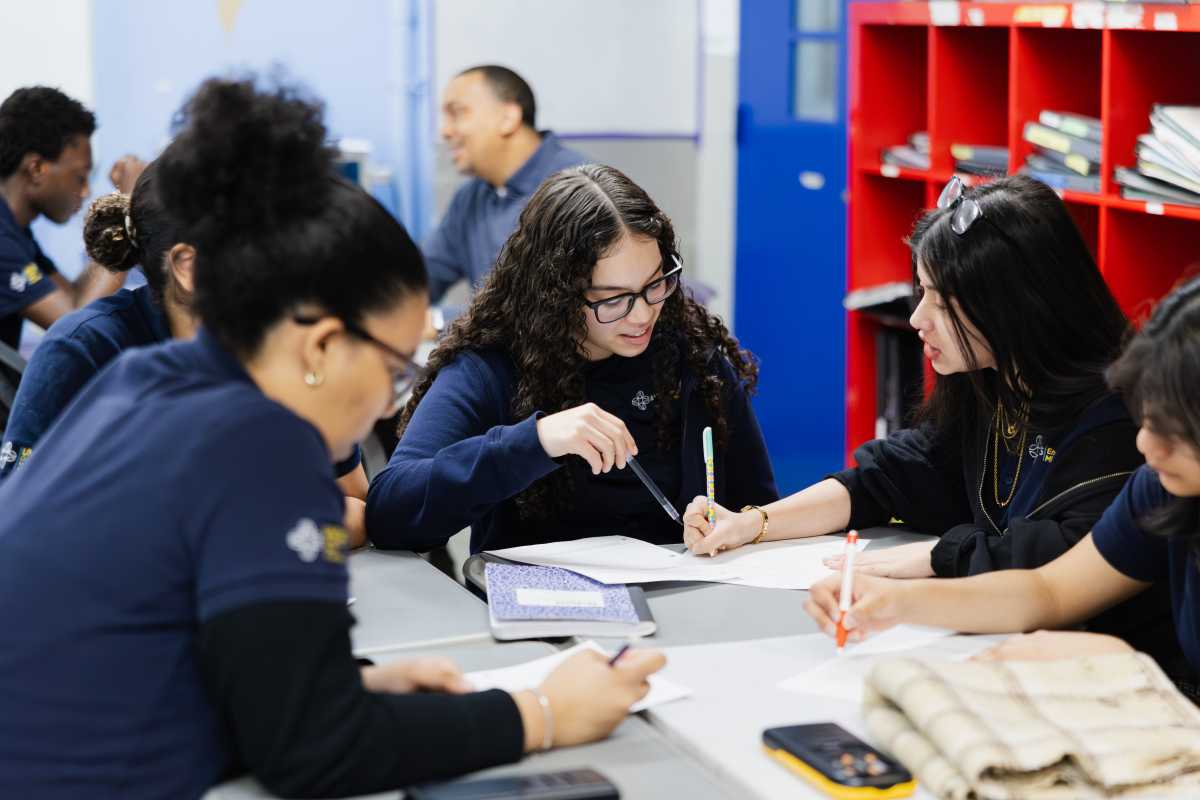
Critically, we anchored everything in authentic assessment. Students demonstrate Portrait competencies through essays, service learning, internships, and civic projects, all required parts of their academic lives. Three years ago, we added a formal capstone: as juniors, students complete “Demonstrations of Learning,” defending their growth before a panel of educators and assembling portfolios tied to each experience.
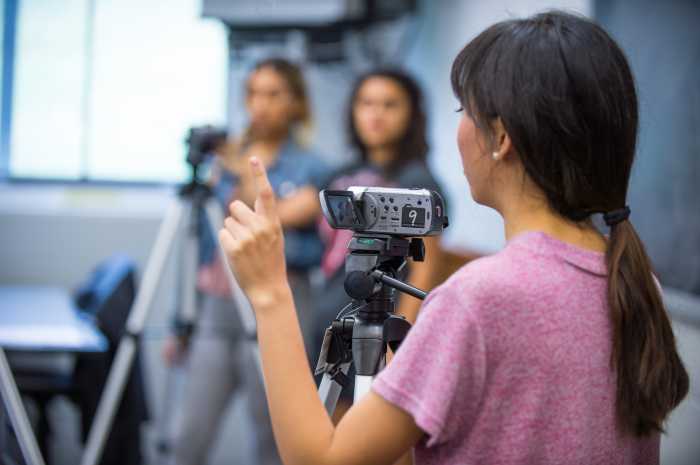
One student presented a community photography project from the Bronx Documentary Center as evidence of communication skills. She documented her own neighborhood, interviewed local small business owners, and stood before a panel of educators to defend what she had learned.
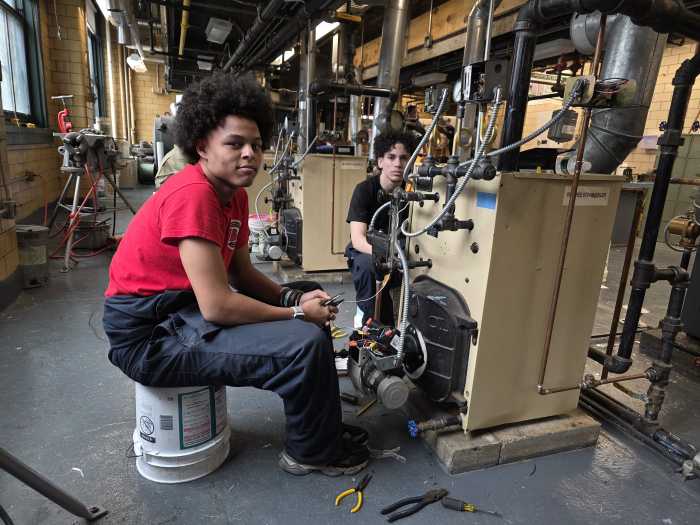
In AP U.S. History, she worked with classmates to teach a lesson on the Dust Bowl to demonstrate collaboration. Another student connected his engineering internship to his career goals, making the case that the project demonstrated critical thinking beyond the classroom.
When students can point to their own work and say, “This is what I can do, and here’s the evidence,” the Portrait stops being abstract.
None of this happened quickly, and we are still refining it. This year, each of our schools is aligning at least one authentic assessment to a set of eight priority skills, tracked through a shared digital platform. Cross-school curriculum teams are developing common assessments network-wide beginning in 2026-27.
New York State’s rollout will face every one of these challenges at a scale that dwarfs what any single network has attempted. The risk is that implementation gets treated as an execution problem rather than a years-long act of institutional change.
For Bronx families, the stakes couldn’t be higher. Done well, Portrait of a Graduate gives students—especially those whose strengths aren’t captured by traditional exams—a diploma that genuinely represents what they can do.
Done poorly, it gives them a framework that looks meaningful on paper and disappears in practice. The difference comes down to choices that must be made now, before the framework hardens.
Bronx students deserve a diploma that truly reflects what they know and what they can do. As we’ve learned at United Charter High Schools, Portrait of a Graduate earns its value not by what it promises, but by what students are ultimately asked to prove.
Dr. Curtis Palmore is the CEO of United Charter High Schools (UCHS), a network of seven public charter high schools in New York City. Robert Hiller is Chief Academic Officer of UCHS and former principal of Advanced Math and Science Charter High School.